• Research
  • About
  • Experts
Carnegie India logoCarnegie lettermark logo
Technology
{
  "authors": [
    "Sinan Ülgen"
  ],
  "type": "other",
  "centerAffiliationAll": "",
  "centers": [
    "Carnegie Endowment for International Peace",
    "Carnegie Europe"
  ],
  "collections": [
    "Turkey’s Transformation",
    "EU Integration and Enlargement"
  ],
  "englishNewsletterAll": "",
  "nonEnglishNewsletterAll": "",
  "primaryCenter": "Carnegie Europe",
  "programAffiliation": "",
  "programs": [
    "Europe"
  ],
  "projects": [],
  "regions": [
    "Europe",
    "Türkiye",
    "Middle East",
    "Iran"
  ],
  "topics": [
    "EU",
    "Political Reform"
  ]
}
Other
Carnegie Europe

A Resilience Approach to a Failed Accession State: The Case of Turkey

The Turkey-EU agenda should include a resilience action plan to improve the capacity of Turkish institutions and society to withstand—and eventually seek to roll back—challenges to democracy.

Link Copied
By Sinan Ülgen
Published on Oct 27, 2017

Source: International Affairs Institute

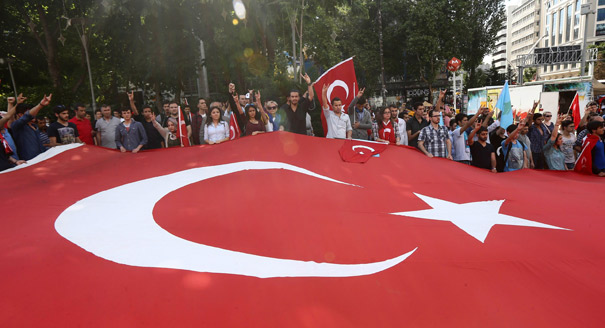
The concept of “building resilience” in Turkey can be defined as improving the capacity of institutions and society to withstand and eventually seek to roll back a sustained challenge to democratic norms. From the perspective of Turkish society, the threat originates from the wide disparities in regional incomes that are themselves a by-product in the equally wide disparities in educational achievements and employable skills. Nevertheless, Turkish society retains important elements of resilience. This is the end result of a flawed and yet very real experience with multi-party democracy for over seven decades. At the same time Turkey is a failed accession state and the frustrations as well as the acrimony generated by this hapless state of affairs will have implications for any other EU engagement strategy with Ankara. It is therefore necessary to build the resilience action plan as a component of the formal Turkey–EU agenda, which is broader than the accession track. The soon-to-be-launched negotiations for the modernization of the EU–Turkey Customs Union provide a timely and useful option.

Read Full Text

This report was originally published by the International Affairs Institute.

Sinan Ülgen
Senior Fellow, Carnegie Europe
Sinan Ülgen
EUPolitical ReformEuropeTürkiyeMiddle EastIran

Carnegie India does not take institutional positions on public policy issues; the views represented herein are those of the author(s) and do not necessarily reflect the views of Carnegie, its staff, or its trustees.

More Work from Carnegie India

  • Article
    Can Geopolitical Alignment Seal the India-EU FTA?

    This article argues that the geopolitical circumstances have never been more conducive, not merely for the early conclusion of the free trade agreement (FTA) between India and the EU, but also for crafting a substantive and comprehensive strategic partnership.

      Mohan Kumar

  • Article
    Risk and Retaliation: Israel, Iran, and the Evolving Situation in West Asia

    An Israeli response to Iran’s October 1 attack is imminent. The key question is of its intensity and potential fallout, both within Iran, in terms of nuclear security policy changes, and across the broader region. The coming days are likely to reshape West Asia irreversibly.

      Gaddam Dharmendra

  • Commentary
    How WHO’s “One Health” Program Can Help India Tackle Monkeypox

    With monkeypox being declared a global health emergency, the WHO approach is an innovative and effective way to curb outbreaks of zoonotic diseases.

      Shruti Sharma

  • Paper
    Lessons from the Coronavirus Pandemic: Leveraging Biotechnology to Tackle Infectious Diseases in India

    In India, biotechnology has played an important role in helping stakeholders in academia, industry, and government develop new pandemic-related technology, from test kits to respiratory devices. But these biotechnology advancements can go further to strengthen India’s public health capacity.

      Shruti Sharma

  • Commentary
    Combating Vaccine Hesitancy in India

    Unless the government can up its communications game, anti-vax movements could prolong India’s pandemic effects.

      Shruti Sharma

Get more news and analysis from
Carnegie India
Carnegie India logo, white
Unit C-4, 5, 6, EdenparkShaheed Jeet Singh MargNew Delhi – 110016, IndiaPhone: 011-40078687
  • Research
  • About
  • Experts
  • Projects
  • Events
  • Contact
  • Careers
  • Privacy
  • For Media
Get more news and analysis from
Carnegie India
© 2026 Carnegie Endowment for International Peace. All rights reserved.