Source: Wall Street Journal
As President Trump’s rhetoric on North Korea grows more bombastic, the world wonders if China will step up to help resolve the crisis. Last month, when the United Nations Security Council deliberated a new round of sanctions on Kim Jong Un’s regime, China conspicuously didn’t raise objections. A few days later, during a phone call with Mr. Trump, Chinese President Xi Jinping promised he would put “maximum pressure” on Pyongyang. It may seem as if Beijing finally is ready to work with Washington—but appearances can be deceiving.
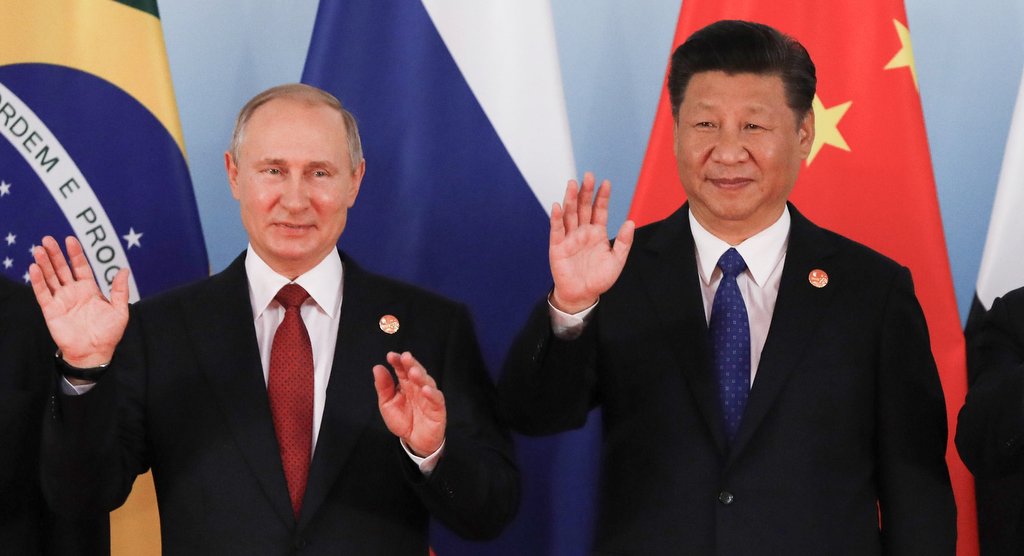
In reality, Mr. Xi has worked out a good-cop/bad-cop routine with Russian President Vladimir Putin, and the two countries are working together to torpedo some of the most important U.S. proposals on North Korea. While China looks like a constructive partner, Russian diplomats at the U.N. were able to water down language in Security Council Resolution 2375 that would have restricted oil shipments to North Korea and totally banned the use of North Korean labor abroad.
This kind of cooperation between Moscow and Beijing now stretches far beyond the Korean Peninsula and will remain an important part of the international environment for years to come.
An unprecedented round of Sino-Russian joint naval exercises in the Baltic Sea over the summer sent an unambiguous message about this state of affairs to Washington and its partners in the North Atlantic Treaty Organization. More exercises last month in the Sea of Japan added insult to injury. Further, since 2014 Moscow has dramatically ramped up sales to China of some of Russia’s most advanced defense equipment and technologies. Today Russian jet fighters and surface-to-air missiles are boosting the Chinese military’s capabilities in contested parts of the South China Sea and elsewhere in the Pacific. On global issues such as the future governance of cyberspace, the defense of state sovereignty, and Western pressure on human rights, China and Russia routinely present a united front.
The budding partnership between these two great powers—who were riven for decades by high levels of mistrust—is a natural response to the adversity and confrontation in the U.S.-Russian relationship. When Mr. Trump arrived in the White House, the Kremlin nurtured some hope that the bilateral relationship might be improved. But the adoption of new congressional sanctions against Russia and mounting questions about Mr. Trump’s ability to change the direction of the relationship put that idea to rest. As the president declared in his signing statement for the new sanctions: “By limiting the Executive’s flexibility, this bill . . . will drive China, Russia, and North Korea much closer together.” This new reality helps explain why the Kremlin feels it has nothing to gain from being helpful to the U.S. on North Korea.
Meantime, China is becoming central to the Russian economy’s future and to the stability of the Putin regime. Over the past four years, Beijing has turned into a major investor and lender to Russia, channeling billions through its state-controlled “policy banks” to members of Mr. Putin’s entourage and Russian companies subject to sanctions. This is one of the key reasons that Russia is happy to defend North Korea at a time when doing so has become costly for China, which is worried about Mr. Trump’s threat to link Beijing’s “help” on North Korea to the status of bilateral trade talks. A new trade war with the U.S. is a nightmare for Beijing, particularly on the eve of the crucial 19th Party Congress, where projecting the image of domestic and international stability is crucial for Mr. Xi’s effort to cement his grip on power.
China and Russia’s budding relationship is still primarily transactional. Their interests don’t coincide on many issues, and they have little reason to limit themselves with a formal, permanent alliance. But ignoring the strategic rationale for increased Sino-Russian rapprochement would be a great mistake. These two authoritarian powers are not united by a messianic ideology or desire to spread their systems across the globe, as they might have been during the Cold War. Rather, they both see the U.S.-led international system and Western democracy-promotion efforts as a direct threat to their political systems and regional spheres of influence.
Chinese and Russian leaders won’t always agree, but their deepening cooperation and mistrust of the U.S. is here to stay. Unfortunately, American leaders have shown few signs that they know how to navigate this new reality, let alone manage the competition among great powers as non-Western countries grown in stature.
This op-ed was originally published in the Wall Street Journal