• Research
  • About
  • Experts
Carnegie India logoCarnegie lettermark logo
Technology
{
  "authors": [
    "Zaha Hassan"
  ],
  "type": "commentary",
  "centerAffiliationAll": "",
  "centers": [
    "Carnegie Endowment for International Peace"
  ],
  "collections": [],
  "englishNewsletterAll": "",
  "nonEnglishNewsletterAll": "",
  "primaryCenter": "Carnegie Endowment for International Peace",
  "programAffiliation": "",
  "programs": [
    "Middle East"
  ],
  "projects": [],
  "regions": [
    "Middle East",
    "Israel",
    "Palestine"
  ],
  "topics": [
    "Political Reform",
    "Democracy"
  ]
}
Commentary

Why Palestinian Voters Could Change the Outcome of the Israeli Elections

If more Palestinian citizens of Israel vote, an unprecedented coalition between Arab parties and the main Israeli opposition party could scupper state plans to annex parts of the West Bank.

Link Copied
By Zaha Hassan
Published on Sep 13, 2019

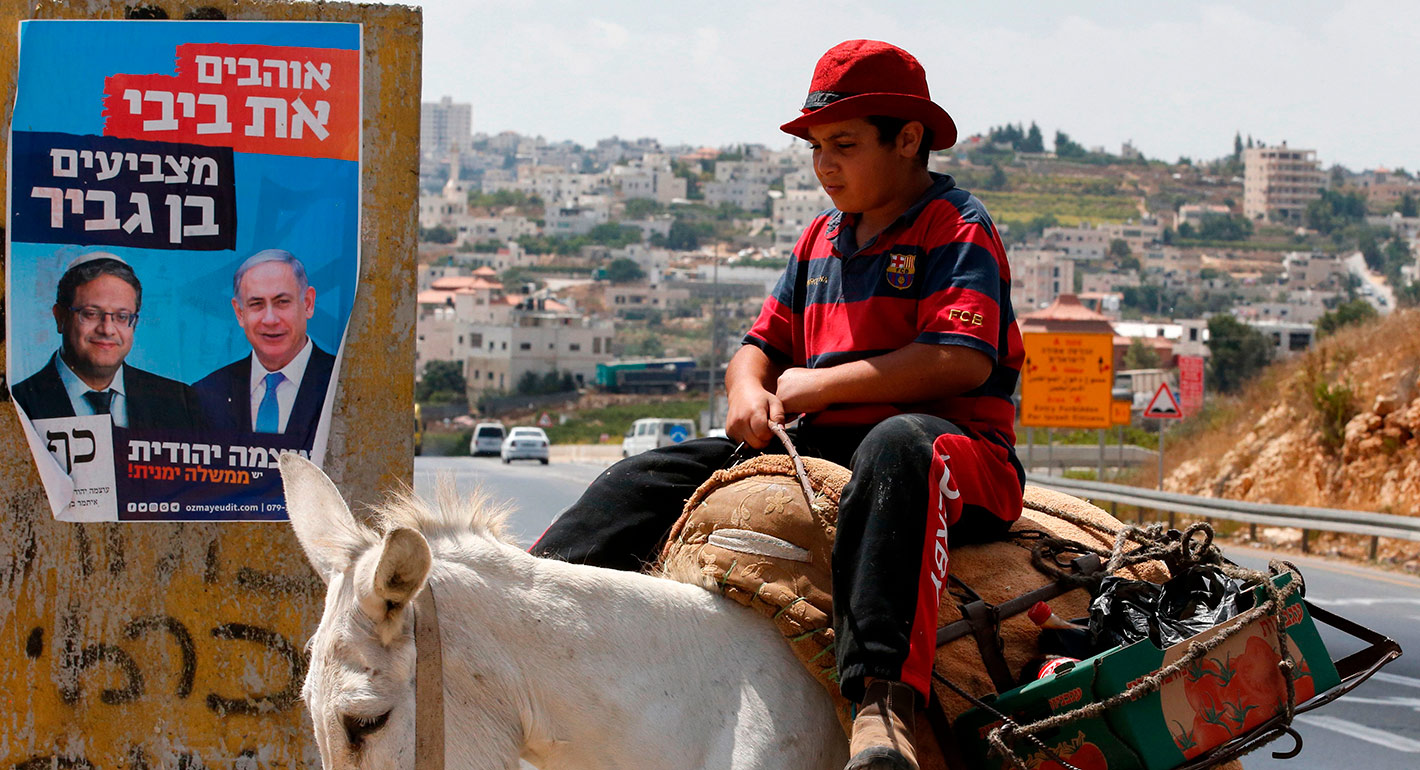
Palestinian citizens of Israel may have a decisive role in Israel’s upcoming election. If they vote in larger numbers than they did in the April 2019 election, it could affect whether Israeli Prime Minister Benjamin Netanyahu can make good on his promise to annex most of the occupied West Bank.

In 2015, the Joint List—a political alliance of the main Palestinian parties in Israel, got the third-most parliamentary seats (thirteen), though it was not invited to join the coalition government. The alliance’s numbers also did not stop the Knesset from passing a quasi-constitutional bill that legalized Palestinians’ unequal treatment before the law and prioritized settlement construction in the occupied West Bank.

Now, however, the head of the Joint List, Ayman Odeh, has said that he would consider joining a coalition government with center-left Israeli parties. This engagement is something most Palestinians want. According to a poll cited by Al-Monitor, 80 percent of the Joint List and almost 70 percent of Palestinian voters in Israel support Palestinian parties joining such a government.

On September 13, 2019—the last day to publish polling—one Israel Hayompoll suggests that the Joint List may secure twelve seats and retake the third spot in the Knesset. (In the last election, when voter turnout was low, Arab parties only received ten seats.) Odeh’s statement may encourage some voters to return to the polls—that may even have been the purpose all along.

A Palestinian party joining the government would be a first in Israel. The main opposition party, Blue and White, is neck and neck with the ruling party Likud for the most Knesset seats. The opposition has not said that it would consider asking the Joint List to join a coalition government. That suggests the point is moot. If, however, Likud wins and is again unable to form a coalition, Blue and White might be inclined to rethink things.

Blue and White, which includes three former chiefs of staff of the Israel Defense Forces at the top of the ticket, may not be as keen to make good on Netanyahu’s campaign promise to annex all Israeli settlements along with the Jordan Valley, because of the potential impact on security in the West Bank and on neighboring Jordan.

Israelis support annexation to varying degrees—but only if Palestinians in the West Bank are not offered citizenship and equality. If Israel were to legally annex most of the territory and place it under Israeli law, without enfranchising the nearly 3 million Palestinians who live there, that would put the country in stark opposition to the rest of the world—even if the United States were prepared to support this shift.

A coalition with the Joint List would not only be a handy counterargument to the charge that Israel is not a country for all its citizens. It would also provide an off-ramp for the Israeli right wing’s drive toward annexation of occupied Palestinian land, because it would let Blue and White point to its Arab coalition partner as the obstacle, thus avoiding the perils of annexation while saving face with Israeli voters.

However the election turns out, Palestinian voters are poised to be a more important factor than they have been in the past.

Zaha Hassan
Senior Fellow, Middle East Program
Zaha Hassan
Political ReformDemocracyMiddle EastIsraelPalestine

Carnegie India does not take institutional positions on public policy issues; the views represented herein are those of the author(s) and do not necessarily reflect the views of Carnegie, its staff, or its trustees.

More Work from Carnegie India

  • Article
    Risk and Retaliation: Israel, Iran, and the Evolving Situation in West Asia

    An Israeli response to Iran’s October 1 attack is imminent. The key question is of its intensity and potential fallout, both within Iran, in terms of nuclear security policy changes, and across the broader region. The coming days are likely to reshape West Asia irreversibly.

      Gaddam Dharmendra

  • REQUIRED IMAGE
    Commentary
    Is U.S. Foreign Policy Too Hostile to China?

    Experts weigh in on whether the United States is too hostile toward China.

      Stephen Wertheim, Evan S. Medeiros, Vijay Gokhale

  • Paper
    India’s Sustained Economic Recovery Will Require Changes to Its Bankruptcy Law

    As India’s economy recovers from the coronavirus pandemic, Indian businesses need efficient financial structures to regain their ground. Key reforms to India’s Insolvency and Bankruptcy Code could fill these gaps.

      Anirudh Burman

  • Paper
    Cross-Border Data Access for Law Enforcement: What Are India’s Strategic Options?

    Access to cross-border data is an integral piece of the law enforcement puzzle. India is well placed to lead the discussions on international data agreements subject to undertaking necessary surveillance reforms.

      Smriti Parsheera, Prateek Jha

  • Article
    The BRI in Post-Coronavirus South Asia

    After the coronavirus pandemic wanes, how will China’s reorientation of the Belt and Road Initiative to address global health concerns influence its relationships with South Asian countries?

      Deep Pal, Rahul Bhatia

Get more news and analysis from
Carnegie India
Carnegie India logo, white
Unit C-4, 5, 6, EdenparkShaheed Jeet Singh MargNew Delhi – 110016, IndiaPhone: 011-40078687
  • Research
  • About
  • Experts
  • Projects
  • Events
  • Contact
  • Careers
  • Privacy
  • For Media
Get more news and analysis from
Carnegie India
© 2026 Carnegie Endowment for International Peace. All rights reserved.