Source: One Earth Future
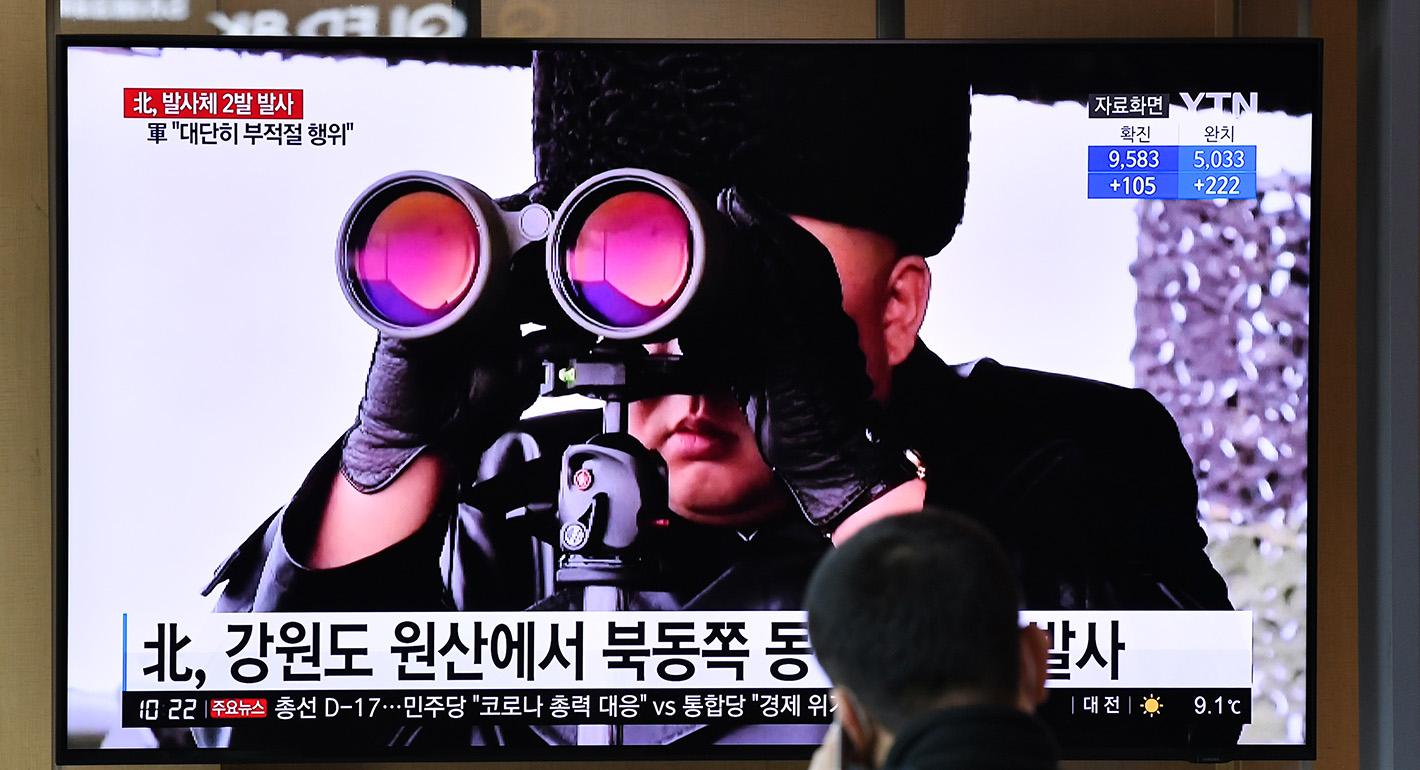
The world is shocked by the blowing up of the Inter-Korean Liaison Office by North Korea who has continued to upgrade its threats and raise tensions along the inter-Korean border. These have followed multiple short-range missile tests and other relatively low-level provocations by North Korea earlier in the year. As the immediate impact of the COVID-19 pandemic tapers, North Korea may be stepping up efforts to carry out “offensive measures” and a “new path” pledged by Kim Jong Un since the end of 2019. The pandemic may have worsened the domestic economic situation that is already under stress from severe sanctions. This may have added to Pyongyang’s sense of urgency to ramp up its own version of maximum pressure campaign and to force Seoul and Washington into relaxing economic constraints on North Korea.
The intensifying U.S.-China great power competition provides an important opportunity for Pyongyang to exploit. Mutual finger-pointing during the pandemic has pushed the hostile relationship between Beijing and Washington to a level that senior Chinese experts believe is worse than the U.S.-Soviet relationship during the Cold War. When Chinese strategists feel their country is under vicious attack from the United States and is at a time of strategic vulnerability, they probably view North Korean provocations that humiliate not only Seoul but also Washington as less problematic. Indeed, many Chinese government experts are sympathetic and share Pyongyang’s frustration over the perceived failure by Seoul and Washington to deliver their previous promises. Recent North Korean efforts to publicly defend Beijing’s position over COVID-19 and Hong Kong were probably aimed at further securing Chinese support in the event that future North Korean provocations cause serious international backlash.
The recent North Korean threats so far have been focused on South Korea. Sensing a growing division within the U.S.-ROK alliance, caused by disagreements over burden-sharing and by President Trump’s transactional attitudes towards allies in general, North Korea may believe it has a chance to drive the Moon administration to exercise greater autonomy from Washington. To some extent, such North Korea activities are doing China a favor. To have the U.S.-led military alliance weakened and to draw South Korea away from the U.S. orbit is very much in Chinese geostrategic interests.
Nonetheless, the North Korean brinkmanship is never risk free. Between now and when the next U.S. president takes power is a relatively safe window of opportunity for North Korea to push the envelope without fearing huge consequences. Internal power transition undermines the U.S. will and capacity to open a new front against North Korea and the competitive U.S.-China relationship makes additional collective punishment from the U.N. Security Council unlikely. If North Korea needs to perfect its strategic deterrent capabilities which many analysts believe are not yet technically effective or reliable, it won’t have to wait longer. It may even calculate that to test its strategic weapons would strengthen its future negotiating leverage and consolidate its claim as a permanent nuclear power. This is a prospect that worries China and represents a major divergence of interests between Beijing and Pyongyang. To dissuade North Korea from testing long-range missiles or conducting other serious military provocations, Beijing needs to signal to Pyongyang beforehand where the red line is and what consequences may follow. The message would be more effective if it is coordinated with the United States and other regional players.
The fact that North Korea aims its wrath at political leaflets should be a wake-up call for those who believe Kim Jong Un has a different vision for his country than his father and grandfather. It demonstrates Kim’s little tolerance for things that may weaken the information barrier between his insulated kingdom and the outside world and that may undermine North Korea’s long-standing political ideology built around the cult of personality surrounding the Kim family. His apparent promotion of his sister to be the de facto Number 2 in the political system defies some observers’ previous expectation that Kim Jong Un would gradually transform the family rule toward a more modern governance system. For many Chinese strategists who are proponents of comprehensive engagement with North Korea, they may feel the need to reexamine the widely accepted assumption in China that Kim Jong Un would take North Korea in the direction of opening up and reform and that after North Korea becomes more developed and stronger it would have no need for keeping its nuclear weapons.
The blowing up of the Inter-Korean Liaison Office adds weight to the hypothesis that nuclear weapons will embolden North Korean behavior. This slap in South Korea’s face after Seoul’s dedicated effort in the last few years to work with the North should also raise questions of the Chinese confidence that China could manage and steer North Korea’s behavior to its own benefit. The need for China to cooperate more closely with South Korea, the United States, and other regional players to jointly contain North Korean provocations is growing.
The current status quo over the Korean Peninsula is not sustainable, as North Korea faces growing economic stress and may become more desperate to shake off the external constraints. China and the United States need to lead a discussion with the other main stakeholders in the region to build common understandings on two issues: how to coordinate immediate steps to deter North Korean provocations in the near-term and how to construct a strategic plan to prevent a permanent nuclear-armed North Korea in the long run. This also presents an opportunity for Washington and Beijing to work together in an area of obvious common interests and help save their own bilateral relationship from falling into a comprehensive confrontation.
This article was originally published by One Earth Future