This Q&A has been adapted from a Carnegie live event assessing EU-China relations amid Russia’s invasion of Ukraine.
Paul Haenle: How do you think the Ukraine issue will impact the broader EU-China relationship over the long run?
Philippe Le Corre: I think it’s impacting the relationship tremendously. All my contact with Chinese colleagues over the past few weeks . . . it’s been a dialogue of the deaf, in the sense that people don’t seem to realize in China how dreadful this war has been. . . .
There are many issues that the EU is willing to discuss with China. I don’t think the door is closed. There will be more meetings. Their relationship is not as bad as the U.S.-China relationship.
On the economic front, there are many things going on, but there’s also the COVID [pandemic] issue. A number of European countries are not very satisfied with the way China has handled the pandemic for the past year, with many expats not being able to go back and things like the current lockdown.
Also, on the Comprehensive Agreement on Investment (CAI) [a proposed China-EU investment deal], there was some progress being made through this agreement, which was discussed for seven years—a very long time for an agreement, even by EU standards. The problem is that the EU has to stand for its values and principles. It has a principled diplomacy, as [High Representative of the EU for Foreign Affairs and Security Policy] Josep Borrell wrote recently. And in fact, members of the EU Parliament are the ones ratifying international agreements, including the CAI. So as long as the members are being sanctioned by China, it’s going to be very difficult to ratify the CAI at least for the next two years.
We should be continuing to talk about climate, biodiversity, and how to prevent the next pandemic, but on the economic front, it’s not so clear how we’re going to get out of this.
Meanwhile, the relationship is not as smooth as it was before, in terms of Chinese investment in Europe or European investment in China. What’s working well is trade, with a huge deficit in China’s favor.
Paul Haenle: I know the EU foreign policy chief at one point suggested China play the role of mediator between Russia and Ukraine. Is there a desire or an appetite in the EU to have China play this role?
Philippe Le Corre: I think the expectations are very low, because we know that China has been sending very clear signals that it does not want to be part of this war. It may want to be part of a settlement, but we’re far from that. As you see from the situation in Ukraine, every day we discover new massacres, new dreadful actions by the Russian military—or mercenaries hired by Russia, because these are not even conventional militaries.
The ideal situation would be for China to side with the EU. And by the way, the EU is not following the U.S. view on this. The war is being fought in a European country that is neighboring EU members, including Poland, Hungary, and Romania. So I think the EU would be happy to see China offering its help, but I’m not quite sure how, since it obviously does not want to sacrifice its friendship without limits that was announced and [has been] reaffirmed many times since Russian President Vladimir Putin and Chinese President Xi Jinping made their joint statement on February 4.
Paul Haenle: The EU’s interests do not always completely overlap with those of the United States when it comes to China. Is there a role for the EU to mediate, or provide a balance, between the United States and China? Or is the EU mostly in the same boat as the United States vis-à-vis China?
Philippe Le Corre: I would say that of course the EU has its own policy. It may appear in some cases that it’s aligned with the United States, but actually it’s not.
I think the idea behind the CAI was . . . the compartmentalization of the relationship, which is also a very complicated concept. I think originally the idea was that Europe was able to deal on economic matters, on the environment . . . but the problem is that there is a war going on. It’s difficult to have a rational and peaceful conversation. . . .
I think Europe in the long run would want to play that role. It’s certainly what [French President Emmanuel] Macron has been saying. It’s also the German position. [Germany is] very reliant on Russian energy, and the German industry is very reliant on the Chinese market. China is also very dependent on the 420 million consumers in European markets. We do have a lot of business going on, but at the moment, everything is very polarized.
Carnegie India does not take institutional positions on public policy issues; the views represented herein are those of the author(s) and do not necessarily reflect the views of Carnegie, its staff, or its trustees.
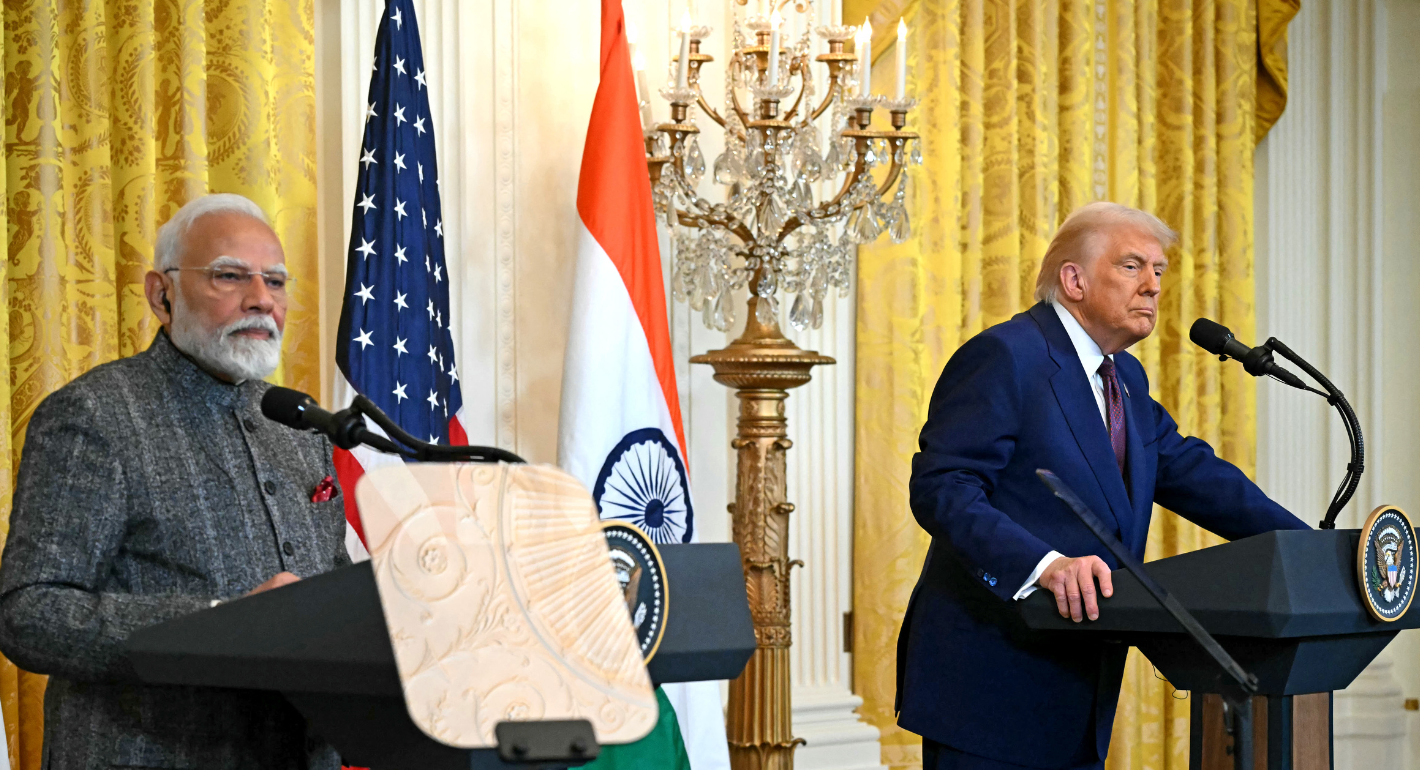
This piece examines India’s response to U.S. sanctions and tariffs, specifically assessing the immediate market consequences, such as alterations in import costs, and the broader strategic implications for India’s energy security and foreign policy orientation.
This paper examines the evolution of India-China economic ties from 2005 to 2025. It explores the impact of global events, bilateral political ties, and domestic policies on distinct spheres of the economic relationship.
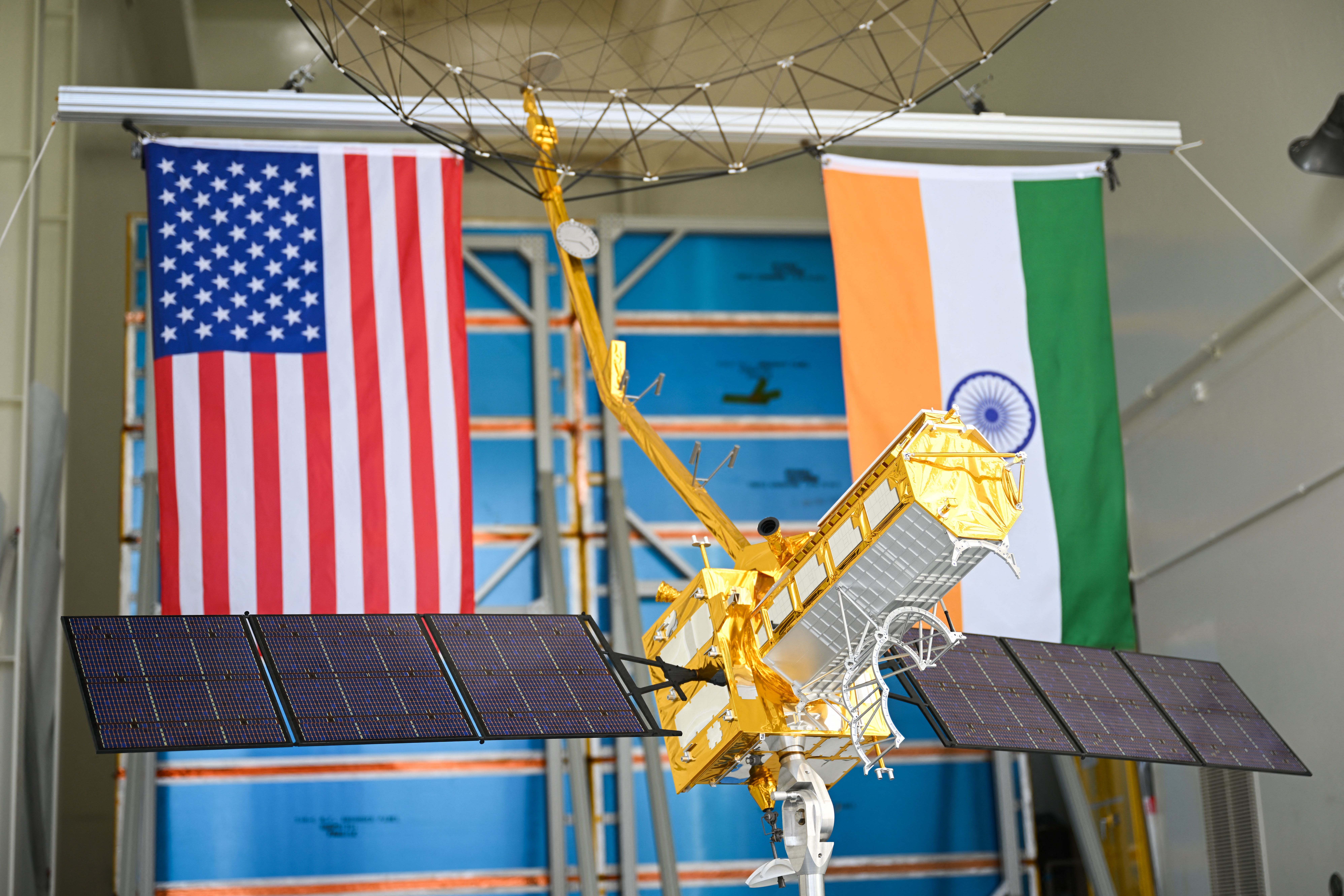
On July 30, 2025, the United States announced 25 percent tariffs on Indian goods. While diplomatic tensions simmered on the trade front, a cosmic calm prevailed at the Sriharikota launch range. Officials from NASA and ISRO were preparing to launch an engineering marvel into space—the NASA-ISRO Synthetic Aperture Radar (NISAR), marking a significant milestone in the India-U.S. bilateral partnership.
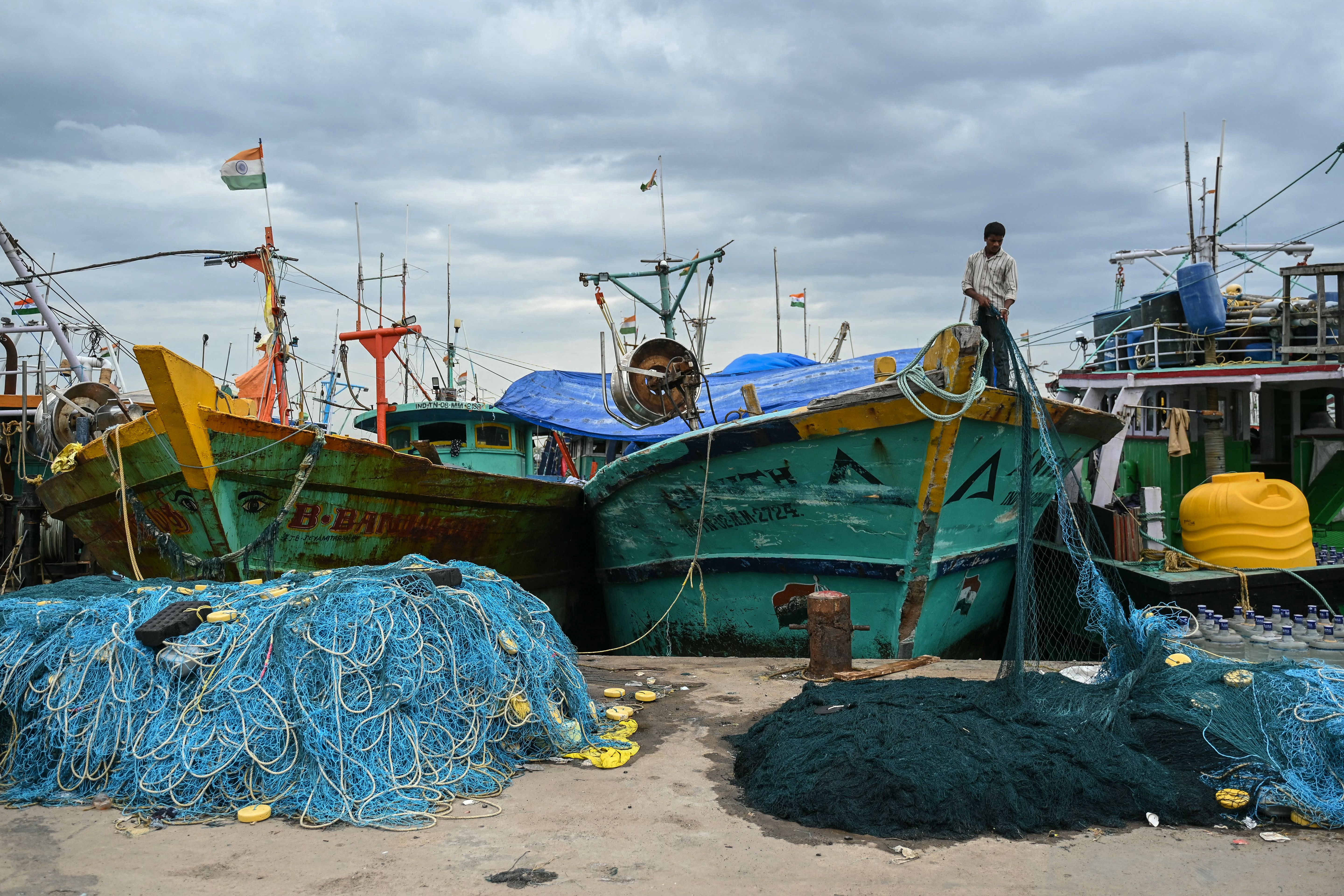
This article examines the scale and impact of Chinese IUU fishing operations globally and identifies the nature of the challenge posed by IUU fishing in the Indian Ocean Region (IOR). It also investigates why existing maritime law and international frameworks have struggled to address this growing threat.