

Article
President Kais Saied has won a second term in office, but his country is facing a host of problems that necessitate urgent reforms, above all preventing the possibility of a financial meltdown.
Ishac Diwan, Hachemi Alaya, Hamza Meddeb
Source: Getty
The recent revolution in Tunisia demonstrates that the complete stifling of political opposition does not guarantee longevity for authoritarian regimes.
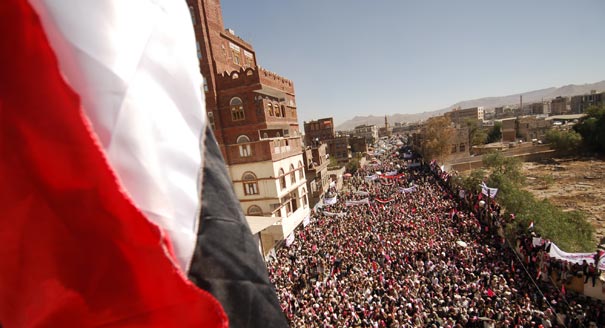
With the label of "Jasmine" now being attached to the political upheaval in Tunisia, some people may assume that the events are another "color revolution" like the ones that garnered so much attention earlier this decade. The images of angry protesters gathering in the streets and the abrupt fleeing of the president may call up memories of seemingly similar situations in Eastern Europe or the former Soviet Union from not long ago.
It is important to see, however, that the events unfolding in Tunisia are quite different from those that produced regime change in Serbia in 2000, Georgia in 2003, Ukraine in 2004, and Kyrgyzstan in 2005. Those "color revolutions" involved pitched political struggles over contested elections. When the challengers to the elections felt cheated and shut out, they pushed back hard and toppled the incumbents. Although the ousted leaders practiced some elements of authoritarianism, the political systems they were running were best characterized as soft authoritarian—with considerable room for political parties to compete, independent civil society groups to act, and at least some independent media to operate. In Tunisia, no election was at play and the lack of political space was almost absolute.
One consequence of the difference between the types of upheaval that Tunisia has experienced versus the color revolution model is that the forces of opposition in Tunisia are much less organized and strong. In the color revolutions, the opposition forces were assertive political parties and civic activist groups with considerable experience in political competition and mobilization. In Tunisia, although the demonstrators are showing notable courage and persistence, they lack organizational form, leadership, and experience.
Authoritarian leaders around the world who were so stirred up and worried by the color revolutions may take comfort from this important difference, feeling relieved that their color revolution nightmare has not metastasized again. But if they think about it more closely, their comfort may turn quickly into a deeper chill for several reasons.
First, greatly overblowing the modest role U.S. support played for political opposition and civic activist groups in the color revolutions, authoritarians in Moscow, Beijing, Tehran, Caracas and elsewhere convinced themselves that those regime collapses were the work of an outside "hidden hand." Authoritarian leaders reasoned that by closing down the space for external democracy assistance they could undercut any chance of such events. But in Tunisia, it is crystal clear that no hidden hand was at work. No accusations have emanated from Tunis that the United States or some other foreign power was behind the events. In fact, former President Ben Ali was a valued ally. Not only were the protesters acting wholly on their own, they were up against a regime with powerful friends who would likely have been happy to see him ride out the troubles.
Second, seeing that the color revolutions largely occurred in countries suffering from long-term economic stagnation or decline, concerned authoritarians thought economic success could help immunize them from citizen discontent. Yet Tunisia was for many years an economic success story, the poster child of sound economic policies in the Arab world for the World Bank and other international aid organizations. It was the combination of a solid period of economic progress combined with a sharp downturn that created the political tinderbox. Paradoxically, economic success poses as many political dangers for authoritarians as economic decline—one slip off the prosperity path and they can fall hard.
Third, authoritarian leaders may have taken from the color revolutions the lesson that not holding elections at all—or fully manipulating and limiting them—would help remove a major basis for widespread protests and demonstrations. Yet in Tunisia, elections were not a factor. To the extent they were, it was in fact the complete suffocation of the country’s periodic elections that closed off a vital avenue for citizens to let off steam, contributing to the conditions for the blowout. The regime in Tunis was particularly vulnerable due to its personalized nature and limited circle of regime beneficiaries. Highly institutionalized authoritarian regimes such as China are less likely to be toppled by street protests. Tunisia, however, underscores how authoritarian regimes must constantly walk a fretful tightrope, allowing neither too much political opportunity nor too little.
In short, authoritarians previously obsessed with the dangers of a color revolution may be happy to hear that Tunisia’s Jasmine Revolution was not another in the series. But further reflection reveals that this should be cold comfort indeed.
Carnegie India does not take institutional positions on public policy issues; the views represented herein are those of the author(s) and do not necessarily reflect the views of Carnegie, its staff, or its trustees.
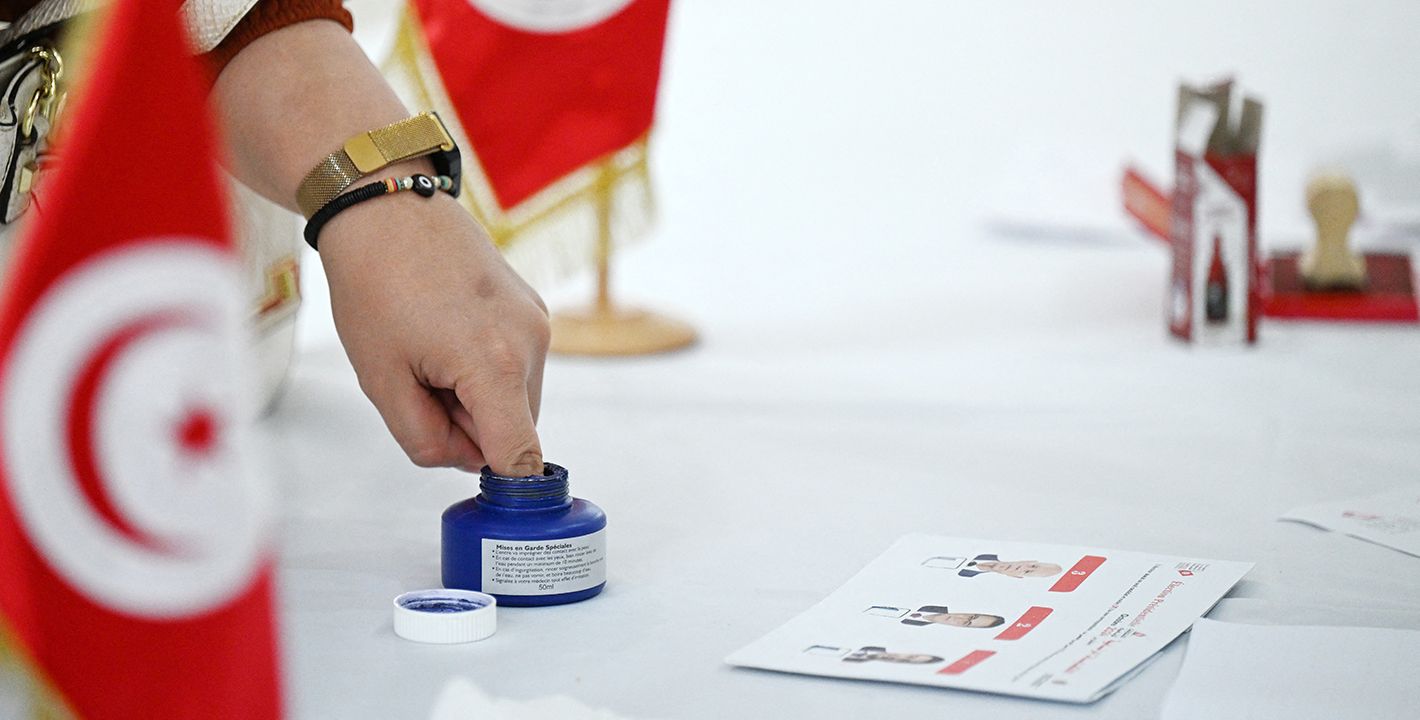
President Kais Saied has won a second term in office, but his country is facing a host of problems that necessitate urgent reforms, above all preventing the possibility of a financial meltdown.


Ishac Diwan, Hachemi Alaya, Hamza Meddeb
As India’s economy recovers from the coronavirus pandemic, Indian businesses need efficient financial structures to regain their ground. Key reforms to India’s Insolvency and Bankruptcy Code could fill these gaps.

Anirudh Burman

Access to cross-border data is an integral piece of the law enforcement puzzle. India is well placed to lead the discussions on international data agreements subject to undertaking necessary surveillance reforms.

Smriti Parsheera, Prateek Jha
After the coronavirus pandemic wanes, how will China’s reorientation of the Belt and Road Initiative to address global health concerns influence its relationships with South Asian countries?


Deep Pal, Rahul Bhatia
Early in the outbreak, government researchers forecast several high-risk scenarios that were downplayed or ignored in public messaging.
Gautam I. Menon