

Paper
This paper examines the evolution of India-China economic ties from 2005 to 2025. It explores the impact of global events, bilateral political ties, and domestic policies on distinct spheres of the economic relationship.
Santosh Pai
Source: Getty
North America is a hot spot for geothermal innovation—but the potential spans the globe.
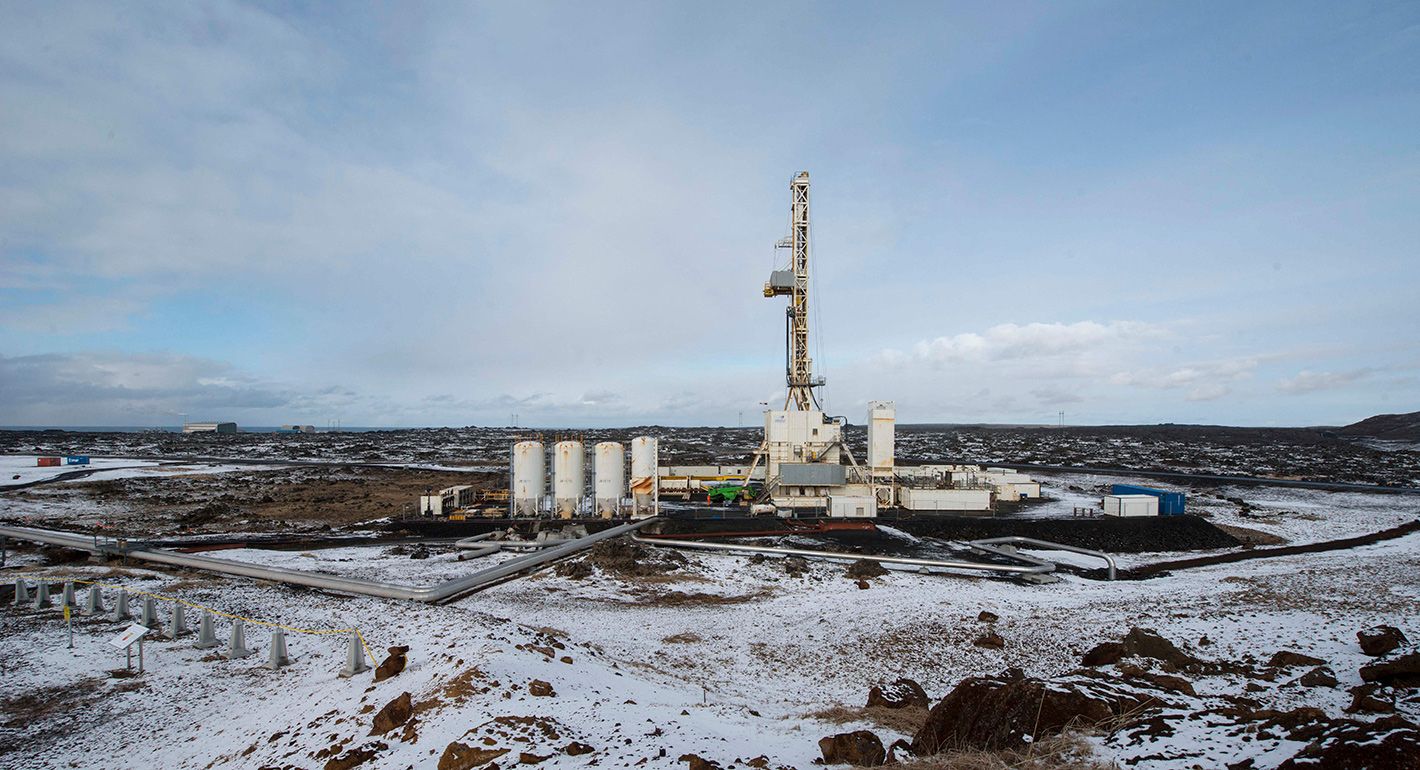
Geothermal energy’s moment is here. Once constrained by niche geologic resources, the ability to produce ubiquitous, clean power and heat from the earth’s crust is now on the horizon. Thanks to drilling advancements from the American fracking revolution, the global geothermal power potential has gone from an inconsequential fraction of demand to second only to solar power in renewable energy potential.1 New techniques needed to deploy these systems are reaching first-of-a-kind commercial scale and cutting costs at notable rates. All the while, a new synergy is emerging with oil field servicing industries, offering a novel, sustainable energy solution for incumbents. The data is clear: new subsurface technologies to produce geothermal energy from abundant hot dry rock open this resource to new regions across the world.2
This paper provides an overview of these emerging technologies and then addresses which thirty countries are optimally positioned to help scale next-generation geothermal systems. The paper develops a taxonomy to understand which countries are home to ideal conditions for adopting next-generation geothermal technologies. It evaluates resource potential based on data from Project InnerSpace’s GeoMap™ and catalogs industrial, policy, regulatory, and market indicators. Alongside many of the usual suspects for legacy geothermal developments and high potential, such as Germany, Indonesia, Kenya, Mexico, and Türkiye, this paper finds that a range of nations across geographies are well positioned to be second movers of this technology, including Australia, Romania, Colombia, and Vietnam. The findings also indicate countries with long-term potential, such as Malaysia, Saudi Arabia, Tanzania, and Argentina. In-depth regional analyses then explore these opportunities. Lastly, the paper recommends domestic policies and multilateral actions that could stimulate these developments, including specific recommendations for the United States.
Geothermal power—extracting steam or hot water from hydrothermal reservoirs to propel a turbine—has been around for over a century. By the end of 2022, about 16 gigawatts of geothermal power had been installed in at least thirty countries and six continents (see figure 1), comprising a small fraction of the global electricity mix at about 0.34 percent.3 First deployed in Italy in 1904, the technology quickly spread across the United States, New Zealand, and Japan during the postwar era.4 During the energy crises of the 1970s, Iceland developed its geothermal resources to protect itself from fuel shocks and associated macroeconomic fall out.5 By the early 1980s, geothermal began to spread across the Global South to countries such as Mexico, the Philippines, Türkiye, and, most notably, Kenya—today’s geothermal success story.6 Kenya’s geothermal rise is a pertinent case study in this paper, as much of the know-how was successfully transferred from Iceland.7 With support from the United Nations in the late 1970s, Icelandic institutions offered increasing amounts of training, field support, and mapping to Kenya’s nascent industry over several decades.8
Since the 1990s, cheap natural gas and renewables such as wind and solar have outcompeted geothermal in new capacity additions.9 This trend has coincided with the geothermal industry’s inability to produce economies of scale, relegating much of the turbine equipment to a customized industry devoid of analogous technology learning rates observed in wind and solar.10 In many saturated markets like New Zealand and the United States, hydrothermal growth has remained stagnant for decades. There are, however, exceptions. The Central American countries of Costa Rica, El Salvador, and Honduras have made comparatively strong capacity gains since 2000.11 In the past decade, global geothermal growth in sheer volume of installed capacity has been driven by three important actors: Indonesia, Kenya, and Türkiye (see figure 2). These countries have used various policy measures to help domestic industries accelerate, as described later in this paper.
Researchers and innovators have long sought the potential of novel geothermal drilling and completion techniques that do not require harder-to-find hydrothermal resources. In the 1970s, American researchers at Los Alamos National Laboratory began to experiment with so-called hot dry rock, a resource that, as the name implies, is privy to heat but lacks the fluid required in a geothermal reservoir.12 These early experiments sought to fracture the rock to create an artificial reservoir, a process known today as enhanced geothermal systems (EGS) (see figure 3). By the 1980s, researchers in France and Japan also tried to create an artificial reservoir through fracturing the hot dry rock but to no avail. These early EGS projects failed due to the technical complexity of completing these wells. In the 2000s, others in South Korea and Switzerland tried to stimulate wells with fracturing but triggered seismic activity, essentially stopping the research altogether.13 But by the 2010s, the U.S. government reignited its support for this technology.14 Thanks in part to U.S. government research grants and allocation of public land as drilling test beds, the expertise from the American shale revolution helped solve some of EGS’s technical challenges in drilling and maintaining the flow of the reservoir.15 By this time, another solution to the dry rock challenge was emerging: using a closed loop to circulate heat from the earth without the need for external water. Known today as advanced geothermal systems (AGS), or closed-loop systems, these designs started to take off in the late 2010s and quickly entered the scene.16
While EGS and closed-loop geothermal are the primary approaches in the next-generation geothermal umbrella, other strategies are being pursued. Some have chosen to tackle sedimentary basins, which are more permeable than those that are typically fractured with EGS and could yield an underappreciated resource that could be tapped more like the incumbent hydrothermal system.17 Others are looking further into the future—and deeper underground. Various researchers and startups are experimenting with supercritical geothermal or superhot rock (SHR) projects by finding and extracting heat above 375 degrees Celsius (707 degrees Fahrenheit).18 These resources turn water into a supercritical state where it could be used to produce as much as ten times the power from a single well compared to conventional geothermal.19 But SHR projects remain at the early stages of research and development. While some supercritical resources are near the surface due to extraordinary geological formations, most of the resources and energy at these temperatures are significantly deeper and thus cannot be accessed with incumbent oil and gas drilling technology, instead requiring advanced drilling that can penetrate deeper than the vast majority of existing wells.20 Other technological challenges arise with SHR, such as the materials required to enclose the well and withstand such high temperatures, as well as completion and stimulation techniques to keep the reservoir flowing.21
EGS and closed-loop systems are at approximately the same stage of commercialization, with first-of-a-kind facilities slated to come online by 2026.22 That said, EGS has garnered more policy support in the United States and remains at the center of ample literature evaluating its potential cost reductions.23 Although next-generation geothermal may not reach cost parity with onshore wind or solar in the 2030s on a purely levelized cost basis, it is essential to emphasize that EGS and closed-loop geothermal provide system-wide benefits that levelized cost metrics do not depict: they are flexible power sources that are dispatchable 24/7.24 Today, EGS price estimates are between about $100 and $240 per megawatt hour—near the cost of new nuclear power.25 However, recent analysis points to EGS reaching $80 per megawatt hour by the end of the decade and $50 by 2035.26 This price drop, if actualized, would bring EGS to passing parity with thermal power generation and somewhere between onshore and offshore wind (see figure 4). Some studies show significant promise. The cost reduction of doubling deployment or productivity, known as learning rates, observed in early EGS drilling have reached 35 percent, an astounding number when compared to lithium-ion batteries near 30 percent and solar at 24 percent.27
While the cost potential of closed-loop geothermal is less clear, it could yield unforeseen opportunities. At present, it is likely more expensive than its next-generation competitor. By some estimates, the cost of closed-loop systems is $105 per megawatt hour in high heat gradients and as much as $321 per megawatt hour in lower quality resources. This is primarily due to the high costs of drilling of the specific closed-loop systems observed in the analysis (other closed-loop designs may yield different results). Once professionalized, closed-loop geothermal could reduce costs, to between $64 to $160 per megawatt hour.28 Nonetheless, closed-loop systems still may have a promising pathway to market, particularly in district heating (centralized heat sources that are distributed throughout neighborhoods), which do not require turbines, cutting the cost of the project by about 30–50 percent.29 This is because of the efficiency in power generation, estimated at about 20 percent, versus heating, which can be as high as 90 percent.30
Beyond cost, closed-loop geothermal could yield other positive externalities for geothermal build-out, such as widespread scalability and reduced impact on water resources. As this paper will explore, some markets—particularly in Europe—may be averse to EGS’s fracturing process (which is also water intensive), providing a regulatory opening for closed-loop systems.31 Similarly, EGS resources are not inherently ubiquitous and, although vastly larger than those of the existing hydrothermal systems, may come with their own geologic requirements, such as rock that has low permeability.32 If geothermal is to become a truly global energy source, closed-loop systems may offer a complimentary value proposition. Also important is that closed-loop geothermal is a unique and sole form of clean firm power generation that requires negligible quantities of water to generate electricity (see figure 5). It should be noted that although EGS does indeed demand water, industry results indicate a reduction of water use that is well below other thermal generation like nuclear and especially natural gas. Over time, as certain regions face increasing drought and stress on water-intensive industries, closed-loop systems could yield a water premium that helps define its long-term value in a sustainable energy mix.
Because of these breakthrough advancements, energy forecasters now expect step changes in geothermal power’s potential. Analysis from the U.S. Department of Energy (DOE) asserts that the next-generation geothermal potential from hot dry rock in the United States alone could be 5,500 gigawatts, nearly 140 times its previous estimation from incumbent hydrothermal systems of a mere 40 gigawatts. The DOE’s forecast expects U.S. next-generation geothermal power to reach at least 90 gigawatts of installed capacity by 2050 under reasonable economic cost assumptions and over 300 gigawatts based on other factors, such as land availability and the development of competing technologies.33 Subsequent analysis from the International Energy Agency (IEA) utilizing data from Project InnerSpace’s GeoMap™ finds that U.S. capacity could reach 150 gigawatts by 2050. Globally, the IEA expects that over 800 gigawatts of next-generation geothermal could be installed by mid-century, comprising about 15 percent of total power generation, an astounding level of development that the industry has not yet experienced.34
The geothermal industry today remains a niche sector compared to multi-gigawatt giants like natural gas, solar, and wind. The modeling completed by the DOE and IEA paints an enormous scale of supply chain build-out. For example, annual geothermal power installations between 2000 and 2029 hovers near 300 megawatts but jumps from anywhere between 100 to 200 times that between 2030 and 2050 (see figure 6). This potential growth is unprecedented for the geothermal industry and an important area to consider if demand is to escalate as anticipated by forecasters. A convenient narrative has emerged amid the present geothermal momentum: the supply chain is entirely transferable from the oil and gas sector and devoid of geopolitical risks endemic to clean tech (specifically, China’s accelerating dominance across renewables, batteries, nuclear power, and the minerals these technologies require).35 Based on discussions with industry and existing literature, this analysis ignores some potential complexities that could emerge and will nonetheless require care and attention to scale at the necessary pace.
Modern-day geothermal wells and power plants require three essential technology verticals for development: drill rigs to construct the wellbore, tubulars and casings to seal the well, and organic Rankine cycle (ORC) turboexpanders (a specialized class of turbine) to convert the earth’s heat into electrons. If geothermal power is to scale, these supply chains could face varying degrees of strain. Some drilling rigs required for EGS and closed-loop systems can be applied from oil and gas, but universal transferability is not possible, as these operations could require accessing depths and environments typical in unconventional production.36 As a result, specialized so-called heavy drill rigs with heavy hook loads may be needed.37 Conversely, many of the tubulars and casings required to seal a geothermal well can easily be borrowed from oil and gas production.38 Close proximity to these components could be beneficial to project development. Lastly, the industry for ORC turbines is ripe for disruption, with just five manufacturers in operation whose factories are split between Italy, Israel, China, and increasingly in Türkiye, as well.39 If demand increases as the IEA forecasts, it could pose opportunities for gas turbine manufacturers to enter this space or for novel innovations, such as supercritical carbon dioxide turbines that boast higher efficiency and modularity, to seize a burgeoning market.40
Advancements in geothermal technologies are concentrated in North America, but the potential for global deployment is growing (see figure 7). North America—particularly the Western part of the United States—is the optimal environment for next-generation geothermal commercialization because of strong hot dry rock resources, incumbent geothermal and drilling industries, deep expertise in complex drilling techniques from shale production, proximity to equipment (such as rigs and casings), and a dynamic startup culture and venture capital ecosystem. Meteoric electricity demand growth from data centers and Big Tech’s interest in next-generation geothermal only furthers this argument.41 The world’s first commercial scale EGS facility is being finalized in Utah, closed-loop systems are under development in California and New Mexico, and other early-stage projects are beginning in the United States and Canada.42 The U.S. Air Force has contracted nearly all regional next-generation geothermal firms to develop their technologies on American military installations across Texas and California.43 Some early developments are also underway for SHR projects in Oregon and Nevada.44
This paper envisions a scenario where next-generation geothermal becomes a bankable low-carbon energy source in North America and, due to country-level policy regimes, industrial bases, and hot dry rock resources, can be exported as a global opportunity. Some North American firms are already beginning to develop projects abroad: the first commercial scale closed-loop facility will be online next year in Germany, and other early next-generation geothermal projects are at feasibility study stages in Japan, Kenya, the Philippines, and Romania.45 The following outlines how well countries outside of North America are positioned to scale these systems once they commercialize. To illustrate which countries are prime opportunities, a rating system uses the following key indicators (see figure 8):
This high-level framework omits areas that require further investigation. First, the resources identified are based on the best existing data, but some countries may differ in the granularity of resource identification while others may simply not have been sufficiently surveyed. As geothermal exploration continues, new regional discoveries may emerge. Secondly, while this paper creates a framework to evaluate the accessibility and proximity of resources to key industrial hubs, it does not include more granular, community-level dynamics that are essential to equitably developing infrastructure prospects, especially regarding Indigenous communities and water rights. Third, the paper ascribes two demand-pull indicators—data centers and district heating—because those are presently being observed in early next-generation geothermal development. But it does not include medium enthalpy heat applications, such as food processing, textiles, and paper production, where next-generation geothermal could supply residual heat from clean power production. Lastly and similarly, the analysis does not indicate where countries are currently using geothermal for heat—not power—which could be a consideration to note in future research.
There is no perfect market, but there are clear leaders. To help visualize the results of this analysis, three broad categories emerge (see table 1). Power Playersare countries that are either legacy producers of geothermal power or have begun to install geothermal capacity, including Chile, Indonesia, Kenya, Mexico, the Philippines, and Türkiye. These are likely to be optimal markets given the confluence of incumbent industries, subsurface data, and existing policy regimes. Second Movers are countries that do not have historical geothermal capacity additions (although some may be preparing to install their first power plants) but possess policy and market indicators that would position them as prime opportunities down the line. Lastly, Heat on the Horizon refers to countries with strong resources but no relevant policy regime, positioning them as long-term opportunities where effective support mechanisms and regulatory structures could help incentivize developments.
| Table 1 | ||
Power Players | Second Movers | Heat on the Horizon |
Germany, Türkiye, Italy, Japan, Indonesia, Philippines, Mexico, Chile, Kenya, Taiwan | Costa Rica, El Salvador, France, Spain, Romania, Ethiopia, Vietnam, Australia, Hungary, Colombia | India, Tanzania, Malaysia, Saudi Arabia, United Arab Emirates, Argentina, Brazil, Morocco, Thailand, Egypt |
This paper reviews the top thirty countries based on domestic resource potential, excluding those with high political risk and unfavorable investment climates. For instance, countries such as China, Iran, and Venezuela, despite having strong resources, will not engage in joint ventures with U.S. or Canadian firms anytime soon. Others, such as Algeria, Haiti, Sudan, and Yemen, face significant domestic political risks. Additionally, nations such as Jordan and Papua New Guinea lack the long-term demand needed for technology adoption. The United States and Canada are excluded because they are already hotspots of next-generation geothermal incubation, while Iceland and New Zealand are unlikely to need next-generation technologies given their abundant hydrothermal potential.
Across Latin America, Mexico stands out as the most important potential player with near-term opportunities in the region, Chile and Colombia for medium-term considerations, and Argentina and Brazil for long-term potential. Other countries not analyzed should also be considered given their resources, especially the Dominican Republic and Panama. Fuel-poor island nations could also be well positioned to adopt this energy source, albeit with limited long-term growth potential. Bolivia, Ecuador, and Venezuela boast top caliber resources but were omitted from this paper given their varying degrees of political risk. While Latin America does not currently produce significant quantities of geothermal power (barring power plants in Mexico and some Central and South American countries), this unexploited resource could prove a boon for regional energy security, decarbonization, and national energy majors as they build out transition strategies.
Mexico is ripe for a geothermal renaissance. The confluence of exceptional hot dry rock resources with an existing incumbent (and expanding) geothermal industry and regulatory regime, as well as rising load growth from industry and data demand, paint a high opportunity scenario.46 Further, about 70 percent of Mexico’s natural gas is imported, accounting for about 60 percent of its power mix.47 This dynamic creates a strong political argument for reinvesting in geothermal from an energy security lens. Although Mexico has not built any new geothermal power in the past decade, it is home to a legacy industry with about 1,000 megawatts of installed capacity.48 In recent years, the nation’s power market has become increasingly statist, which would imply that state-owned Comisión Federal de Electricidad (CFE) would be an essential player in a geothermal build-out (although there are no indications of the potential geothermal involvement from the country’s bloated state-owned oil major, PeMex).49
Most strikingly, Mexico’s resources are located in ideal regions of economic concentration. Areas primed for next-generation geothermal developments based on resource potential, access to existing transmission, and demand-side developments underway include Monterrey in the Northeast, Tijuana in the Northwest, and a collection of hubs across central Mexico: Querétaro, San Luis Potosí, Guanajuato, Guadalajara, and Mexico City.50 In 2025, Mexican President Claudia Sheinbaum unveiled new energy laws that include reforms to help streamline geothermal development; future policies from Mexico City are key signposts to consider.51
Costa Rica and El Salvador rate highly on their resource potential, but they are small nations that are still exploiting their well-endowed hydrothermal resources.52Costa Rica boasts a growing incumbent geothermal industry, clear domestic regulations, and some data center growth. (The nation is quietly emerging as a manufacturing hub for semiconductors, another power-hungry tech sector.)53 Although domestic resources do not directly overlap with the primary industrial hub of San José, transmission lines are clearly sufficient to deliver new capacity, especially in the northwest part of the country, which is devoid of national parks.54
El Salvador has experienced similar growth in geothermal capacity, and the country offers some subsidy support through the Renewable Energy Incentives Law.55 Resources are notably strong surrounding San Salvador and especially San Miguel.56 The country’s historically unstable security and investment climate is now improving, an important long-term variable.57 Honduras and Panama were omitted from this analysis, but they both boast strong resources and should be considered in future research.
South America is more complex, but Chile and Colombia stand out as logical opportunities. Colombia’s resources are strongest surrounding urban areas such as Cali, Pereira, Ibagué, and Bogotá (although the potential appears weaker near the port hubs of Barranquilla and Cartagena).58 Colombia has installed negligible geothermal power and offers no subsidies, but it does have a geothermal regulatory regime through the Ministry of Mines and Energy and is also an emerging tech hub.59 Colombia could find opportunity for Ecopetrol, its state-owned energy major, in pursuit of its diversification strategy: the firm recently took preliminary measures to develop its first geothermal project.60
Chile recently installed its first geothermal power plants and could prove an interesting location to explore given its top-tier resources and long-standing climate goals that will require retiring its remaining coal fleet.61 Chile’s hot dry rock resources are conveniently located across the nation’s most important economic clusters, including Santiago and Antofagasta (as well as nearby northern industrial hubs).62 Although Chile lacks geothermal subsidies, it has an accessible and clearly defined permitting regime.63 All the while, its energy demand growth and proximity to Argentina’s oil and gas infrastructure position it as a potential hub for new geothermal development.
Argentina and Brazil both have heat potential, but long-term development remains a question. Notable geothermal resources surround some of Brazil’s key economic areas with transmission access, including Rio de Janeiro, Recife, Brasília, Curitiba, and, to a lesser extent, São Paulo.64 However, geothermal development will likely be constrained by Brazil’s lack of existing geothermal industry or policy regime. It is also one of the most important developers of solar and wind and has sizable existing clean firm capacity from hydro.65 Further, its hydrocarbon production is almost entirely offshore, implying lower potential labor and equipment transferability.66 That said, Brazil’s state-owned oil giant has begun exploring deep geothermal drilling, an important area to watch.67
Argentina faces the opposite problems. Unlike Brazil, its present economic stature, although potentially improving, may preclude novel infrastructure investment in the near or medium term.68 Although the country also has a nonexistent geothermal regime, it is home to a unique shale boom that would imply a higher level of transferability than other onshore oil and gas production. Further, the Vaca Muerta region, where Argentine fracking takes place, is located near the nation’s optimal geothermal resources. They are, however, on the opposite side of the country’s primary economic and industrial clusters, with some transmission access across the nation.69 In sum, Argentina’s potential, while unique and notable, remains a long-term prospect.
Europe is home to clear opportunities across France, Germany, Italy, Hungary, Romania, and Spain, with Germany standing out as a priority. Europe has notable subsurface resources and above surface industry: three of the five specialized geothermal turbine companies are domiciled and operating in Italy.70 But it is missing a sizable domestic industrial base from both geothermal developers and oil and gas producers. Similarly, because of a lack of hydrocarbon activity, the continent is home to negligible drill rigs, and there would be less accessibility to casings than in locations with ongoing energy production. Some European Union (EU) member states in this paper, such as France, Germany, and Spain, have imposed various restrictions on hydraulic fracturing that could complicate the potential rollout of enhanced geothermal and isolate certain markets to closed-loop systems, barring regulatory changes.71
All said, the long-term opportunity for European energy security and decarbonization is enormous. Europe is home to 19,000 district heating units that are almost entirely thermal fired—geothermal systems are well positioned to decarbonize them.72 While individual member states have enacted geothermal-specific policies, both the European Parliament and the European Council have recently put forth agenda setting items that could prove a signpost to watch for the block’s push on the technology writ large.73
Germany’s combination of strong resources, market environment, and demand-pull indicators—alongside recent geothermal policy and project developments—position it as a prime next-generation geothermal market in Europe.74 Germany currently operates forty-two deep geothermal power plants (mostly for heat), with sixteen facilities under construction and an astounding 155 plants in the planning phase; this is a sizeable example of industrial momentum.75 Alongside federal laws that promote 10 terawatt hours of geothermal energy by 2030, Berlin has initiated support measures—both a feed-in tariff and a loan scheme to de-risk the drilling operations—and legislation to expedite the permitting process.76
Germany’s hot dry rock resources are well situated near major cities and industrial regions, such as Essen, Frankfurt, Munich, and Stuttgart.77 On the demand side, both Germany’s data center build-out and thermal-fired district heating units are the largest in Europe—roughly double those of Poland, the runner up. (Germany’s heating units primarily rely on natural gas, coal, and biomass.)78 Power market trends would also bode well for geothermal power: the nation plans to retire 30 gigawatts of coal capacity, having already retired its nuclear fleet, while experiencing power price volatility from the so-called dunkelflaute (or “dark lull”) when wind and solar resources are not activated.79 Already, German researchers are investigating deep geothermal projects in coal-heavy regions, likely in anticipation of these dynamics.80
France, Italy, and Spain all stand out as potential areas for consideration—albeit with their own challenges. France is home to Europe’s historical EGS research and has notable hot dry rock resources in the central-eastern part of the state between Paris, Lyon, and Limoges.81 Alongside France’s feed-in tariff and slightly convoluted risk mitigation scheme, the nation’s long-term energy framework specifically calls for the development of deep geothermal resources—albeit entirely for heat.82
Conversely, Italy could prove a market where next-generation geothermal has opportunity in the power sector. Alongside over 700 megawatts of installed geothermal capacity, new power (and combined heat/power) installations are forthcoming, with billions of euros being pledged by utilities and developers.83 Italy’s resources are located conveniently near key cities, such as Florence, Genoa, Naples, and Rome, but they are not directly accessible to the industrial clusters in the North. Italy has a specific geothermal permitting regime and high tariff rates (especially for binary cycle) but lacks de-risking mechanisms for drilling or project financing.84
Although Spain is building its first geothermal power in the Canary Islands, high variable renewables and nuclear phase-out could create market precedent on the mainland.85 Spain has considerable resources, especially near Valencia, A Coruña, Zaragoza, and south of Madrid.86 It is also home to notable data demand and clean power subsidies, including a fund to de-risk geothermal drilling.87 Not listed in this paper are countries with notable resources, such as Greece, which is home to a less favorable investment climate, and the states of Belgium, the Netherlands, and Luxembourg with notable nuclear power. These other member states also pose notable potential that might be explored further.
Eastern Europe is home to important resources that Hungary and Romania are notably positioned to exploit. Hungary’s resources are essentially ubiquitous across the country and align nicely near demand hubs such as Budapest, Gyor, Kecskemét, and Szeged.88 The Hungarian government released a national strategy in April 2024 to double its geothermal use by 2030 and announced a loan scheme from the Ministry of Energy to de-risk projects, with particular goals for district heating.89 However, market indicators paint a potentially less enticing environment for geothermal power development, in which data center demand growth is bearish and nearly half of the country’s electricity is already supplied by nuclear electrons, with solar comprising an additional 20 percent.90
Romania also has considerable resources, but they are located in the western part of the country, away from key cities and economic zones, and are compounded with a slightly less enticing environment that includes fewer district heating units, potential contracts for difference as subsidies, and a permitting regime that lacks clarity (as domestic energy companies have called for a geothermal-specific regulatory regime for heat that sits more clearly in either the mining or hydrocarbon sector).91 Although Romania is building its first geothermal heating project, nearly half of the country’s electricity already comes from clean firm resources, such as hydro and nuclear, with notable variable renewable progress.92 Not listed in this paper are Baltic states that boast significant resources but face weaker investment climates, such as Serbia.
Africa and the Middle East hold enormous next-generation geothermal resources, but current political economic realities confine the possibilities to several key players. Kenya, Tanzania, and Ethiopia are well positioned on the African continent, while Türkiye is the standout actor in the Middle East and Saudi Arabia has notable long-term potential. It should be noted that North African resources appear exceptionally strong, especially in Algeria, but Egypt and Morocco are the most viable regional countries where these opportunities could emerge because of political and economic risk factors (although the former presents concerns from an investment perspective). Nigeria has exceptional dry rock resources but is omitted because electricity infrastructure investment is hindered by the country’s defunct power grid and market.93 Multiple African countries, such as Namibia and Senegal, also have some potential and merit further examination.
Kenya is perhaps the great, modern geothermal success story, and its prominence could be furthered by next-generation technologies. Geothermal now provides nearly 50 percent of the nation’s electricity and is increasingly used across industries.94 The nation’s hot dry rock resources are accessible and consistent across economic zones, including Nairobi, Nakuru, Kisumu, and Eldoret.95 Further, the nation’s incumbent geothermal developer, KenGen, is supported by a strong policy ecosystem that includes a competitive auction system, risk mitigation measures for drilling, and a permitting regime that includes two-year permits and thirty-year licenses for heat extraction.96 The country is the epicenter of data center growth in Africa and home to the continent’s first hyperscalers.97 Kenya is also the first Global South country to develop a direct air capture facility, which will also be geothermal powered (another potential long-term demand indicator).98 Although Kenya has at least another 200 megawatts of geothermal power in the pipeline, important questions remain about when a nation with such plentiful hydrothermal resources will need next-generation geothermal.99 Kenya has faced ongoing drought, and closed-loop systems could find a niche in certain parts of the country—a closed-loop system has already received approval to operate in a brownfield geothermal site.100
Kenya serves as an African hub for geothermal development by training the workforce and exporting the technology to its neighbors, including Tanzania and Ethiopia, among others.101 These countries have notable potential, as observed in this analysis. Tanzania’s resources appear potentially under-surveyed, that could be in part because of protected lands. Nonetheless, the data still indicate high heat gradients, especially surrounding cities such as Mbeya, Arusha, and Moshi (and, to a lesser extent, the capital of Dar es Salaam and Morogoro).102 Tanzania is developing its own domestic geothermal industry, with a goal of generating 200 megawatts in the coming years.103 Although the national feed-in tariff scheme has ended, geothermal projects are eligible for international drilling risk mitigation funds and are privy to a clear—albeit not geothermal specific—permitting regime.104
Ethiopia’s comparably positive geothermal resources and unique electrification goals, which require expanding its power generation, create tailwinds for its potential.105 With access to de-risking funding and a moderately clear permitting structure, the nation has long-term potential.106 But Ethiopia’s regional security risks could complicate this outlook.107
Like Kenya, Türkiye is a regional geothermal champion. The nation has installed about 1.7 gigawatts of hydrothermal capacity, and it has strong targets for adding new geothermal power generation. However, geothermal still comprises only a small amount of the national power mix.108 Türkiye is also home to an exceptionally strong policy regime, including a fifteen-year feed-in tariff authorized under the Renewable Energy Law and a risk sharing mechanism for drilling put forth by the Development and Investment Bank of Türkiye.109 The nation’s Geothermal Resources and Natural Mineral Waters Law is specifically tailored to geothermal licenses.110
Alongside the nation’s emerging position as a clean tech manufacturing hub for Europe, Türkiye has successfully brought onshore the production of the geothermal supply chain, including turbines, generators, and steam injectors, as a result of its subsidy that prioritizes domestic products.111 This could provide a template for other geothermal-rich nations keen to attract value-added industry, such as Indonesia, Kenya, and Mexico. Like in the case of Mexico, Türkiye’s hot dry rock resources are well placed around key cities and industrial zones, such as Istanbul, Izmir, Kayseri, and Gaziantep.112 Alongside these compelling indicators, a closed-loop geothermal system in Türkiye is already in the preliminary investigation phase, a potential sign of this low-risk operating environment.113
Long-term questions remain about North African countries, such as Egypt and Morocco, while Gulf states, such as Saudi Arabia, boast optimal indicators. Morocco is a key manufacturing hub and is significantly dependent on fuel imports for power.114 In addition to its consistent capacity additions of renewables, it also boasts newly appreciated hot dry rock geothermal resources near Meknes, Fes, and Oujda—albeit with no industrial momentum.115Egypt has an even greater single source dependence on hydrocarbons for electricity and boasts promising geothermal resources between Cairo and Hurghada, but it remains an unlikely prospect given the current investment climate.116
Across the Red Sea, however, Saudi Arabia has already begun investigating its well-endowed geothermal resources.117 Primarily concentrated in the western parts of the country, Saudi Arabia’s hot dry rock strongly overlays with key cities, such as Jeddah, Medina, and Yanbu, an emerging industrial hub; additional resources are also located near Riyadh.118 Although the kingdom currently lacks a subsidy or regulatory regime, its world-renowned oil production and industry, rising data demand, and sovereign wealth funds create a long-term prospect for diversification.119 As illustrated in table 1, the United Arab Emirates’ resources are less notable, but the country has analogous indicators of prestigious hydrocarbon development, and data demand. Like Saudi Arabia, the nation has a well capitalized sovereign wealth fund.120
Over the past decade, Asia has emerged as the foremost region for geothermal power development, with over 40 percent of global installed capacity and a robust pipeline of planned investments.121 Indonesia and the Philippines are the clear front-runners for potential next-generation geothermal adoption, each with established geothermal industries, market subsidies, risk mitigation platforms, and streamlined regulatory frameworks. Japan and Vietnam have strong resources, clear market incentives, permitting structures for private developers, and notable demand signals from the technology sector, but there are sociopolitical and policy trade-offs. Countries like India, Australia, Malaysia, and Thailand are beginning to explore geothermal potential in varying degrees.122 Together, these countries comprise a significant portion of the regional next-generation geothermal potential, particularly as populations grow, industrial policies accelerate, and load growth continues.
In the entirety of this analysis, Indonesia is a standout priority for next-generation geothermal production. Besides the United States, Indonesia is the global leader for geothermal power, having installed 2 gigawatts of capacity to its grid over the past two decades.123 In its 2025–2034 investment plan, Indonesia’s state-owned utility announced a new deployment target of 5.1 gigawatts, of which 4.5 gigawatts will be developed by private investors, over the next ten years.124 Indonesia’s geothermal boom is the result of domestic market support and policy regulation, bolstered by funding from multilateral development banks.125 A 2022 presidential decree restructured the feed-in tariff system introduced by the Ministry of Energy and Mineral Resources (MEMR) in 2017, which is expected to slightly increase the subsidies received by geothermal producers.126 Additionally, MEMR manages several funds to mitigate drilling risks, with support from the Ministry of Finance and separate funding from the World Bank.127
However, well-crafted policies have been historically constrained by Indonesia’s geography—nearly all conventional geothermal sites are located on the islands of Java and Sumatra.128 Despite past geographic hurdles, Indonesia’s geothermal stars remain aligned: more ubiquitous resource potential compounded with power demand from data centers and onshoring paint a scenario where Indonesia’s subsurface expertise and industrial momentum could be an asset to these technologies.
Like Indonesia, the Philippines is a world leader in geothermal, with around 2 gigawatts of installed capacity in 2024.129 However, unlike its neighbor in the Ring of Fire, annual capacity additions in the Philippines have stalled since the early 2010s.130 Growth has been limited predominantly due to the financial burden of geologic exploration, potentially made worse by a highly corrosive volcanic subsurface.131 To reduce financial pressures and geologic uncertainty, the Philippines launched a series of green energy auctions (GEA) with associated feed-in tariffs and other favorable rate structures to stimulate interest in new geothermal investments. However, the most recent GEA-3 in 2025 saw secure bids for only 31 megawatts, well below the 100 megawatt goal, while most other eligible technologies were oversubscribed.132
In attempts to reinvigorate the industry, the Philippine Department of Energy announced new financial incentives, including a $250 million facility in partnership with the Asian Development Bank, which would provide up to half the initial costs for exploration and drilling.133 The Department of Energy is also conducting additional resource assessments for geothermal sites to assess geologic attributes for private developers.134 Despite recent difficulties, the Philippines remains invested in geothermal development and has even taken the first steps to develop next-generation systems.135
Japan and Taiwan both have strong regimes and resources but different limitations. Japan’s geothermal growth has been stagnant over the past decade, and it may face challenges going forward. Japan had 460 megawatts of installed geothermal capacity in 2024, down from 533 megawatts in 2000, and its growth is challenged by social license issues, such as onsens (culturally coveted natural hot springs that may be affected by geothermal development).136 However, the Japanese government has maintained support for geothermal through feed-in tariffs since 2012, with the latest adjustment from the Ministry for Economy, Trade, and Industry setting rates between $0.11 and $0.37 per kilowatt hour.137 Japan’s strategy for mitigating risk is uniquely channeled through the state-owned oil and gas company, JOGMEC, which offers financing to cover 50 percent of exploration costs, project development finance if drilling is successful, and debt guarantees for up to 80 percent of loans provided by private financial institutions.138 The regulatory regime is less comprehensive, favoring permits for production approved at the local level, with no license required for exploration.139
The confluence of immense fuel import vulnerability and strong indicators could position Taiwan as a potential market for consideration.140 Like Japan, Taiwan has a feed-in tariff for geothermal and a potentially favorable permitting regime, but the country has installed negligible capacity.141 However, these winds are changing, as tech giants work with the Taiwanese government to double production.142 It should be noted that Taiwan’s long-term political risks, namely the looming concerns of confrontation with Beijing, could preclude startups with new technology to choose this market.
Although Australia has no installed geothermal capacity, it holds several promising indicators, and recent developments could position it as long-term player. Despite the nation’s lack of hydrothermal resources, its hot dry rock resources are well situated near key urban and industrial areas, such as the Northern Territory near Cairns and especially New South Wales outside Melbourne and near Canberra—all of which have existing transmission access.143 Australia produces natural gas domestically, implying some of level of existing workforce that could be transferred.144 Market dynamics create further potential headwinds: the nation has proactively been retiring its coal fleet while not expanding other firm power sources (though nuclear power remains banned).145
These factors could create long-term opportunities for clean firm power sources like geothermal, especially if Prime Minister Anthony Albanese’s climate agenda continues.146 Where Australia’s geothermal becomes complicated is on policy, as the nation holds a federalist system with various permitting regimes by states and no present incentives (though some drilling subsidies were used in the past for geothermal exploration).147 Recently, two feasibility studies for EGS were completed on sites in Southern Australia near Adelaide, confirming notable heat potential.148
While Vietnam has no operable geothermal power stations, developers have announced several large-scale projects, and the government is developing stronger incentives with streamlined regulations.149 Vietnam’s state-owned utility, EVN, does not offer feed-in tariffs, but 2024 legislation creates a power purchase agreement model for independent power producers to strike a long-term offtake agreement for a fixed cost.150 Demand drivers could help spur geothermal development, with 2024 legislation permitting full foreign ownership of data centers which are expected to result in large global operators entering the Vietnamese market.151
Although Malaysia, Thailand, and India have a combined geothermal power capacity of only 0.3 megawatts, next-generation geothermal systems could open new opportunities. Unlocking this potential will require dedicated effort from both the public and private sectors. Neither Malaysia nor Thailand offers market incentives for geothermal power or risk mitigation schemes for exploration, and permitting structures are vague—if they even exist. The heat potential, however, is promising. Among the countries analyzed in this paper, Malaysia has the third-highest potential for hot dry rock resources in this analysis, and Thailand’s highest heat gradients are located near the largest energy demand clusters of Bangkok and Pattaya.152 Both countries currently rely heavily on coal and natural gas for electricity generation and have announced significant data center expansion, underscoring the need for clean firm power in the coming decades.153
Unlike Malaysia and Thailand, India is developing a domestic geothermal strategy. The Ministry of New and Renewable Energy (MNRE) launched the Taskforce to Harness Geothermal Energy in India in August 2024 to review the Indian Geothermal Energy Development Framework and conduct private sector consultations on the global status of geothermal technologies.154 These findings will inform MNRE’s geothermal guidance and subsequent legislation. India’s state-owned oil and gas and coal companies are currently developing the nation’s first two pilot geothermal projects, a notable first step.155
Although next-generation systems are reaching commercial scale at astounding rates, they are unlikely to be globally deployable until later this decade. As a result, policy regimes might take a “rising tides lift all boats” approach by supporting the continual development of incumbent hydrothermal systems in the near term and seizing that momentum to include EGS and closed-loop geothermal systems once they become more widespread. Doing so will entail a strategy that prioritizes collaboration with the Power Playerscountries (such as Kenya and Mexico) and, as next-generation systems commercialize in the medium term, helps the Second Movers ready their policy regimes to attract and incubate next-generation geothermal systems.
An area not observed in this paper, but worth future research, is the creation of optimal business models for technology diffusion abroad. Next-generation geothermal deployment could borrow from overseas investment models for oil and gas or hydrothermal projects. These models broadly fall into three categories: build-own-operate, build-operate-transfer, and technology licensing.
The following section outlines domestic and multilateral policy recommendations, including several for the United States to consider when promoting its technology and drilling activity abroad.
The authors would like to thank Project InnerSpace for the use of GEOMap™ and Drew Nelson for his support in this partnership. Additionally, they would like to thank Caity Smith, Charles Gertler, Taylor Mattie, and Daniel Merino-Garcia for their peer review of this paper.
Geothermal Resource Scoring Methodology
To systematically evaluate national geothermal potential across multiple dimensions, we developed a composite scoring framework that combines both volumetric and spatial quality of geothermal resources. Our analysis is based on raster datasets from Project InnerSpace’s GeoMap™ representing geothermal power potential, overlaid with national boundary shapefiles.
The process unfolds in five steps:
Geothermal Activity Scoring Methodology
To assess the maturity and momentum of a country’s incumbent geothermal power industry, we developed a traffic-light classification framework based on historical installed capacity and growth trends using data from the International Renewable Energy Agency. This activity-based metric complements geologic resource assessments by evaluating the operational footprint and trajectory of geothermal development over time.
The scoring methodology follows three steps:
Onshore Oil and Gas Activity Scoring Methodology
To estimate the level of industrial activity in the onshore oil and gas sector, we relied on operational rig counts as a proxy for ongoing exploration and production. This method captures active field development and serves as a real-time indicator of sectoral intensity.
The methodology consists of two steps:
Geothermal Support Scoring Methodology
To evaluate the strength of government support for geothermal power, we reviewed national legal frameworks, policy instruments, and subsidy mechanisms targeting geothermal development.
Countries were classified into one of three categories based on observed public support:
Geothermal Permitting Structure Scoring Methodology
To assess the regulatory clarity and accessibility of geothermal project development, we examined the legal and administrative permitting frameworks applicable to geothermal energy in each country. This analysis used best available legal and administrative documents to gauge regulatory regimes.
Countries were categorized based on the specificity and adequacy of their permitting regimes:
Data Center Growth Scoring Methodology
To assess the scale and strategic relevance of data center development for geothermal and grid-interactive demand, we evaluated projected electricity demand growth from the digital infrastructure sector.
Countries were categorized based on observed or anticipated data center activity:
District Heating Applications Scoring Methodology
To evaluate the potential for geothermal direct-use in heating networks, we assessed the presence of existing thermal-based district heating systems that could integrate with or be converted to geothermal supply.
Countries were classified as follows:
Figures 9–12 map composite scores based on the seven variables listed in Table One and detailed in Annex One.
Methodology:
Carnegie India does not take institutional positions on public policy issues; the views represented herein are those of the author(s) and do not necessarily reflect the views of Carnegie, its staff, or its trustees.

This paper examines the evolution of India-China economic ties from 2005 to 2025. It explores the impact of global events, bilateral political ties, and domestic policies on distinct spheres of the economic relationship.

Santosh Pai

This paper explores the question of whether India specifically will be able to compete and lead in AI or whether it will remain relegated to a minor role in this global competition.

Anirudh Suri

The government has been working to effect a radical shift in Indian energy production and consumption patterns to reduce dependence on fossil fuels.

R. K. Misra

Electric vehicles offer advantages that are particularly suited to India’s economic and environmental conditions.
Ananth Padmanabhan, Shashank Reddy
Whatever the outcome in Paris, this round marks an important shift in India’s climate diplomacy.
C. Raja Mohan