

Article
U.S. foreign policy in a more difficult, intrusive world.
Jessica Tuchman Mathews
{
  "authors": [
    "Yan Xuetong",
    "Qi Haixia"
  ],
  "type": "legacyinthemedia",
  "centerAffiliationAll": "",
  "centers": [
    "Carnegie Endowment for International Peace",
    "Carnegie China"
  ],
  "collections": [
    "U.S.-China Relations",
    "China’s Foreign Relations"
  ],
  "englishNewsletterAll": "",
  "nonEnglishNewsletterAll": "",
  "primaryCenter": "Carnegie China",
  "programAffiliation": "",
  "programs": [],
  "projects": [],
  "regions": [],
  "topics": []
}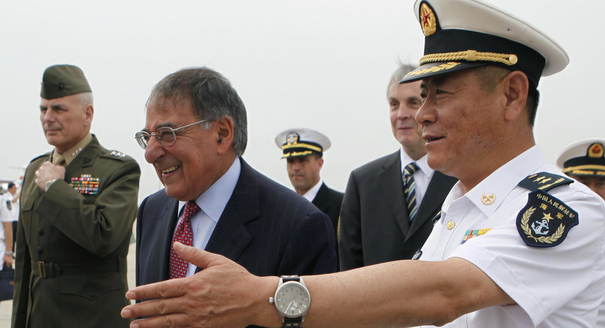
As long as the United States and China both see the need to maintain cordial and positive relations, descent into direct confrontation between the two remains unlikely.
Source: the Diplomat

How do the characteristics of Sino–U.S. relations affect trends in their bilateral ties? Where will strategic competition between China and the United States lead? The U.S. pivot towards the Asia-Pacific represents a strategic readjustment, and competition between China and the United States will consequently grow accordingly. This, however, does not meet the criteria for a Cold War-style scanerio.
Instead, the relationship between the United States and China can best be characterized as “superficial friends,” which is epitomized by a character–strategy duality. The concept of superficial friendship implies a state of bilateral relations as well as a strategy. The state to which superficial friendship refers is one where neither of the two parties regards the other as a strategic partner, but where both claim a strategic partnership. For example, China and the United States see one another as trade partners, yet in the face of a trade imbalance, the United States presses China to appreciate the Renminbi solely to enhance U.S. economic interests like employment, thus exacerbating China’s difficulties vis-a`-vis exports.
A superficial friendship strategy refers to two parties exaggerating the nature of their bilateral friendship and paying lip service to the improvement of relations in order to expand the expected value of future cooperation and to temporarily improve bilateral relations. As long as the United States and China bolster strategic trust they can prevent their bilateral relationship from slipping into a Cold War scenario. The escalating frequency of summit meetings between China and the United States is a classic example of this strategy. Since January 2009, when Obama took office, to the November 2011 APEC meeting in Hawaii, Hu Jintao and Obama met on a total nine occasions in 22 months—on average once every 10 weeks. That the leaders in both China and the United States meet so frequently without expecting any substantive outcome hence implies the use of a superficial friendship strategy.
As, at least for the meantime, China and the United States have no desire to abandon their strategy of superficial friendship, thus the conditions necessary for a Cold War are not present. For example, although Obama supports a new defense strategy aimed at containing China, he purposely avoided mentioning China at the time he announced this new policy at the Pentagon. Moreover, four days after the announcement, Obama sent Treasury Secretary Timothy Geithner to China to seek Beijing’s support on U.S. sanctions against Iran. Not long after that, however, the U.S. government publicly attributed the maritime disputes over the South China Sea to China’s policy of establishing Sansha City, and supported Japan on the disputes between China and Japan over the Diaoyu Islands. Then, in September, Hilary Clinton visited China and suggested that there are many areas for China and the U.S. to cooperate. As long as this superficial friendship strategy continues, Sino–U.S. relations will hence not teeter towards a Cold War.
That being said, as the comprehensive power of China and the United States continues towards parity, the number of conflicts of interest between the two states will continue to intensify, and that there will be an increasing trend wherein the two compete more often than they cooperate. Obama’s strategy of pivoting towards the Asia-Pacific Region is a product of the relative decline in U.S. power and of the increased pace of China’s rise. Furthermore, as its comprehensive national power decreases, United States will as a matter of necessity narrow its strategy, and apply its strategic resources to the globe’s most vital strategic areas. China’s rise has gradually made the Asia-Pacific a global power-center. By narrowing the scope of its strategy, the United States can hope to enhance its domination in the Western Pacific.
It follows that a Cold War between China and the United States will not ensue before they abandon their mutual strategy of superficial friendship. Even if both sides eventually follow this path it will not necessarily escalate into such a scanerio because, after a period of prolonged deadlock, it will remain possible that one party will proactively readopt a strategy of superficial friendship to improve relations.
Carnegie does not take institutional positions on public policy issues; the views represented herein are those of the author(s) and do not necessarily reflect the views of Carnegie, its staff, or its trustees.
U.S. foreign policy in a more difficult, intrusive world.
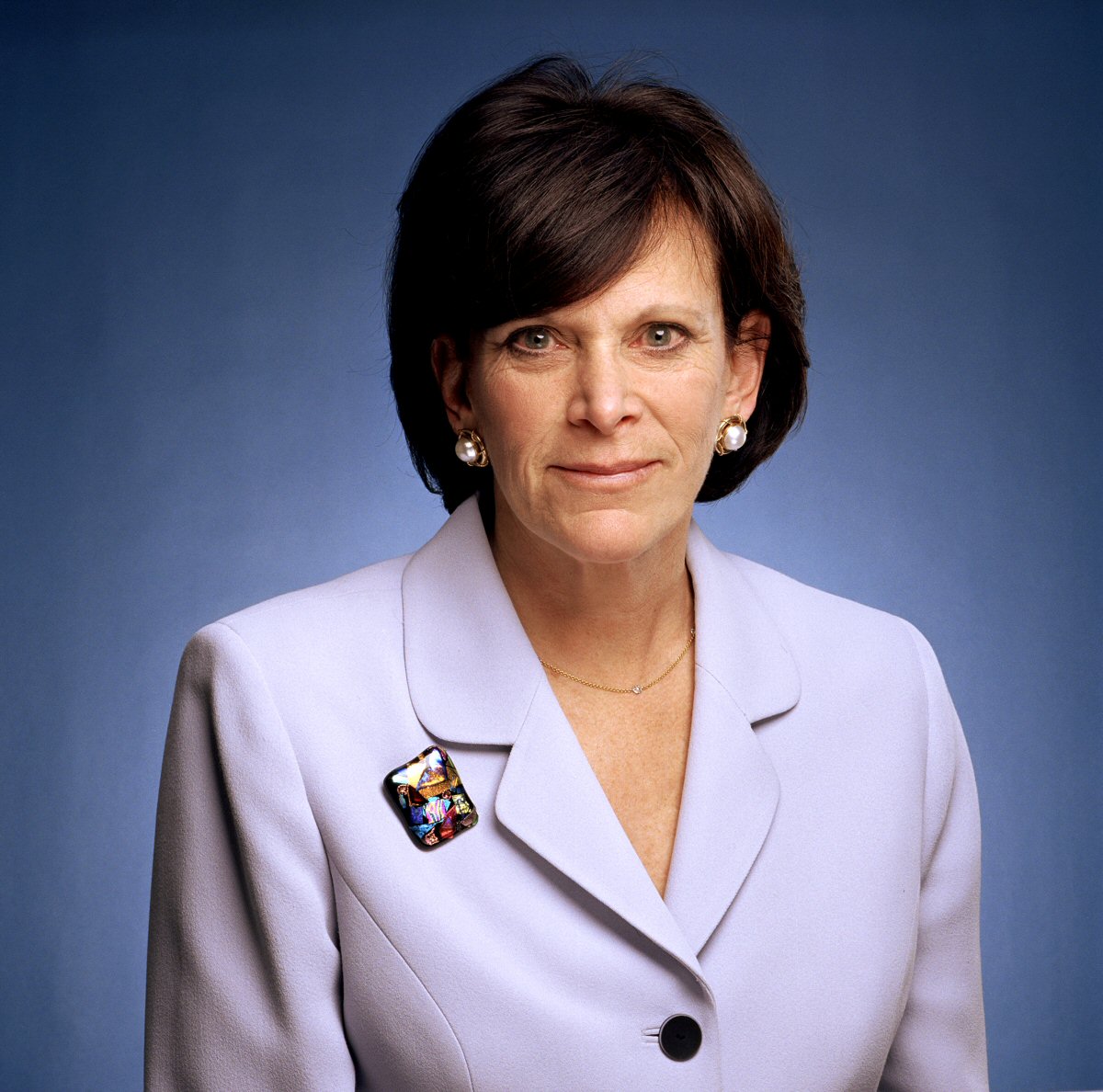
Jessica Tuchman Mathews
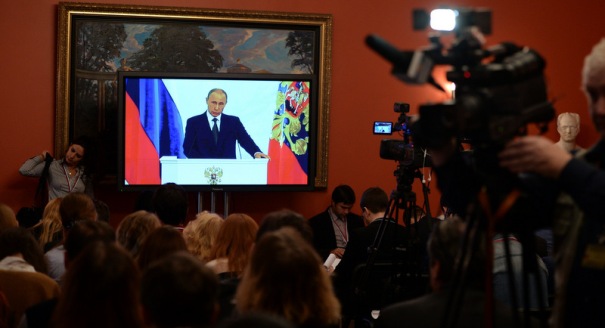
Several Carnegie experts from different offices discuss the significance of Putin’s address to the future of Russia and its role in the international community.

Lina Khatib, Shi Han, Ulrich Speck, …
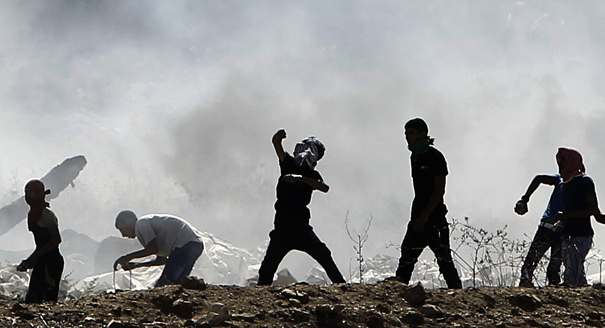
The world can be an awfully dangerous and unpredictable place.


Thomas Carothers, Lina Khatib, Marwan Muasher, …

China is unusually secure in its policy of nonintervention in the Syrian conflict. But will strong rhetoric and vetoes be enough?

Paul Haenle

Turkey’s planned new canal and a missile defense system both send the message that Turkey will go its own way, swiftly and irrespective of the country’s international environment and commitments.

Marc Pierini