

Commentary
What should happen when sanctions designed to weaken the Belarusian regime end up enriching and strengthening the Kremlin?
Denis Kishinevsky
{
  "authors": [
    "Richard Youngs"
  ],
  "type": "legacyinthemedia",
  "centerAffiliationAll": "",
  "centers": [
    "Carnegie Endowment for International Peace",
    "Carnegie Europe"
  ],
  "collections": [
    "Democracy and Governance"
  ],
  "englishNewsletterAll": "",
  "nonEnglishNewsletterAll": "",
  "primaryCenter": "Carnegie Europe",
  "programAffiliation": "",
  "programs": [
    "Democracy, Conflict, and Governance",
    "Europe"
  ],
  "projects": [],
  "regions": [
    "Middle East",
    "Europe",
    "North Africa",
    "Western Europe",
    "Iran"
  ],
  "topics": [
    "Foreign Policy",
    "Democracy"
  ]
}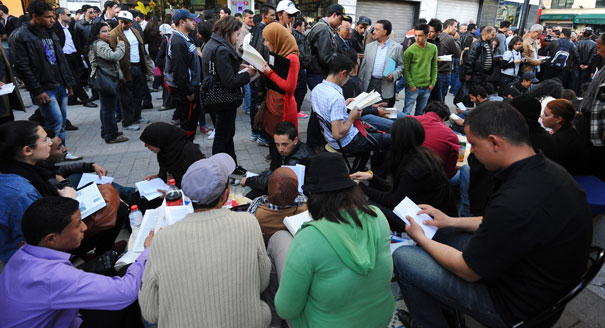
Calls for non-Western democracy are proliferating, and they flow both from political changes within states and from shifts in global power balances between states.
Source: Journal of Democracy
Support for the concept of non-Western democracy is becoming more voluble, widespread and determined.1 In many places, it has become a central focus of debates about the future of democracy. Calls for non-Western varieties of democracy are part and parcel of the rise of a post-Western world order. Attend an international meeting on democracy today, and you will likely hear passionate arguments that Western liberal democracy has lost credibility and that non-Western political models must now be favored across the developing world and among rising powers.
Why are calls for non-Western democracy proliferating? There are several reasons. These calls flow from both political changes within states and shifts in global power balances between states.
The first reason for non-Western democracy’s rising appeal as a concept is Western liberal democracy’s own poor performance of late. Polls regularly show that citizens in Western countries feel increasingly frustrated by liberal democracy’s inability to tackle powerful vested interests. Popular discontent with political parties, persistent corruption, and economic inequality has deepened. Citizens complain that they lack meaningful policy alternatives. As a consequence, the specter of illiberal populism now haunts many a Western country. All this means that non-Western governments and citizens are less inclined than they were a decade ago to see Western-style democracy as a goal toward which to aspire. Citizens in all regions of the world may want more open forms of governance, but there is an emerging feeling that many of liberal democracy’s current problems stem from its Western particularities.The rise of non-Western powers is the second reason. As these countries become more powerful economically, they also seek to promote their own ideas about what constitutes good politics. The discourse of non-Western democracy is now an integral part of debates about the post-Western world order. Rising powers’ pushback against Western democracy is associated with these states’ newfound ability and determination to exert their effective sovereignty.
Globalization drives the non-Western democracy narrative in two senses. On the one hand, it facilitates more active participation by rising powers in international affairs. On the other hand, globalization engenders the kind of disorienting change that leads people to cling to local identities. The changing patterns of global politics mix fast-expanding modernization with aspects of tradition. There is a widening interest in exploring new forms of democracy capable of encapsulating this combination. Processes of modernization are themselves undergoing change. While democracy and economic modernity arrived long after liberalism in the West, elsewhere they have taken root without prior centuries of liberalism.
As recently as the 1990s, countries emerging from authoritarianism seemed to be treading a well-worn path, with the Western political model at journey’s end. This is no longer the case. Many—indeed, probably most—transitional countries have moved into a “gray zone” between autocracy and liberal democracy. These hybrids are not a passing deviation from the West-ern model, but constitute a distinctive regime type. Some insist, moreover, that such regimes can meet standards of legitimacy better suited to local conditions, and thus must not be dismissed as flawed copies of a Western original. Their path to democratic reform need not reflexively imitate the West’s; they can carve their own routes to fit different circumstances.
Third, the failure of external interventions in conflicts during the last decade has led many to argue that Western democratic templates are bad fits for fragile states. The poor record of recent conflict-resolution efforts has heightened interest in non-Western democracy. Many insist that among the lessons of Afghanistan and Iraq is the need for a “post-liberal” model of peacebuilding. Overcoming persistent violence and conflict seems to require carefully engineered settlements among warring factions. There is evidence that in a conflict-ridden state an arrangement that accords rights to groups on the basis of their ethnicity or religion will work better than does the competitive-liberal model. Hence international policy discussions about conflict resolution have expanded to consider alternatives to Western liberal democracy.
Running in tandem with this trend has been the widening use in many developing countries of customary or traditional methods of adjudication. In the eyes of proponents, such locally familiar and time-honored methods will often deliver swifter and cheaper justice than do formal Western-style legal institutions. Local systems, it is said, provide culturally well-grounded remedies that rely on trust, mediation, and the reintegration of offenders into the community rather than Western-style legal punishments. The trend toward legal pluralism questions the definition of the rule of law that underpins Western liberal democracy.
Fourth, international organizations and Western governments seem to be sympathetic toward much of this. They have become aware of the rising demand for locally distinctive politics and claim that they agree with the quest for alternative forms of democracy. They also know that in many non-Western countries international democracy-support strategies have failed, with even the most sincere local democrats criticizing their rigidity and “one-size-fits-all” uniformity. Today, few involved in international programs to support democracy and human rights question the need for customized policies that conform to “local values” rather than just Western templates.
As long ago as 2007, the UN General Assembly denied that there is any “single model of democracy,” while affirming that “democracies share common features.”2 In early 2011, at the height of the “Arab Spring,” U.S. secretary of state Hillary Clinton said that “each society will work to realize its own democratic values and build its own democratic institutions in its own way, because we also recognize the uniqueness of culture and history and experience.”3 A few months later, President Barack Obama added that “not every country will follow our particular form of representative democracy.”4 And EU foreign-policy chief Catherine Ashton observed: “While democracy is the cornerstone of the European Union, it is clear there is no single model for democratic government.”5
As Western leaders express their openness to differing models of democracy, non-Western democracies such as Brazil, India, Indonesia, and South Africa are beginning to consider how they can support democracy as part of their increasingly active foreign policies. As they do so, they appeal to non-Western democratic transitions and speak about the importance of different political models. As international democracy support becomes less a Western preserve, the substance of such support is likely to become less Western as well.
The calls for non-Western democracy are loud and passionate, but seldom make clear exactly what non-Western models would and should look like. What actually distinguishes a non-Western from a Western model of democracy? There is a general sense that other societies want less individualism, more traditional social values, more economic equal-ity, and more consensual and participatory politics. But it remains un-clear how such desires translate into a distinctively non-Western tem-plate for democratic politics.
Some appeals for non-Western democracy see Western liberal democracy as inherently flawed; others put the case less starkly and seek more modest institutional differentiation. A third school of thought af-firms Western standards in principle while worrying that they are too onerous for other societies to live up to. Some leftists see a pivot toward a democracy that is not Western as a welcome turn toward economic justice and the ending of Western normative imperialism. Some rightists back the idea of non-Western democracy as part of a pushback against the social liberalism promoted by Western governments.
Although calls for non-Western democracy are not always a cloak for authoritarianism—and should not be reflexively opposed on this ground—they do sometimes tilt in this direction. A common contention is that non-Western societies value consensus more than adversarial political competition; this easily tips over into a claim that one leader or party has the right to determine what set of values a society agrees upon. Those pressing for locally authentic forms of democracy commonly claim that developing societies need wise guardians to steer them—yet this Platonic template for rule by a supposedly enlightened few is, of course, as Western in its origins as liberal democracy itself.
Even where the concept of non-Western democracy is not a cloak for soft authoritarianism, it rests on questionable claims about the relation-ship between liberal democracy and liberal social or economic policies. In the years immediately following the Cold War, many saw the spread of liberal democracy as inextricably bound up with neoliberal economic reform. This helps explain much of today’s coolness toward Western-style democracy. Radical critics argue that liberal democracy serves to underpin and legitimize neoliberal economics, which breed inequalities that undermine citizens’ ability to exercise their liberal rights. A common follow-on claim is that left-populist varieties of democracy require that individual rights be limited so that heterodox economic policies may be implemented.
While this critique makes the valid point that there is a need to link more closely procedural and substantive democracy, it can tend to simplification. For three centuries, political thinkers have recognized that the relationship between economic and political liberalism is complex. It is an exaggeration to hold that economic justice requires that democracy be less liberal. John Stuart Mill famously pointed to the mutually reinforcing links between liberal political rights and social-democratic ends. Many Western democracies today have strongly redistributivestates. Evidence suggests that regime type is not the most influential variable explaining degrees of socioeconomic equality. There is no uni-form correlation between effective state capacity and a particular form of democracy.6 The recent record suggests that some left-populist regimes use illiberal politics to consolidate their own power, not to ensure more equitable economic policies.
Another oftheard criticism is that Western liberal democracy necessarily entails excessively permissive social values. This claim is also highly questionable. Permissive social norms may flow from the nature of Western society, but they are not an integral part of any specific mechanisms of democracy. Citizens in liberal democracies such as Chile, Poland, and South Korea adhere to conservative social values. There is no strong correlation between regime type and a country’s position on the continuum between liberal and traditional social values.
The non-Western argument often veers into essentialism. It underplays the extent to which cultural values evolve as countries pass through different phases of political development. Calls for “indigenized” forms of democracy in developing regions are often opposed by modernizers and democratic activists inside non-Western countries.7 The challenge is a more subtle one: Traditional forms of family and village solidarity have broken down in developing countries under the pressure of such phenomena as urbanization, but the modern form of (state) solidarity common in advanced Western democracies has not yet been built up to take their place. Paradoxically, people in rising economies may be pushing back against traditional values, at the same time as embattled Western citizens are increasingly searching to protect traditions. Again, the relationship between political systems and support for traditional values is far from uniform.
It is often said that Western democracy is simply too adversarial and that other societies prefer institutional forms that are more collegial and communal. Yet communal mechanisms have their own power dynamics and vested interests, and they are subject to their own forms of manipulation. Moreover, the style of Western politics is not necessarily attributable to liberal democracy per se. Contemporary politics in the West may be abrasive and adversarial, but this does not follow intrinsically from the essential tenets of Western democracy. Non-Western countries, if they so choose, can combine a less aggressive style of political debate with a set of fully open democratic institutions and liberal guarantees.
Even though the notion of non-Western democracy remains inchoate and less than fully convincing, recent years have witnessed a broader debate about democratic variation that offers many promising ideas. These ideas may not be framed explicitly in terms of non-Western democracy, but they do suggest innovations in democratic forms and practices. They do not entail political features or practices that stand directly at odds with the core democratic standards that exist in the West, but seek improvements to democracy that expand variation across Western and non-Western regions.
In fact, calls for non-Western democracy echo growing concerns about the nature of politics in Europe and North America. Democracies and would-be democracies everywhere struggle with inequality, corruption, and citizen disaffection. Political, social, and economic liberalism is under fire within the West itself. In Europe, thinkers call for more participative and deliberative forms of democracy in the face of protests and the rise of new social movements. Writers focus on notions of liberalism that go beyond the protection of personal rights. Republican notions of democracy and liberty are more widely advocated. In some regards, recent trends within Western polities, societies, and economies pose a greater challenge to the liberal components of democracy than do critiques from outside the West. The West needs to work hard to avoid misunderstanding others’ perspectives on democracy, but others need to take care not to reduce “Western democracy” to a caricature.
The quest for democratic variation must steer between an overly rigid assertion of the core liberal-democratic framework and a cavalier dis-regard for the minimal standards of pluralism. While those on one side of the debate tend to be overly defensive of a fixed liberal-democratic template, those on the other side often exhibit a blanket antipathy to Western norms and policies.
Some elements of the “authenticity” narrative are questionable, but this should not stop Western democracy supporters from working with non-Western reformers in finding ways to ensure that democracy gains local legitimacy. Even if they fail to constitute distinctive models, non-Western preferences may still be different to a meaningful degree. Modern democracy has been conditioned by aspects of Western political history that were historically contingent and reflected the circumstances of the times. In the same way, democracy’s future will be shaped by new patterns of power and political trends that are now gathering force outside the West.
In this sense, democratic variation can and should be pursued in a way that builds upon rather than subtracts from liberal democracy. The most desirable democratic variation is not “liberalism-minus” but “liberalism-plus.” This principle calls for experimentation to find local ways to give greater vitality to the core ideas of tolerance, participation, and accountability. It does not mean simply more Western liberalism. Rather, it calls for others’ ideas to be taken seriously as a path to ensuring better respect for the core spirit of political liberalism.
Democratic variation can deepen and even reradicalize liberal democracy.8 Reform options are best formulated as being within and beyond—not against—liberalism’s basic core. This is because liberalism should properly be understood as tolerance, effective participation, and protection against injustice and repression. The liberalism-plus notion should not involve an automatic assumption that market reforms and economic deregulation need to be unconditionally extended. The trend in many non-Western countries today is toward deregulated capitalist markets within systems of carefully managed political control. If anything, exactly the opposite combination needs to be explored.
States and societies around the world are likely to create their own democratic combinations, adopting some parts of Western systems and taking other parts from what appears to have worked in non-Western contexts. The Varieties of Democracy (V-Dem) research project sheds light on how various “types” of democracy—liberal, egalitarian, participative, deliberative, and electoral—can be combined in various permutations, and suggests that there is no sharp distinction between Western and non-Western preferences.9 There is so much international interaction and shared learning today that it is becoming difficult to define what is Western and what is non-Western.
The quest for democratic variation must go beyond modest institutional tweaks. It is sometimes asserted that people outside the West harbor the same democratic values as Westerners, but express these values through different institutional forms. Yet the desire for democratic variation is more complicated than this. It has to do with values and not just institutions. There are genuine and necessary debates to be had about how democratic values should now be defined. Indeed, the situation is the reverse of what is normally asserted: Non-Western societies transitioning to democracy have tended to accept most of the basic Western institutional template of elections, parties, and parliaments, even though many in these societies contest certain prevailing Western values. These non-Western value preferences are not necessarily illiberal. While some non-Western positions aim to limit liberalism, others seek to enhance liberal democracy’s core ideals.
In line with the principle of liberalism-plus, I believe that scope for democratic variation exists along each of five axes. But red lines are also needed along each axis in order to limit the extent of divergence from core democratic norms. The five axes are as follows:
What implications should those concerned with democracy-support policies draw from the notion of liberalism-plus? To date, people working in this field have mostly busied themselves with running projects more effectively and coming up with tactics to dislodge autocrats. The question of what form of democracy to pursue has not been a major concern. In the world of democracy support, the concept of democracy itself has not been up for debate in any fundamental way.
Western donors insist that they do not seek to export a specifically Western or liberal type of democracy and are open to non-Western practices. Critics retort that this is disingenuous and that Western govern-ments in practice work to foist their own understanding of democracy on other societies—whether out of ethnocentrism and intellectual rigidity or because this suits their own interests. Encouraging local specificity is certainly a challenge to the whole enterprise of international democracy support. Skeptics say that the need for authenticity renders the very notion of democracy support problematic, as even well-intentioned Western policies inevitably work against the rise of locally legitimate institutions.
Critics admonish Western donors for overemphasizing elections and favoring professional advocacy NGOs that have little place in non-Western civil society. Western democracy supporters seem reluctant to support social movements that advocate more radical notions of participatory democracy. Yet they also seem to shun civic organizations that are concerned with developing communitarian identities in cooperation with state institutions, as opposed to those focused on individual human rights. And many Western donors still tend to fuse pressure for neoliberal economic reforms with support for prodemocratic political reforms.
In fact, Western donors have begun to address the issue of democratic variation more than is generally realized. While critics’ indictments of Western democracy support are partly justified, they are often overstated. Far from myopically pressing for early elections in every situation, Western governments are often guilty of wanting to delay voting in transitional countries because it can generate so much uncertainty. In high-conflict settings such as Afghanistan, Mali, Somalia, and South Sudan, many donors and international organizations have worked with tribal authorities and traditional-justice institutions. In the Balkans, the United States and the EU have given priority to locally tailored, consensual power-sharing solutions that do not sit easily with the standard tenets of liberal democracy. Donors are looking more closely at how to support civic awareness through organizations other than professional NGOs and have begun to engage with “nontraditional” civil society organizations. European governments, relatively sympathetic to the populist forms of democracy found in places such as Bolivia, have been focusing on socioeconomic rights and projects meant to promote economic justice.
Indeed, some donors almost overstate the enhanced legitimacy that conventional democracy support can hope to reap by backing non-West-ern forms of democracy. Then, however, they find themselves forced to admit that they have yet to follow through on their commitment to democratic variation, mostly because they are unsure exactly how to do so. Reformers in developing countries have not detected in donors’ policies any overwhelming wave of support for democratic variation. Non-Western officials and experts still routinely complain that Western democracy supporters avoid tribal structures and undermine traditional mechanisms that do not meet Western rights standards. This has led to resistance against international support in places as diverse as Libya, Mali, Pakistan, and Tunisia.
The five axes of variation sketched above suggest how donors might do more to allow and even stimulate healthy democratic variation. Democracy-support organizations should explore how citizenship rights can be recalibrated as a means of enhancing community-level moral identities. They need to consider how liberal rights can be framed in a way that is more sensitive to religious values.
Support for civil society organizations keen on exploring heterodox economic models should be more common than is currently the case. Democracy-support projects could explore the joint challenges that both Western and non-Western governments face today in designing more effective forms of democratic representation as they respond to economic difficulties. More support should be given to “liberal” forms of power-sharing and consensual communitarianism, which protects minority identities but also leaves them open to deliberation and adaptation.
Democracy-support programs should try to get ahead of technological trends by more systematically considering how to support a healthy degree of direct democracy. The international community needs to think about how it can offer stronger support to new forms of participation—participatory budgeting, for example—without subverting standard representational dynamics. Donors should be looking for the positive potential of new social movements, while also correcting their negative features. The idea should be to engage with groups that are more confrontational toward the state, but also with those that see civil society’s function as empowering rather than simply restraining the state. Finally, donors should explore local customary structures in a way that strengthens their potential to provide more effective and consensual justice while remaining within the bounds of core humanrights norms. There is, above all, a need for both the Western and the non-Western side to be open to new approaches.
Rather than simply being on the receiving end of international policies, non-Western states are now also sources of global influence. Rising non-Western democracies such as Brazil, Chile, India, Indonesia, Japan, Nigeria, South Africa, South Korea, and Turkey may be better positioned than their Western counterparts to support democratic variation. The rising democracies certainly have an advantage, in that the types of political reform they encourage cannot be dismissed as unsuitably Western. Several African, Arab, and Asian states now look to these countries for advice, best practices, and capacity building. Rising democracies’ foreign policies interweave concerns with peacebuilding and social justice with support for political reform.
Yet it is still not clear that the rising democracies have distinct, successful, and replicable models of democracy to convey to the rest of world. So far, their democracy-support efforts differ from Western ones mostly at the level of tactics rather than goals. They are not promoting a distinctive new type of democracy. If anything they are even more cautious than Western donors when it comes to supporting social movements and civic activism, and prefer elite-led change (a preference that does not always sit well with protestors in developing countries). Considering critics’ complaint that Western democracy is too fixated on elections, it is striking that non-Western democracies’ support policies are most active precisely in the area of election observation.
Non-Western democracies are strongly critical of Western democracies for replicating their own model of liberal democracy, but rising democracies also tend to see political change narrowly through the lens of their own experiences of democratic transition. This means they often fail to see that other countries’ conditions may be very different from their own and therefore require foreign-policy interventions that go beyond simply teaching the lessons of democratic transition. While rising democracies have great potential to further democratic variation across different regions, it is a potential that will need nurturing if it is fully to bear fruit.
In the years ahead, variation in democratic forms is likely to increase, and might even help to head off resurgent authoritarianism. But variation has to be conceived correctly. If bungled, it could become a high-way to illiberalism. The quality of the coming new global order hangs in the balance. At a time when rising powers are challenging liberal norms, democracy must demonstrate a capacity to adapt and incorporate ideas from both Western and non-Western sources
The principle of liberalism-plus is meant to convey the need to look seriously at non-Western ideas that give greater meaning to political liberalism’s core spirit of tolerance, pluralism, and accountability. Variation along the five axes identified above holds out the promise of positive innovation. Some variations will involve non-Western countries making choices that Western societies would not favor; other variations will be matters of Western and non-Western countries seeking to improve current democratic practices in relatively similar ways. Supporting the notion of democratic variation is not about moving regimes defined as “not democratic” into a category of “democratic” systems. Rather, it is about improving democratic quality across all types of regimes.
If those involved in implementing democracy-support initiatives have traditionally thought mainly about how to support reformers, today they are also likely to spend time reflecting on what kind of reform to support. Both the “how” and the “what” of democracy support must be subject to systematic critical reflection, if the international community is to be truly open to democratic innovation.
1 The growing literature on this subject includes Daniel Bell, Beyond Liberal Democracy: Political Thinking for an East Asian Context (Princeton: Princeton University Press, 2006); Boaventura de Sousa Santos, Democratizing Democracy: Beyond the Liberal Democratic Canon (London: Verso, 2005); David Held, Models of Democracy (Stanford: Stanford University Press, 2006); Katherine Fierlbeck, Globalizing Democracy: Power, Legitimacy and the Interpretation of Democratic Ideas (Manchester: Manchester University Press, 2008); Ewan Harrison and Sara McLaughlin Mitchell, The Triumph of Democracy and the Eclipse of the West (London: Palgrave Macmillan, 2014); John Keane, The Life and Death of Democracy (New York, Simon and Schuster, 2009); Nader Hashemi, Islam, Secularism, and Liberal Democracy: Toward a Democratic Theory for Muslim Societies (Oxford: Oxford University Press, 2009); Larbi Sadiki, The Search for Arab Democracy: Discourses and Counter-Discourses (New York: Columbia University Press, 2004); Shadi Hamid, Temptations of Power: Islamists and Illiberal Democracy in a New Middle East (Oxford: Oxford University Press, 2014); Alfred Stepan and Juan Linz, “Democratization Theory and the ‘Arab Spring,’” Journal of Democracy 24 (April 2013): 15–30; Laurence Whitehead, “Alternative Models of Democracy in Latin America,” Brown Journal of World Affairs 17 (Fall–Winter 2010); Mark Mazower, “Has Democracy Had Its Day?” Prospect, May 2013; and Anne Applebaum, “Developing Nations Could Benefit From Trying Southern Democracy,” Washington Post, 16 May 2014.
2 UN General Assembly, Resolution 62/7, “Support by the United Nations System of the Efforts of Governments to Promote and Consolidate New or Restored Democracies,” 13 December 2007.
3 Hillary Clinton, “Remarks at the Launch of Strategic Dialogue with Civil Society,” Washington, D.C., 16 February 2011.
4 “Remarks by the President on the Middle East and North Africa,” White House, 19 May 2011.
5 “Statement by High Representative Catherine Ashton on the Occasion of the International Day of Democracy,” Brussels, 15 September 2011.
6 Francis Fukuyama, Political Order and Political Decay: From the Industrial Revolution to the Globalization of Democracy (London: Profile, 2014), 333.
7 Michael Saward, Democracy (London: Polity, 2003), vii, 46, and 114.
8 Milja Kurki, “Democracy and Conceptual Contestability: Reconsidering Conceptions of Democracy in Democracy Promotion,” International Studies Review 12 (September 2010): 362–86.
9 Staffan I. Lindberg, Michael Coppedge, John Gerring, and Jan Teorell, “V-Dem: A New Way to Measure Democracy,” Journal of Democracy 25 (July 2014): 159–69.
10 John Keane, The Life and Death of Democracy (New York: W.W. Norton, 2009).
Carnegie does not take institutional positions on public policy issues; the views represented herein are those of the author(s) and do not necessarily reflect the views of Carnegie, its staff, or its trustees.
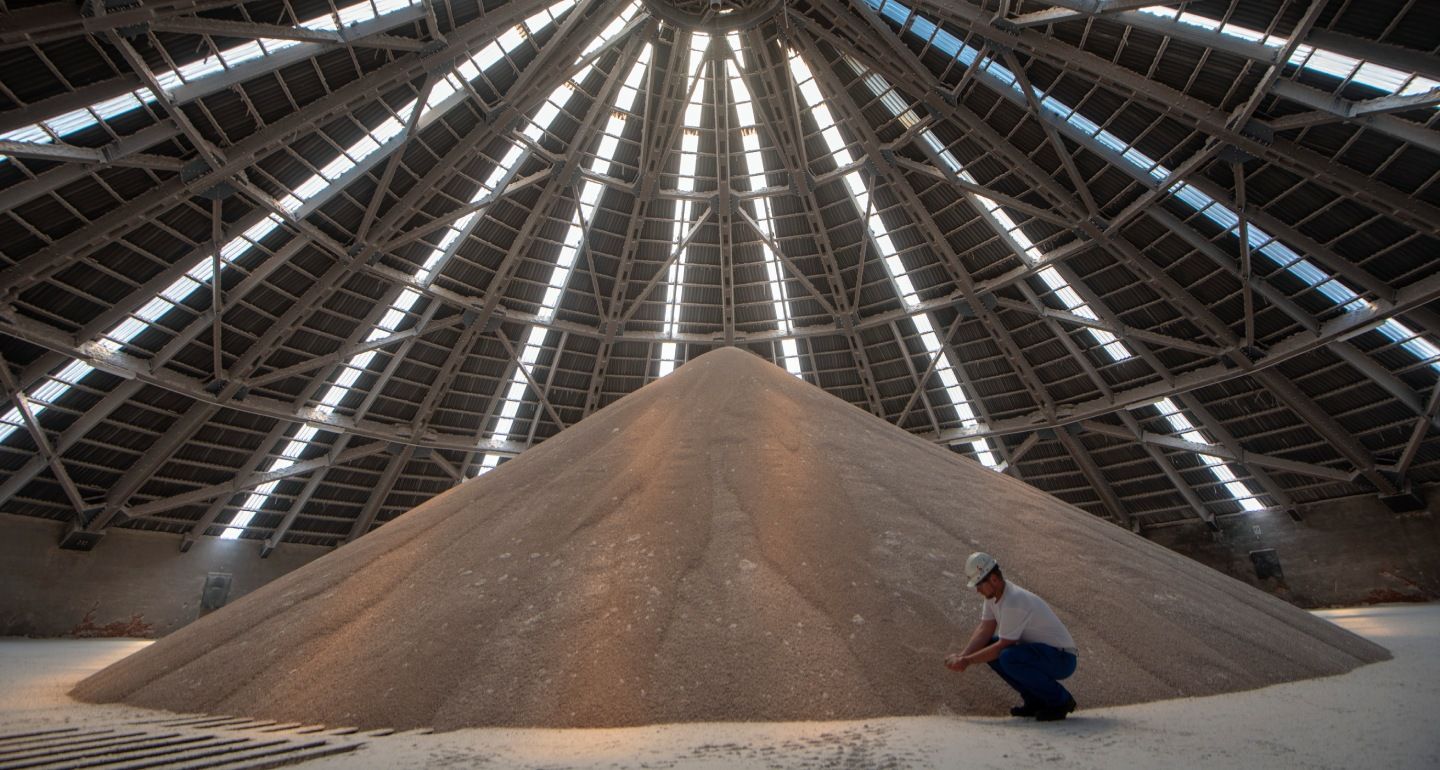
What should happen when sanctions designed to weaken the Belarusian regime end up enriching and strengthening the Kremlin?

Denis Kishinevsky
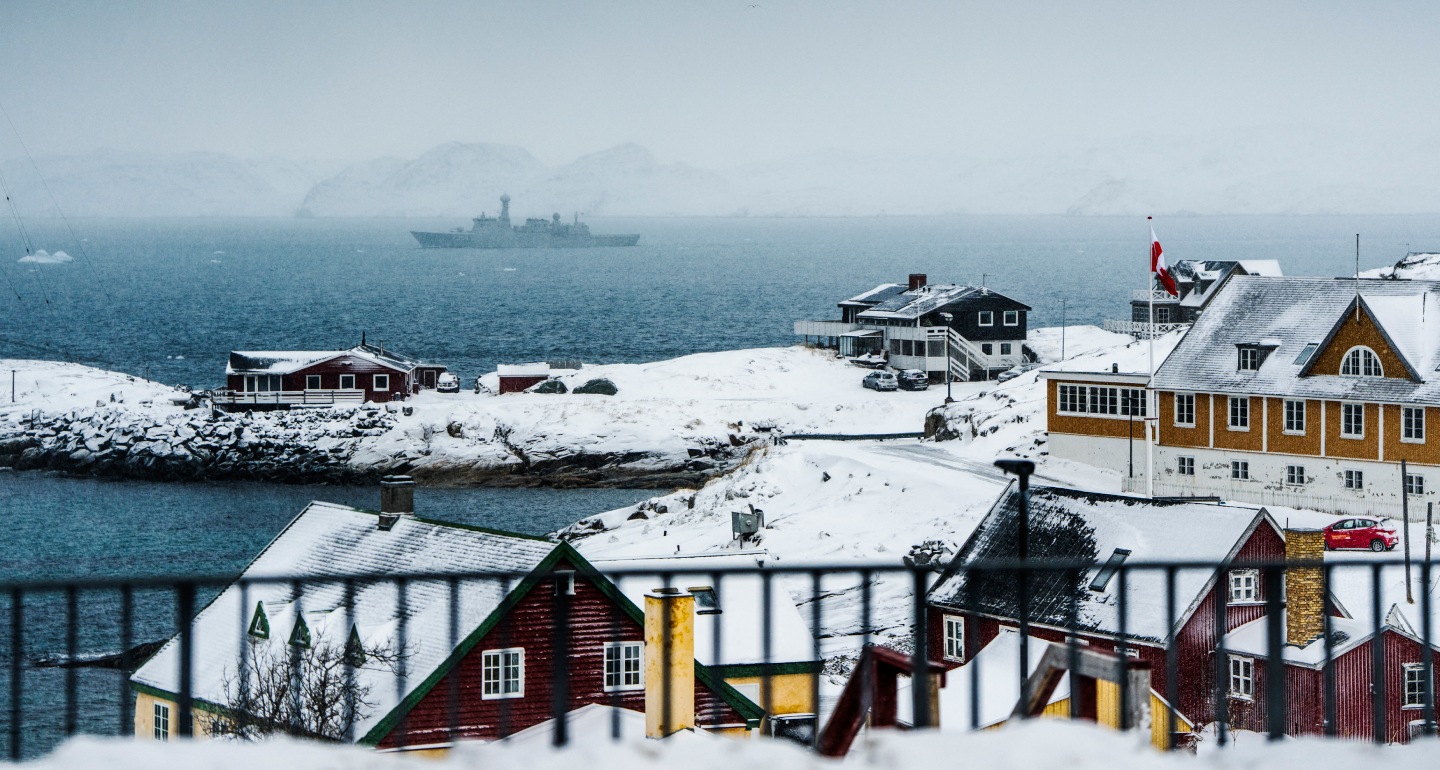
The supposed threats from China and Russia pose far less of a danger to both Greenland and the Arctic than the prospect of an unscrupulous takeover of the island.

Andrei Dagaev
Western negotiators often believe territory is just a bargaining chip when it comes to peace in Ukraine, but Putin is obsessed with empire-building.
Andrey Pertsev
Unexpectedly, Trump’s America appears to have replaced Putin’s Russia’s as the world’s biggest disruptor.
Alexander Baunov
Baku may allow radical nationalists to publicly discuss “reunification” with Azeri Iranians, but the president and key officials prefer not to comment publicly on the protests in Iran.

Bashir Kitachaev