

Commentary
Even if there is cause for competition in Central Asia, both Moscow and Beijing see friendly bilateral relations as a priority, especially against the backdrop of their escalating confrontation with the West.
Temur Umarov
{
  "authors": [
    "Dmitri Trenin"
  ],
  "type": "commentary",
  "centerAffiliationAll": "",
  "centers": [
    "Carnegie Endowment for International Peace",
    "Carnegie Russia Eurasia Center"
  ],
  "collections": [
    "Pax Sinica",
    "Coronavirus"
  ],
  "englishNewsletterAll": "",
  "nonEnglishNewsletterAll": "",
  "primaryCenter": "Carnegie Russia Eurasia Center",
  "programAffiliation": "",
  "programs": [],
  "projects": [],
  "regions": [],
  "topics": []
}
To avoid becoming part of a Sino-centric power bloc and maintain international equilibrium, which is critically important to Russia’s status and self-image, Moscow must reduce its dependence on China by fostering its relations with other large economic and financial players: primarily European countries, India, and Japan.
Although the crisis precipitated by the new coronavirus pandemic is still in its very early stages, it is clear that it has vastly accelerated the ongoing processes around the world. The most consequential is the intensification of Sino-American rivalry and the emergence of new global bipolarity. It is this looming global bipolarity that presents the main challenge to Russian foreign policy in the medium and long term.
Some in Moscow may be relieved that Washington now treats China rather than Russia as its main rival. They should not be. The hostility of the U.S. political elite toward Russia is not going anywhere and is not decreasing. Any idea of a reset in the face of a common enemy—this time, the coronavirus—is doomed to disappointment.
Closer relations with China have strengthened Russia’s geopolitical and geoeconomic positions at a time when Moscow’s relations with the West have deteriorated. For Russia, China has become an essential economic, financial, and technological partner. Further cultivating a strategic partnership with Beijing, even an entente, is certainly in Moscow’s best interests.
The current Russia-China relationship was originally based on the national interests and sovereign equality of the two great powers. The underlying principle of the relationship has been “never against each other, not always with each other.” This combination of reliability and flexibility is how it should also be in the future.
The coronavirus crisis has put Sino-Russian relations to the test. Both for Moscow and Beijing, national security trumped all other considerations. Each country proceeded to close their shared border as soon as it perceived a threat to public health, and without prior consultations. The Chinese authorities voiced displeasure at the treatment of Chinese tourists in Russia, and the Russians complained that the Chinese did not readily share with them all the information available about the virus.
In their direct communication, presidents Vladimir Putin and Xi Jinping managed to iron out these early tensions. Russian state-owned media praised the Chinese handling of the pandemic, and even continuously broadcast Chinese TV’s own accounts of the battle with the virus. Responding to an early token shipment of masks from Russia to China, Beijing later sent a large amount of medical supplies and a team of doctors to Russia.
When the United States started blaming China for the outbreak, and demanded an international investigation, Russian officials immediately condemned the “politicization” of the pandemic. Reacting to Western mentions of claims worth trillions of dollars in compensation for the coronavirus outbreak, the Russian media drew parallels with U.S. and EU sanctions against Russia. To outsiders, it looked as if Moscow was buying a little too much into Beijing’s version of the origins of the pandemic.
A strategic partnership demands a modicum of trust and a high degree of mutual loyalty. Russia would be insane to jeopardize its all-important friendly relationship with the superpower next door. Having said that, Moscow should not go out of its way to accommodate all of Beijing’s wishes. When in doubt, it would suffice for the Kremlin simply to look at China’s own practices vis-à-vis the U.S.-Russia confrontation. Beijing did not join Washington in sanctioning Moscow, but it always put its own interests in the United States first when developing economic ties with Russia. This is not meant as criticism: the Chinese have every right to behave in this manner. The Russians must simply follow suit.
The fact that China is so much more powerful in economic terms than Russia should not make Moscow more pliable. On the contrary, it needs to be more careful. For Russia, developing further cooperation with China only makes sense if it does not lead to one-sided dependence on it. Becoming part of a Pax Sinica, China’s sphere of influence, is absolutely unacceptable to Russia.
Another area where Russia should tread carefully is the Sino-American confrontation. Both Moscow and Beijing share a worldview that rejects U.S. dominance and its promotion of democracy, and both are branded as adversaries by the United States. Yet a military alliance between Russia and China is justified in only one, entirely hypothetical case: a U.S. military attack against both countries.
In principle, to avoid overdependence on others, Russia has the resources to start developing its own economy and advanced technologies, but unfortunately, the country’s current political and economic conditions block that path for the moment. Until the country can begin to use its internal reserves for economic self-empowerment, foreign policy could help.
In order not to fall into China’s lap and to maintain equilibrium, though not equidistance, between the United States and China (ties with China will grow stronger, even as the confrontation with the United States is likely to continue), Moscow must start fostering its relations with the other major economic and financial players in Greater Eurasia. These are primarily the European Union countries, India, and Japan.
The coronavirus crisis has dealt yet another blow to EU musings about strategic autonomy. At the same time, it has enhanced the role of individual states. Germany, which has been the most successful in dealing with the crisis, is clearly strengthening its position within the EU and potentially in the world at large. It is time to reach out to the German political and economic elites about the prospects of economic cooperation and the requisite political conditions for that.
Dialogue with France, which is already underway, should be energized with a focus on continental security and the situation in the Middle East and North Africa. Russia has scope for substantive discussions with Italy (for example, on Libya), the Nordic countries (on the Arctic), and even the United Kingdom (on normalizing their badly damaged relationship), as well as with other European countries, without particularly shunning anyone. This diplomatic outreach should pave the way for more intense economic exchanges, even, initially, while sanctions are in place.
Humanitarian actions such as the recent aid shipments to Italy are good, but are completely insufficient for improving the atmosphere in Russian-European relations. It makes no sense for Russia—especially under the current conditions—to waste time and effort undermining the EU and NATO from within. Russia’s policy should be positive, emphasizing goodwill and cooperation with individual European countries, and avoiding attempts to interfere in their domestic political processes. A revision of Russia’s information policy directed at Europe is in order.
The Donbas conflict cannot, of course, be put to one side. While a solution to the issue is still a long way off, and the 2015 Minsk agreement, which basically works for Russia, is stalled, the ceasefire needs to be made permanent and stable, and humanitarian and economic contacts across the line of fire expanded and developed.
The overall goal of Russia’s revised Europe policy should be the gradual return of Europe as a major external source of Russia’s economic modernization. Europe is not the only such source, of course. Japan, a highly developed nation that is successfully weathering the coronavirus crisis, is as much of a potential resource for Russia in the east as Germany is in the west.
The escalating confrontation between Russia and the United States has resulted in the stalling of the once-promising process of finally normalizing Moscow’s relations with Tokyo. Prime Minister Shinzo Abe, the main enthusiast of the Japan-Russia rapprochement, will not stay in power forever. If his outreach to Putin ultimately fails, Abe’s successors will be loath to try it again for quite some time. However, Japan’s strategic interest lies not so much in returning the disputed Kuril islands, which is of purely symbolic significance, but in building stable relations with Russia as a great power that is pursuing a foreign policy independently of China. Such geopolitical sovereignty is also at the core of Russia’s interests.
Russia has been publicly suspicious of the concept of the Indo-Pacific, which it has regarded as basically anti-Chinese. This is generally correct, but only where the U.S. version is concerned. Both Japan and India have their own concepts, which Moscow needs to examine on their own merits, rather than treating them as adjuncts of the U.S. strategy. A smart move by Moscow would be to engage with Tokyo and New Delhi on developing security, stability, and prosperity in the maritime regions that adjoin the great continent of Eurasia.
Russian geopolitical thinking has been historically focused on land. Both the failed project of a Greater Europe from Lisbon to Vladivostok and the current proposal of a Greater Eurasian partnership are characterized by continental thinking. This should be complemented by a maritime component: a Murmansk to Mumbai vision, for example, that would link the three oceans washing Eurasia’s northern, eastern, and southern shores. In practical terms, it could combine the greater involvement of Japan and India in the Arctic regions of Russia with Russia’s enhanced cooperation with those two countries in the Pacific and the Indian Ocean, respectively.
Relations between Moscow and New Delhi have been traditionally friendly from the outset. However, they’ve long been stagnant. Their economic basis is very narrow: it includes cooperation on military technology and, more recently, on energy. Neither of those areas of cooperation has been exhausted. The co-development and co-production of advanced weapons systems could add value to the relationship, along with India’s greater involvement in Arctic projects. Technological cooperation appears to be a new promising area.
In the diplomatic domain, triangular Russian-Indian-Chinese interaction within the RIC group framework should be given a fresh impulse. The group could become the nucleus of the Shanghai Cooperation Organization (SCO), managing security on the continent of Asia. Russia’s strategic goal is to upgrade its relations with India to the level of its relations with China. Together with Moscow’s strategic partnership with Beijing, its renewed links with European countries, and closer cooperation with Japan, these would be the main structural elements of Russia’s foreign policy, providing it with geopolitical equilibrium on the Eurasian continent.
Russia’s main geopolitical problem for the foreseeable future is not withstanding a confrontation with an adversary, the United States, but maintaining an equilibrium with a partner, China. Moscow must take care to preserve its full sovereignty and independence vis-à-vis Beijing, which is the only solid basis for friendly and productive relations with China. Much depends on Russia’s own ability to start developing its economy and restoring its status as a technological power. Apart from this resource, which is likely to remain in reserve for political and economic reasons, Moscow needs to reenergize its relations with other major outside sources of economic modernization across Greater Eurasia, namely the European countries, Japan, and India. While relations with the United States are likely to remain confrontational for the foreseeable future, Russia should tread cautiously when it comes to its attitude and actions toward the intensifying Sino-American rivalry. Striving for equilibrium must become the key principle of Russian foreign policy for the next few decades.
Carnegie does not take institutional positions on public policy issues; the views represented herein are those of the author(s) and do not necessarily reflect the views of Carnegie, its staff, or its trustees.
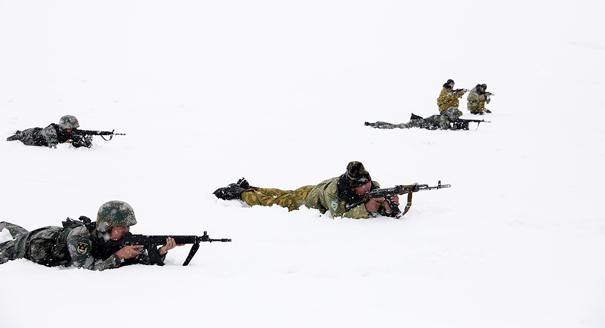
Even if there is cause for competition in Central Asia, both Moscow and Beijing see friendly bilateral relations as a priority, especially against the backdrop of their escalating confrontation with the West.
Temur Umarov

Russia needs foreign students, and not only to diversify its exports. Connections with people who have lived in a partner state are a valuable resource for fostering cooperation and an instrument of soft power.
Raisa Epikhina
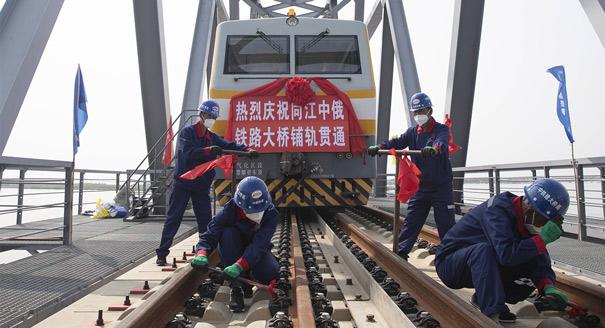
If the pandemic has highlighted one source of friction in Russia-China relations, it is inadequate governance.

Yanliang Pan
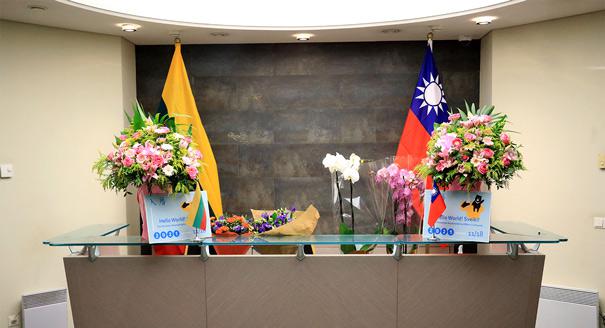
By acting as the driving force behind anti-Chinese initiatives, Lithuania hopes to focus U.S. attention on the region and procure guarantees that Washington will not scale back its presence in Eastern Europe and the Baltic states.

Denis Kishinevsky

China’s new isolation has created plenty of difficulties in Sino-Russian ties, but its influence on strategic relations should not be exaggerated: the problems that have arisen can hardly be described as a serious crisis.
Yaroslav Shevchenko