

Commentary
This episode looks at the domestic and international reception of Russia’s Sputnik V vaccine.
Alexander Gabuev, Polina Ivanova, Henry Foy
{
  "authors": [
    "Ksenia Luchenko"
  ],
  "type": "commentary",
  "centerAffiliationAll": "",
  "centers": [
    "Carnegie Endowment for International Peace",
    "Carnegie Russia Eurasia Center"
  ],
  "collections": [
    "Coronavirus"
  ],
  "englishNewsletterAll": "",
  "nonEnglishNewsletterAll": "",
  "primaryCenter": "Carnegie Russia Eurasia Center",
  "programAffiliation": "",
  "programs": [],
  "projects": [],
  "regions": [],
  "topics": []
}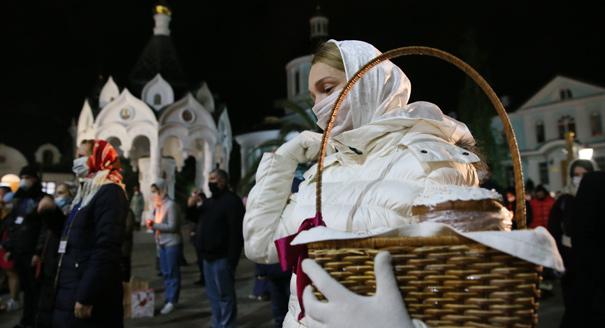
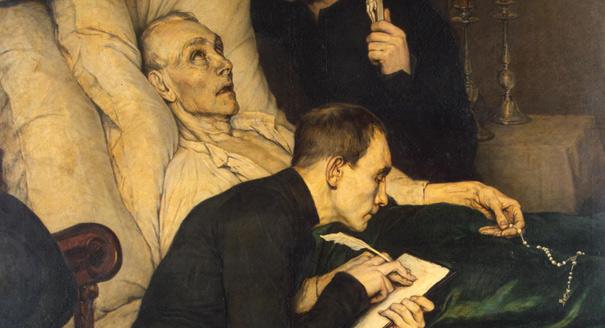
Increased coronavirus infection rates among Russian churchgoers could seriously damage attitudes toward Orthodoxy for a long time. The state has also seen for itself that the church is unable to deal with its own flock.
The Russian Orthodox Church is in the throes of a tragedy. Its priests, monks, and congregations are dying from the new coronavirus. Official figures show that the percentage of coronavirus cases among the Moscow clergy is much higher than the average among regular Muscovites.
What’s more, it has become clear that there is a schism within the church that goes far deeper than ideology. Unexpectedly, some of the strongest loyalty to the church and state leadership has come from those whom Patriarch Kirill, the head of the Orthodox Church, had previously called “traitors in the ranks” and denounced for their liberalism. Patriotic and conservative circles, on the other hand, have spawned noncompliance with public health measures, and even protestations of martyrdom.
As the coronavirus spread through the Russian capital, Patriarch Kirill avoided taking personal responsibility for closing churches. A letter sent out to Moscow clergy on April 11—just over a week before Orthodox Easter—advising worshippers to stay at home and not go to church services during Holy Week was signed by the metropolitan Dionisy, a functionary unknown to churchgoers, while a decision published on April 20 that extended the “regime of restrictions on visiting churches” merely cited Moscow’s chief medical officer, Elena Andreeva.
But many eparchs did take responsibility. The coronavirus has prompted a process of decentralization in the Russian Orthodox Church. The bishops have suddenly remembered that according to the canons, each of them is head of the local church, while the Patriarch is merely first among equals. Metropolitan Longin of Saratov and Volsk entered into a direct confrontation with the secular authorities by refusing to close churches for Easter, which necessitated police patrols outside churches in the city.
Not all the initiative shown by the church hierarchy was to resist official advice on stopping the spread of the coronavirus. Metropolitan Tikhon of Pskov appealed to pilgrims repeatedly during Lent not to visit the Pskov-Pechory Monastery, as did Bishop Pankraty of Valaam Monastery, in successful attempts to protect the monks and congregations. In contrast, at the Trinity Lavra of St. Sergius in the Moscow region town of Sergiyev Posad, nearly all those inside caught the virus. The lavra’s archimandrite is none other than the Patriarch himself.
The pandemic has resurrected the concept of martyrdom in the minds of many churchgoers. Resistance to a godless authority that demands the renunciation of Christ is one of the tenets of church teachings. It was not so long ago, after all, that the early Soviet regime was executing priests. Many victims of the Red Terror, including the last czar and his family, have been canonized in recent years, and those victims never went without mention when the church needed tax breaks or legislative advantages from the current regime. Suddenly, the governors, health authorities, and police are closing churches once again, and refusal to obey government rules on the closure of churches is seen by some as a new form of martyrdom.
A serious economic crisis in the church is inevitable: its revenues have plummeted along with the number of churchgoers, since few people are as yet used to making a donation online instead of in church. In addition, people’s overall incomes are falling, and that means charitable donations are too. Some episcopacies provide support to priests, while others have punished those who dared to ask whether they might pay smaller dues to the episcopacy for now. Either way, those suffering the most are the rank-and-file clergy, who in some regions are on the brink of poverty.
The state hierarchy has seen at various levels that the Russian Orthodox Church not only lacks a strategy for a force majeure and the ability to deal with its own flock without resorting to secular authority; it is also capable of backstabbing regional governors, from whom the church has received financial support for years. The fact that monasteries and congregations became hotspots of the virus and that the church doesn’t want to admit that could seriously damage attitudes toward Orthodoxy among much of society for a long time. Again, it’s the rank-and-file priests who will suffer most, even though many of them fully supported the lockdown: they will be stigmatized as a social group.
At the same time, religious practices are developing online and outside of churches that for the church hierarchy remain a gray area. Some of these practices will, with time, likely become formalized, effecting reform. The hygiene procedures introduced at the start of the epidemic will remain in place in many churches once it has passed, and this will cast doubt on the idea of the immutability of church rites. The followers that have gathered around charismatic leaders like Schema-Hegumen Sergey, who cursed those responsible for closing churches and called the government “satanic,” will remain in this gray area. They will have to be dealt with, though the patriarch has been reluctant to do so for many years.
In short, if the world will never be the same after the coronavirus pandemic, then it’s clear that neither will the church.
Carnegie does not take institutional positions on public policy issues; the views represented herein are those of the author(s) and do not necessarily reflect the views of Carnegie, its staff, or its trustees.
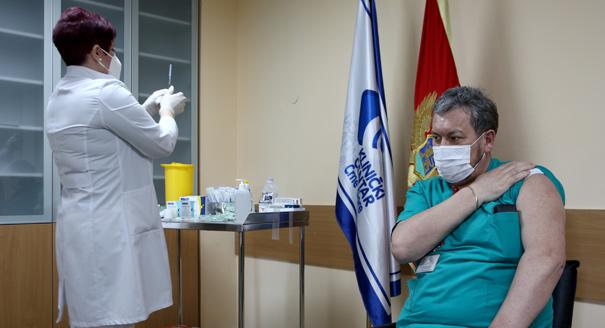
This episode looks at the domestic and international reception of Russia’s Sputnik V vaccine.
Alexander Gabuev, Polina Ivanova, Henry Foy
Russia is rapidly approaching a situation in which the public will lose the right to decide anything once and for all, because the authorities simply have no remaining political will or the resources to persuade the people.
Tatiana Stanovaya
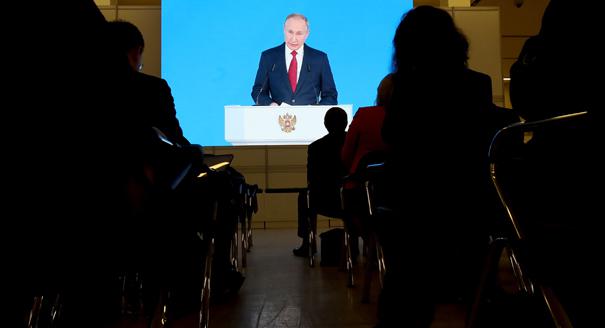
Two key mobilizing events—the vote to change the constitution and the Victory Day parade—were supposed to force Russians to temporarily forget about their low incomes and stagnating GDP. The pandemic meant they had to be postponed. Now—as lockdown measures are lifted—the Kremlin is trying to return to the scenario of rallying around the flag.
Andrei Kolesnikov
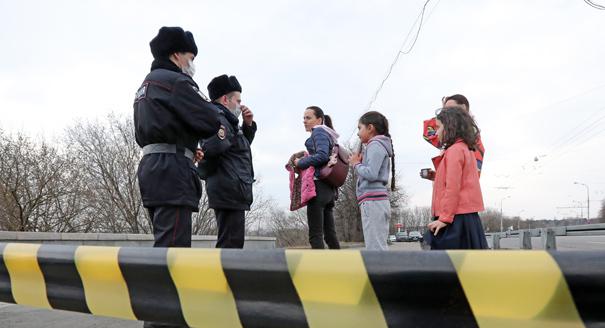
In trying to shirk responsibility for the fallout from the coronavirus pandemic, the Russian leadership is destroying the loyal majority it spent years building.
Andrey Pertsev
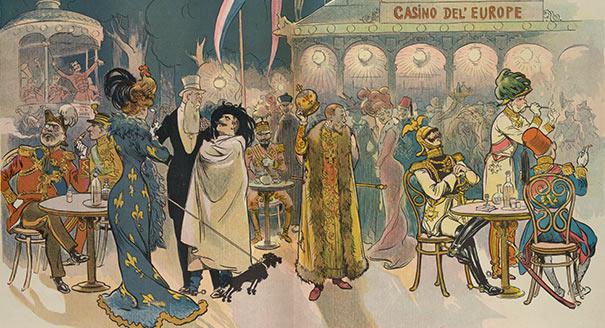
To avoid becoming part of a Sino-centric power bloc and maintain international equilibrium, which is critically important to Russia’s status and self-image, Moscow must reduce its dependence on China by fostering its relations with other large economic and financial players: primarily European countries, India, and Japan.
Dmitri Trenin