

{
  "authors": [
    "Frederic Grare",
    "C. Raja Mohan",
    "C. Uday Bhaskar"
  ],
  "type": "event",
  "centerAffiliationAll": "dc",
  "centers": [
    "Carnegie Endowment for International Peace"
  ],
  "collections": [],
  "englishNewsletterAll": "ctw",
  "nonEnglishNewsletterAll": "",
  "primaryCenter": "Carnegie Endowment for International Peace",
  "programAffiliation": "SAP",
  "programs": [
    "South Asia"
  ],
  "projects": [],
  "regions": [
    "North America",
    "United States",
    "South Asia",
    "India",
    "Afghanistan",
    "Pakistan",
    "China",
    "Southeast Asia"
  ],
  "topics": [
    "Security",
    "Foreign Policy"
  ]
}
The Strategic Environment in South Asia
Wed, May 1st, 2013
Washington, DC
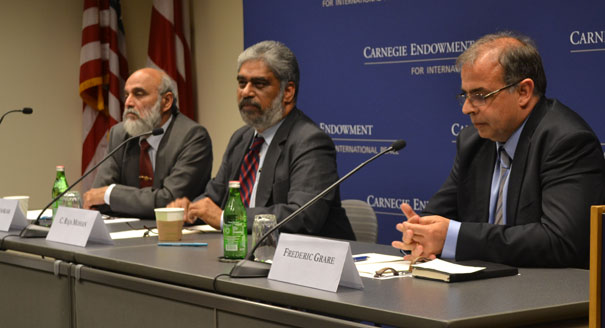
The strategic environment in South Asia is rapidly changing. Over the next decade, the United States, China, and India will form a critical strategic triangle while the individual relationships of these three nations with ASEAN, Iran, and Pakistan will have significant regional and global implications. Although globalization will lead to more robust engagement among the major actors, this will inevitably result in dissonances that pose complex challenges in the South Asian security domain. C. Uday Bhaskar and C. Raja Mohan discussed the critical role of the United States and China in dealing with the delicate strategic framework in South Asia. Carnegie’s Frederic Grare moderated.
Carnegie India does not take institutional positions on public policy issues; the views represented herein are those of the author(s) and do not necessarily reflect the views of Carnegie, its staff, or its trustees.
Event Speakers
Frederic Grare
Former Nonresident Senior Fellow, South Asia Program
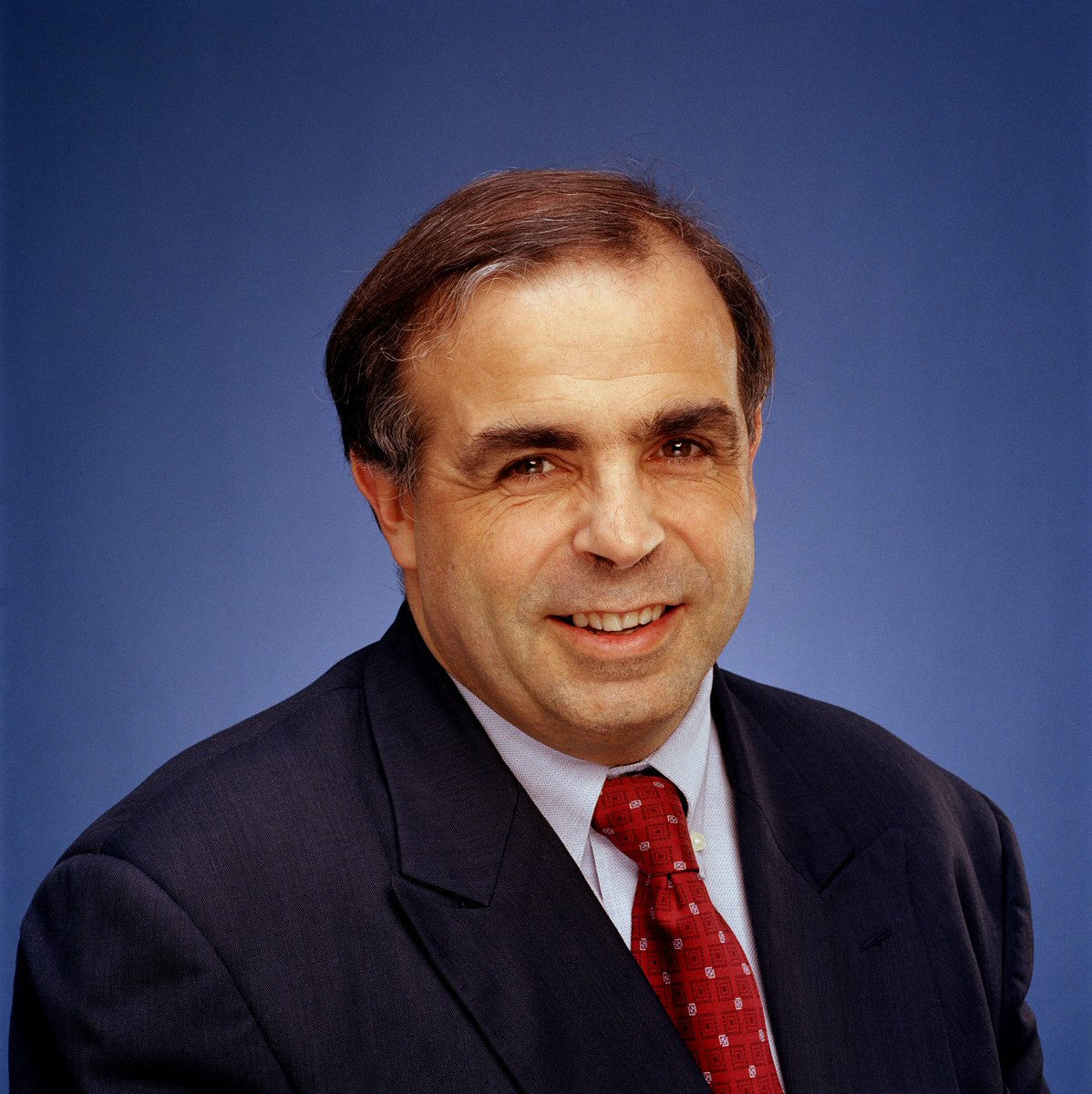
Frédéric Grare was a nonresident senior fellow at the Carnegie Endowment for International Peace, where his research focuses on Indo-Pacific dynamics, the search for a security architecture, and South Asia Security issues.
C. Raja Mohan
Former Nonresident Senior Fellow, Carnegie India
A leading analyst of India’s foreign policy, Mohan is also an expert on South Asian security, great-power relations in Asia, and arms control.
C. Uday Bhaskar