

In The Media
Minxin Pei
{
  "authors": [
    "Minxin Pei"
  ],
  "type": "legacyinthemedia",
  "centerAffiliationAll": "dc",
  "centers": [
    "Carnegie Endowment for International Peace"
  ],
  "collections": [],
  "englishNewsletterAll": "asia",
  "nonEnglishNewsletterAll": "",
  "primaryCenter": "Carnegie Endowment for International Peace",
  "programAffiliation": "AP",
  "programs": [
    "Asia"
  ],
  "projects": [],
  "regions": [
    "China"
  ],
  "topics": []
}
REQUIRED IMAGE
Source: Carnegie
Originally published in the Financial
Times, December 10, 2002
Of all the challenges facing China's new and largely untested leadership, none
is more critical to the survival of the Communist party than containing rampant
official corruption.
To be sure, corruption has always been a scourge for Chinese rulers. But even by China's own lax standards, corruption since the mid-1990s has become intolerable. The blending of a semi-reformed economy, authoritarian politics, decentralisation and burgeoning links to the outside world has allowed corruption to mutate into a voracious and dangerous strain.
In aggregate, estimates of the magnitude of corruption range from 3 to 5 per cent of gross domestic product. Kick-backs from government purchases and construction projects account for a large share (about 1.5 per cent of GDP). Another principal source of corruption is illegal use of public funds. In 2001, for example, China's national auditing agency uncovered illegal spending of more than 160bn yuan - about 1.7 per cent of GDP. Because 8-13 per cent of GDP in government revenues is not spent according to budget rules, huge misuse of public funds is inevitable.
Such estimates understate corruption's real damage to China's economic prospects and regime survivability. Corruption in authoritarian regimes tends to amplify systemic risks and undermine the rulers' legitimacy. It also makes the regime particularly vulnerable to crises.
Beijing's leaders should be especially alarmed because corruption seems to have infected the financial system, as in Indonesia before the 1997-98 crisis. Symptoms of corruption in the financial sector include massive theft of bank funds by insiders. In October 2001, bank auditors discovered that managers at a Bank of China branch in Guangdong province had stolen more than $483m (£310m). All the suspects fled China with their loot. In other instances of banking scandals, senior managers, including the head of the Bank of China, were found to have authorised big illegal loans to cronies that eventually went bad.
China's porous banking system, along with the country's exploding trade and investment ties with the outside world, has also facilitated massive capital flight abroad. The Chinese government estimated that capital flight averaged $20bn a year in the late 1990s. According to press reports, many corrupt officials often transfer their ill-gotten gains and set up havens abroad for their family members before they themselves decide to flee. When a former governor of Yunnan province was arrested for corruption, the police found he had illegally obtained five different foreign passports as preparation for flight abroad.
An official press story in January this year claimed that more than 4,000 corrupt officials, with $600m in stolen funds, were on the run (many supposedly abroad). Officials fleeing with stolen assets have become so routine that a vivid term - "evaporation" - has been coined to describe sudden disappearance by fugitive officials.
But, from the perspective of China's corruption-fighters, worse than evaporation is systematic official collusion. In recent years, corruption cases involving groups of senior officials have grown in frequency and size. In Xiamen and Shenyang, large cities with millions of inhabitants, almost all the main municipal officials were involved in criminal activities in the late 1990s. Most disturbingly, some symptoms associated with the late stages of regime decay - such as illegal subcontracting of tax collection and the sale of government offices - have emerged, mainly in agrarian provinces in the hinterlands.
Unfortunately, Beijing has adopted mostly administrative measures to combat corruption. It selectively prosecutes certain high-profile individual cases to demonstrate its commitment (official data show that only 7 per cent of all Communist party members proved to have engaged in wrongdoing are criminally prosecuted). Such half-hearted efforts have eroded public confidence in the government's ability to contain corruption.
A government that is committed to stamping out corruption must, as experience
in other countries shows, take three measures: reduce government influence in
the economy; enforce the rule of law; and unleash the press and the forces of
civil society. Alas, these steps would force Chinese leaders into a new dilemma.
As a popular Chinese aphorism puts it, corruption will destroy the state but
fighting it will kill the Communist party.

Former Adjunct Senior Associate, Asia Program
Pei is Tom and Margot Pritzker ‘72 Professor of Government and the director of the Keck Center for International and Strategic Studies at Claremont McKenna College.
Recent Work
Minxin Pei
Minxin Pei
Carnegie India does not take institutional positions on public policy issues; the views represented herein are those of the author(s) and do not necessarily reflect the views of Carnegie, its staff, or its trustees.

After the chill in ties between 2020 and 2024 that brought India–China relations to their lowest point in several decades, the two countries have engaged each other afresh. This paper argues that there are predominantly four imperatives guiding India’s approach to China, and they exist in an order of priority.

Saheb Singh Chadha

This piece argues that India’s central challenge is not managing a single flashpoint but resolving the underlying tension between expansion and institutional coherency of the BRICS grouping.

Vrinda Sahai

This paper examines the evolution of India-China economic ties from 2005 to 2025. It explores the impact of global events, bilateral political ties, and domestic policies on distinct spheres of the economic relationship.

Santosh Pai
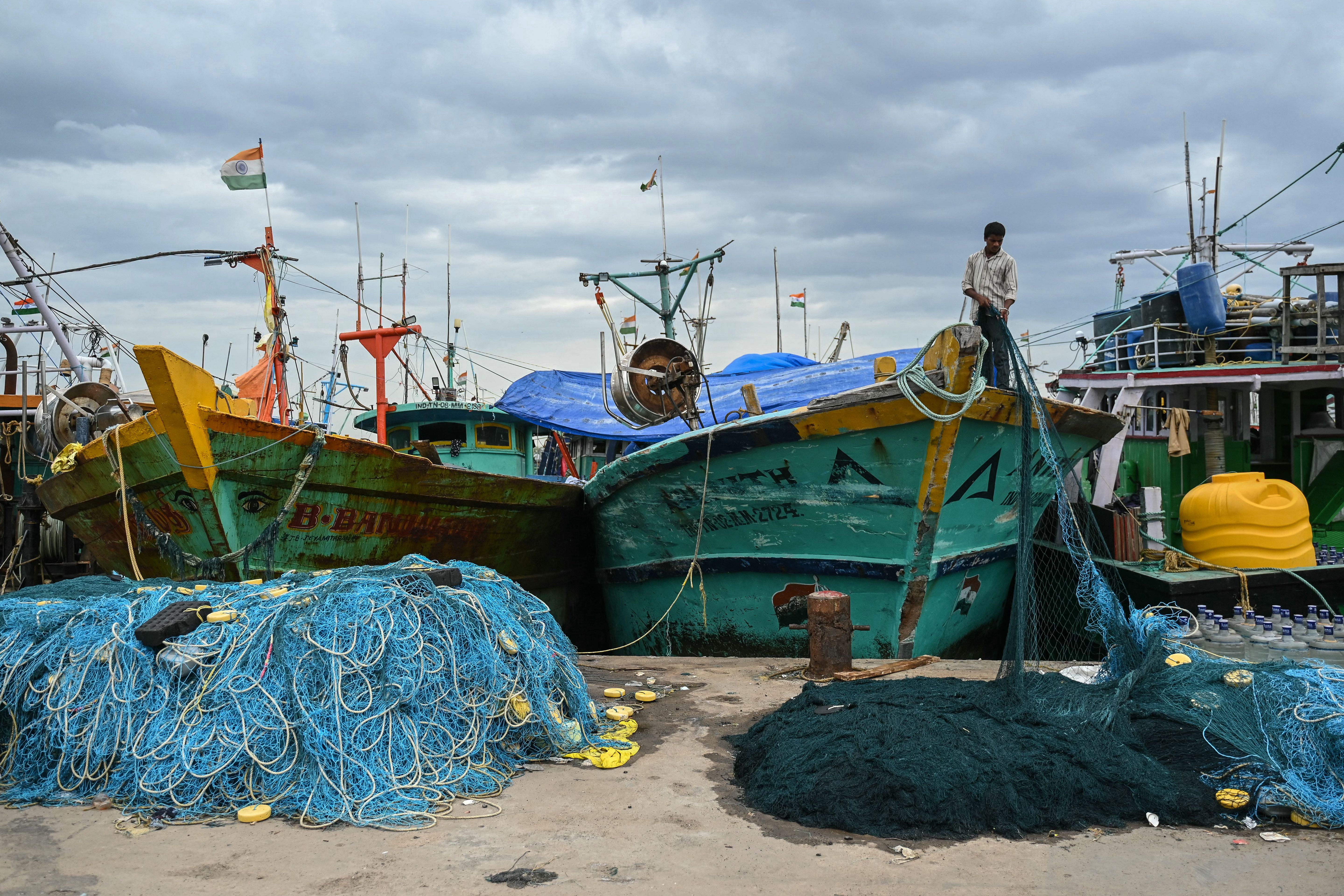
This article examines the scale and impact of Chinese IUU fishing operations globally and identifies the nature of the challenge posed by IUU fishing in the Indian Ocean Region (IOR). It also investigates why existing maritime law and international frameworks have struggled to address this growing threat.


Ajay Kumar, Charukeshi Bhatt

This compendium brings together three essays by scholars who participated in Carnegie India's Security Studies Dialogue in 2024, each examining a different aspect of China’s policies. Drawing on their expertise and research, the authors offer fresh perspectives on key geopolitical challenges.



Vijay Gokhale, Suyash Desai, Amit Kumar, …