

Paper
Ashley J. Tellis
{
  "authors": [
    "Ashley J. Tellis"
  ],
  "type": "legacyinthemedia",
  "centerAffiliationAll": "dc",
  "centers": [
    "Carnegie Endowment for International Peace"
  ],
  "collections": [],
  "englishNewsletterAll": "asia",
  "nonEnglishNewsletterAll": "",
  "primaryCenter": "Carnegie Endowment for International Peace",
  "programAffiliation": "AP",
  "programs": [
    "Asia"
  ],
  "projects": [],
  "regions": [
    "East Asia",
    "China"
  ],
  "topics": [
    "Security",
    "Military",
    "Foreign Policy"
  ]
}
Source: Getty
Beijing seeks to reassure the world that it is a gentle giant. This strategy of emphasizing peaceful ascendancy will likely satisfy Chinese interests until it becomes a true rival of the United States. Washington should recognize that if it mishandles its relations with its current or prospective partners, it might be faced with an absence of allies precisely when it needs them most.
Source: Foreign Policy

In 2003, Chinese President Hu Jintao's advisors hatched a new ft theory. Dubbed China's "peaceful rise," it held that, in contrast to the warlike behavior of ascending great powers in the past, the economic ties between China and its trading partners not only made war unthinkable but would actually allow all sides to rise together. The theory's name didn't survive power struggles within the Communist Party, but the general idea lives on in new and updated formulations such as "peaceful development" and "peaceful coexistence." Regardless of the label Chinese apparatchiks ultimately agree on, one thing is clear: China spends a great deal of time worrying about what other countries think about it.
And for good reason: While China's economic growth over the last 20 years has generated tremendous wealth at home, it has also stirred apprehension abroad. Beijing knows that the United States and countries throughout Asia are casting a wary eye in its direction, worried that China could ultimately become a regional hegemon that threatens their security. It has become obvious to Beijing that a new Chinese grand strategy is required-one that would allow it to continue its economic growth, technological modernization, and military buildup without provoking other countries into a costly rivalry. The China we see striding on the world stage today is cut from the cloth of that new grand strategy.
Beijing began by making nice in its own neighborhood. It has sought to develop friendly relations with the major states on its periphery-Russia, Japan, India, and the Central and Southeast Asian states-that are potential balancing partners in any future U.S.-led, anti-Chinese coalition. This good neighbor approach is dramatically different from its behavior of the 1990s. Instead of invoking Chinese claims in territorial and maritime disputes as it did during that decade, Beijing today has made a special effort to assure other states that it has the best intentions. China agreed to codes of conduct where territorial disputes have economic consequences, such as the South China Sea. It began to resolve border disputes with important neighbors, such as India. It started to take its nonproliferation obligations much more seriously than before, including efforts to tighten export controls of potentially dangerous dual-use technologies. And it expressed a willingness to shelve political disputes that cannot be reconciled immediately, so long as none of the other parties (such as Taiwan) disrupts the status quo. In 1994, during Washington's nuclear standoff with Pyongyang, Beijing's role was minor. Today, it is the driving force behind the complex six-party talks on North Korea's nuclear arsenal.
No relationship factors more into this diplomatic about-face than China's relationship with the United States. Beijing has gone out of its way to mollify Washington, trying to demonstrate that it has neither the intention nor the capability of challenging U.S. leadership in Asia even as it seeks to promote a regional environment where a U.S. political-military presence will eventually become unnecessary. Toward this end, Beijing has used the war on terror to position itself as a U.S. partner. Yet, it has also sought to preempt a potential U.S.-led coalition by deepening economic ties with American allies such as Japan, South Korea, Taiwan, and Australia. These countries would pay a steep economic price if they were to support any U.S.-led, anti-Chinese policies in the future. And China has adroitly exploited every manifestation of regional dissatisfaction with America's obsessive and overbearing war on terror, seeking to cast itself as a friendly, noninterfering alternative to U.S. might in the region. It is even proposing new institutional arrangements wherein China can exercise a leadership role that excludes the United States, such as the East Asian Economic Zone.
China has sought to make its presence felt outside of Asia, too. Much of China's diplomatic globetrotting has been driven by the need to secure stable energy sources to fuel its gigantic economic machine. China is now routinely sending trade missions not only to Central Asia and the Persian Gulf but also to Africa and Latin America. And, as if giving notice of its full arrival as a great power on the world stage, China has become a much more robust player in the United Nations, the World Trade Organization, and other international bodies. More interesting, China has become acutely conscious of the need to promote its culture abroad, partly because it recognizes the benefits of "soft power," but also because it believes that a genuine appreciation of Confucian rectitude will go a long way in mitigating suspicions about how Beijing might exercise its future power.
This strategy of emphasizing peaceful ascendancy in word and deed will likely satisfy Chinese interests until it becomes a true rival of the United States. At that point, China will face another strategic crossroads. Whether a turn toward strident assertiveness or deepened accommodation represents the future of China's geopolitical orientation, only time will tell. But Washington should recognize that if it mishandles its relations with its current or prospective partners, it might be faced with an absence of allies precisely when it needs them most. China's current grand strategy is focused on making that scenario a reality.
Former Senior Fellow
Ashley J. Tellis was a senior fellow at the Carnegie Endowment for International Peace.
Recent Work
Ashley J. Tellis
Ashley J. Tellis
Carnegie India does not take institutional positions on public policy issues; the views represented herein are those of the author(s) and do not necessarily reflect the views of Carnegie, its staff, or its trustees.

This piece examines India’s response to U.S. sanctions and tariffs, specifically assessing the immediate market consequences, such as alterations in import costs, and the broader strategic implications for India’s energy security and foreign policy orientation.
Vrinda Sahai
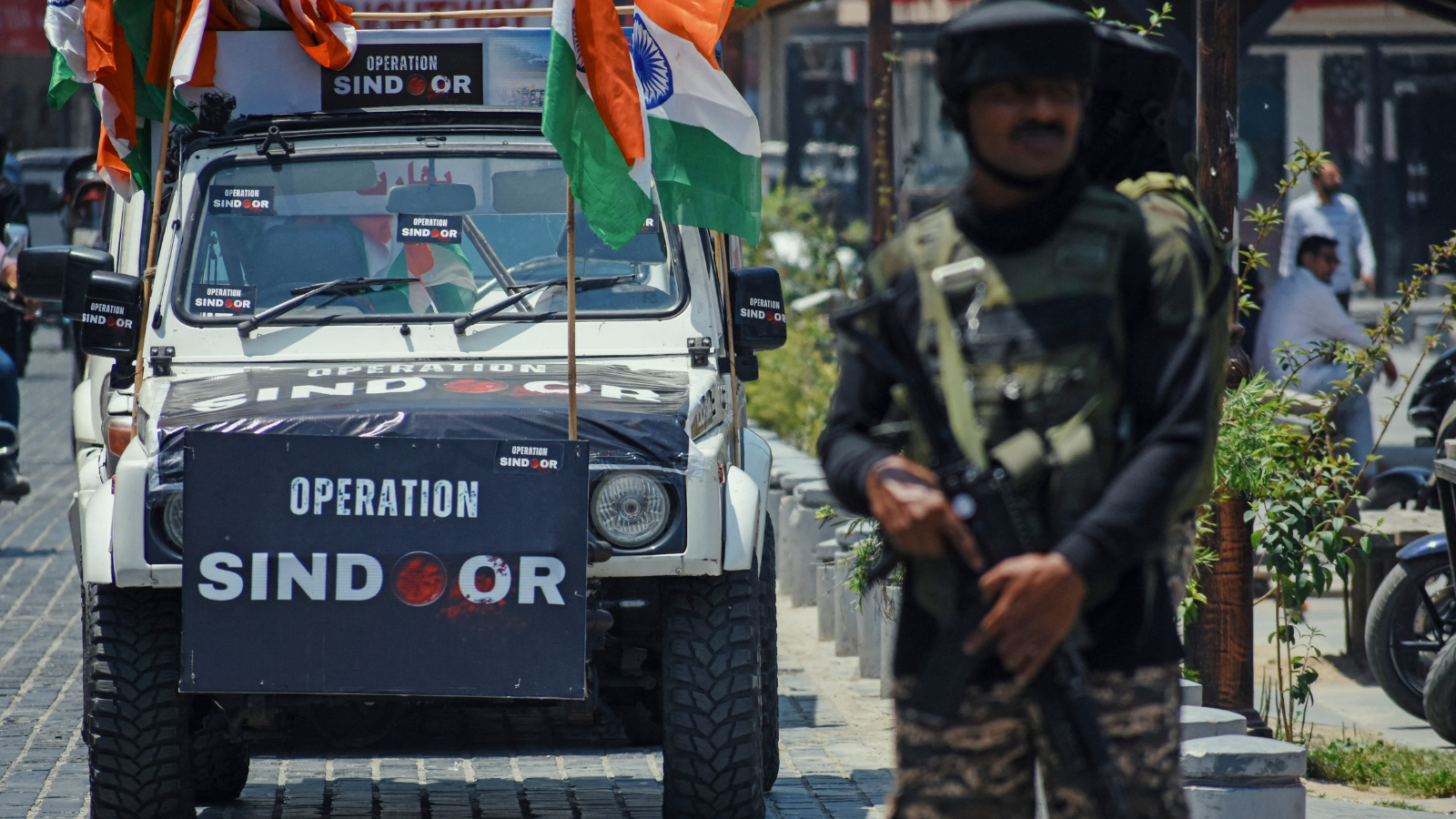
The India-Pakistan conflict that played out between May 6 and May 10, 2025, offers several military lessons. This article presents key takeaways from Operation Sindoor and breaks down how India’s preparations shaped the outcome and what more is needed to strengthen future readiness.

Dinakar Peri
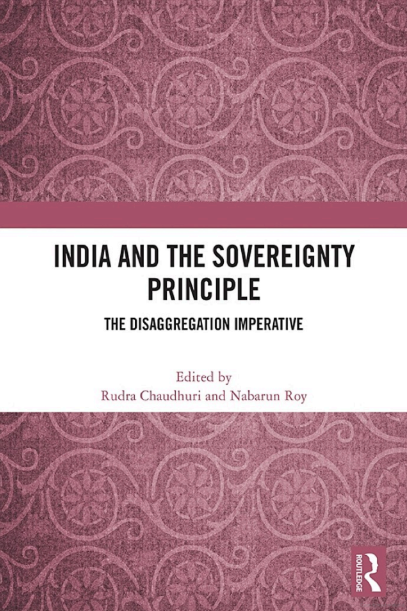
This book offers a comprehensive analysis of India's evolving relationship with sovereignty in a complex global order. Moving beyond conventional narratives, it examines how the sovereignty principle shapes India's behavior across four critical domains—from traditional military power to contemporary data governance.

Rudra Chaudhuri, Nabarun Roy

This paper examines the evolution of India-China economic ties from 2005 to 2025. It explores the impact of global events, bilateral political ties, and domestic policies on distinct spheres of the economic relationship.

Santosh Pai
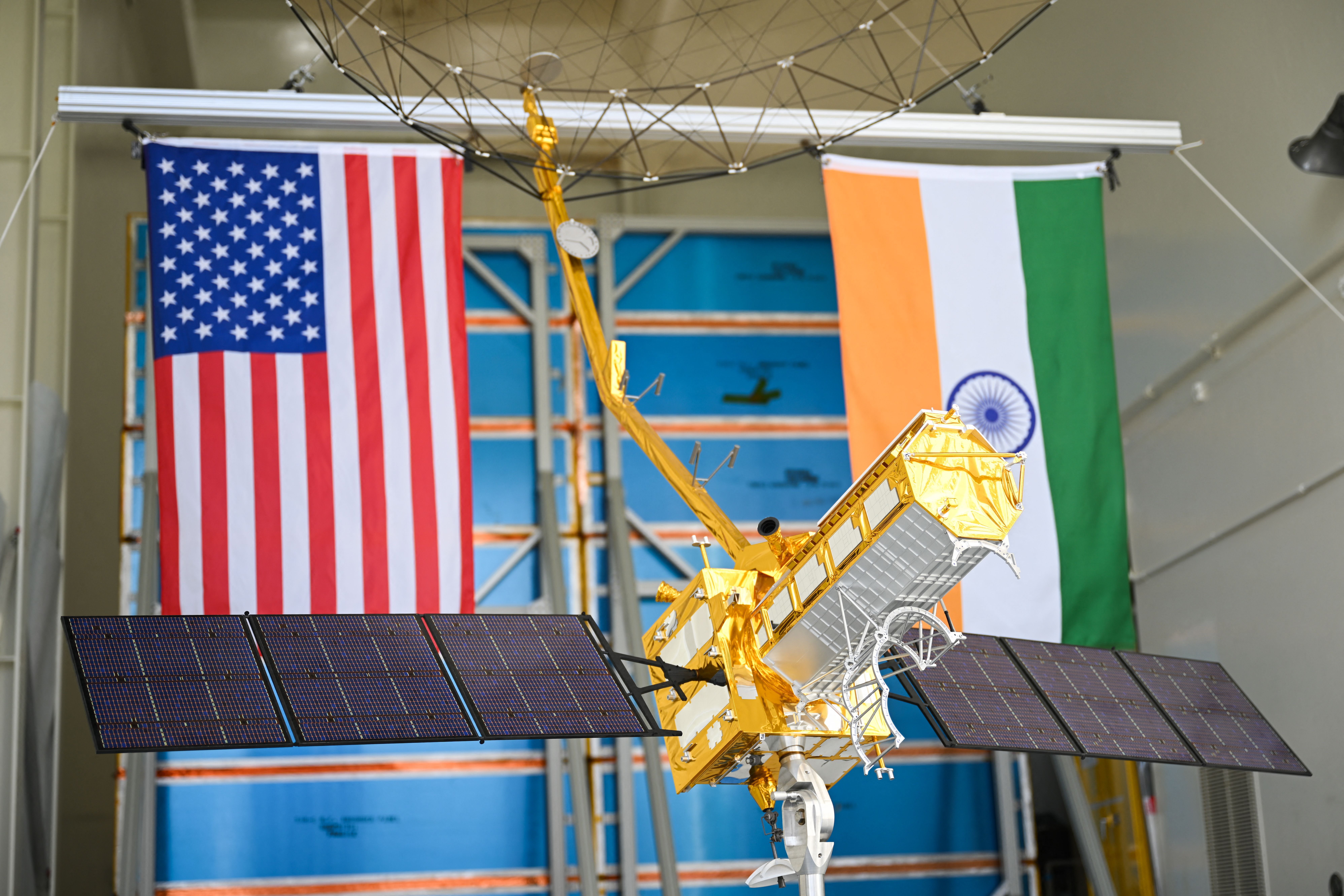
On July 30, 2025, the United States announced 25 percent tariffs on Indian goods. While diplomatic tensions simmered on the trade front, a cosmic calm prevailed at the Sriharikota launch range. Officials from NASA and ISRO were preparing to launch an engineering marvel into space—the NASA-ISRO Synthetic Aperture Radar (NISAR), marking a significant milestone in the India-U.S. bilateral partnership.

Tejas Bharadwaj