

Paper
Ashley J. Tellis
{
  "authors": [
    "Ashley J. Tellis"
  ],
  "type": "commentary",
  "blog": "Emissary",
  "centerAffiliationAll": "dc",
  "centers": [
    "Carnegie Endowment for International Peace"
  ],
  "collections": [
    "Trump’s Disruptive 100 Days"
  ],
  "englishNewsletterAll": "ctw",
  "nonEnglishNewsletterAll": "",
  "primaryCenter": "Carnegie Endowment for International Peace",
  "programAffiliation": "SAP",
  "programs": [
    "South Asia"
  ],
  "projects": [],
  "regions": [
    "India",
    "United States"
  ],
  "topics": [
    "Economy",
    "Global Governance",
    "Foreign Policy"
  ]
}
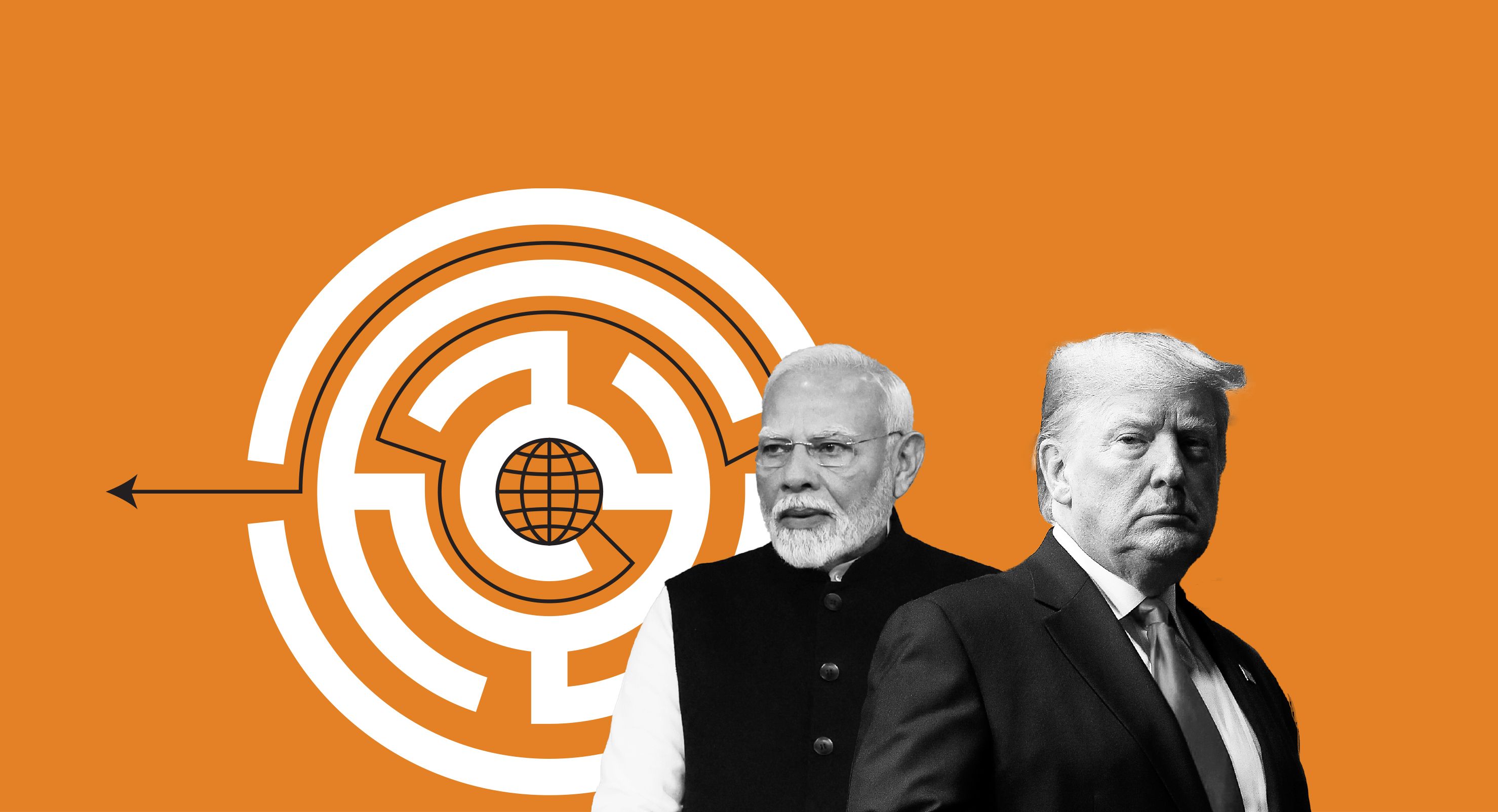
Photos by Getty Images
Even if New Delhi secures tactical gains, the strategic losses could be enduring.
This piece is part of a Carnegie series examining the impacts of Trump’s first 100 days in office.
The tumultuous 100 days after Donald Trump’s return to the U.S. presidency have been disruptive for the United States and the world. Despite New Delhi’s feigned optimism, U.S.-Indian relations have been disturbed as well. For a quarter century now, bilateral ties between Washington and New Delhi had been dramatically improving, as successive U.S. administrations—including Trump’s during his first term—wooed India in the context of the competition with China.
The embrace of India intensified during Joe Biden’s presidency, when New Delhi was viewed as an intimate collaborator in Washington’s efforts at confronting Beijing. Consequently, India’s domestic illiberalism and trade mercantilism were discounted as administration officials sought to build new partnerships in high technology, entice businesses diversifying from China to invest in India, and position India as a new manufacturing node to limit China’s industrial dominance. These goals aligned perfectly with India’s own ambitions to expand its national power, which had the virtue of—at least transitorily—aiding the United States to cement its geopolitical dominance and protect the liberal international order.
Trump’s return has altered the traditional direction of U.S. grand strategy in dramatic ways. His administration’s striking contempt for the liberal order is now clear, but it is also accompanied by atavistic attempts at territorial expansionism, the imposition of “reciprocal” tariffs on U.S. trading partners, and confrontations with many U.S. allies worldwide.
In this environment, India has, first and foremost, sought to protect its past bilateral gains by seeking to mollify Trump through conciliatory public diplomacy. Prime Minister Narendra Modi and his senior aides rushed to Washington to meet the president in a highly choreographed display of bonhomie, attempting to reassure him that unlike many of his other national targets, India is neither a free-loading ally nor a foe and would be a valuable partner in his “Make America Great Again” efforts. Beyond lavishly congratulating Trump for attempting to end the Ukraine war, Modi even offered a cheesy public endorsement of MAGA with a twist intended to protect India’s equities—all intended to deflect the ravages of Trump’s new policies.
These policy changes matter for India. In a striking departure from the past, Trump’s behavior has underscored that he does not think much of India in the context of U.S. rivalry with China. His administration may have other ideas—which could surface in time—but for the moment, Trump is obsessed with correcting America’s trade deficits, which makes India a juicy target.
Recognizing this priority, Indian policymakers have moved in two directions: seeking to conclude an interim trade agreement that would hopefully mitigate Trump’s reciprocal levies (which now involve a 26 percent tariff on India), and offering assurances that India’s problematic nuclear liability law will be amended to permit U.S. nuclear reactor exports to India.
These solutions and others are driven by the imperative of protecting India’s relationship with the United States in the changed circumstances—a partnership that is vital both for India’s economic growth through continued access to the U.S. market and for geopolitical assurance in the face of India’s continued distrust of China.
That Washington now shows little interest in protecting the international order also poses new challenges to India. Although its leaders sometimes discount the value of the existing system—mostly because it has not fully accommodated India’s status claims—they have moved quickly to bolster other international relationships as supplements to the United States.
India’s hedging amid the current uncertainties has assumed different dimensions, including efforts to conclude a free-trade agreement with the European Union and to strengthen ties with key European partners more generally; willingness to explore resuscitating ties with China; determination to preserve India’s traditional relationship with Russia; and persistent strengthening of ties with Australia, Israel, Japan, the wealthy Arab states, and the Global South.
While Indian policymakers are astute enough to recognize that Trump’s disruptive policies could impose serious costs on New Delhi, they have nonetheless publicly touted the benefits of his disorder while seeking to exploit its opportunities. For example, the administration’s dismantling of the U.S. bureaucracy and its aversion to export controls have created new openings for India to acquire controlled technologies that were previously unavailable. Similarly, New Delhi views the United States’s attacks on its alliances and on international institutions as expanding the prospects for the emergence of multipolarity and, by implication, creating new space for India’s arrival as a great power.
But this expectation is illusory. The destruction of the liberal international order does not presage multipolarity but rather consolidates the bipolarity that will subsist amid increasing entropy in global politics. Trump’s policies will enhance the conditions for China’s continued rise, increase its legitimacy as a responsible power, and—by burdening India’s development prospects and damaging U.S. alliances along the way—undermine the countervailing forces that could coherently resist Beijing when needed.
As a result, China will join the United States as a true great power, and despite not matching up fully, both nations will stand apart from the rest of the international system in terms of sheer capabilities for several decades to come. Whether this outcome really serves India’s interests remains to be seen, and even if New Delhi opportunistically secures some tactical gains as a result of Trump’s turbulence, the strategic losses it suffers could be enduring.
Read more from this series, including:
Former Senior Fellow
Ashley J. Tellis was a senior fellow at the Carnegie Endowment for International Peace.
Recent Work
Ashley J. Tellis


Stewart Patrick, Erica Hogan, Oliver Stuenkel, …
Carnegie does not take institutional positions on public policy issues; the views represented herein are those of the author(s) and do not necessarily reflect the views of Carnegie, its staff, or its trustees.

Rubio’s recent visit brought welcome attention, but more capital requires governance changes that may be a hard sell for regional governments.

Jennifer B. Murtazashvili
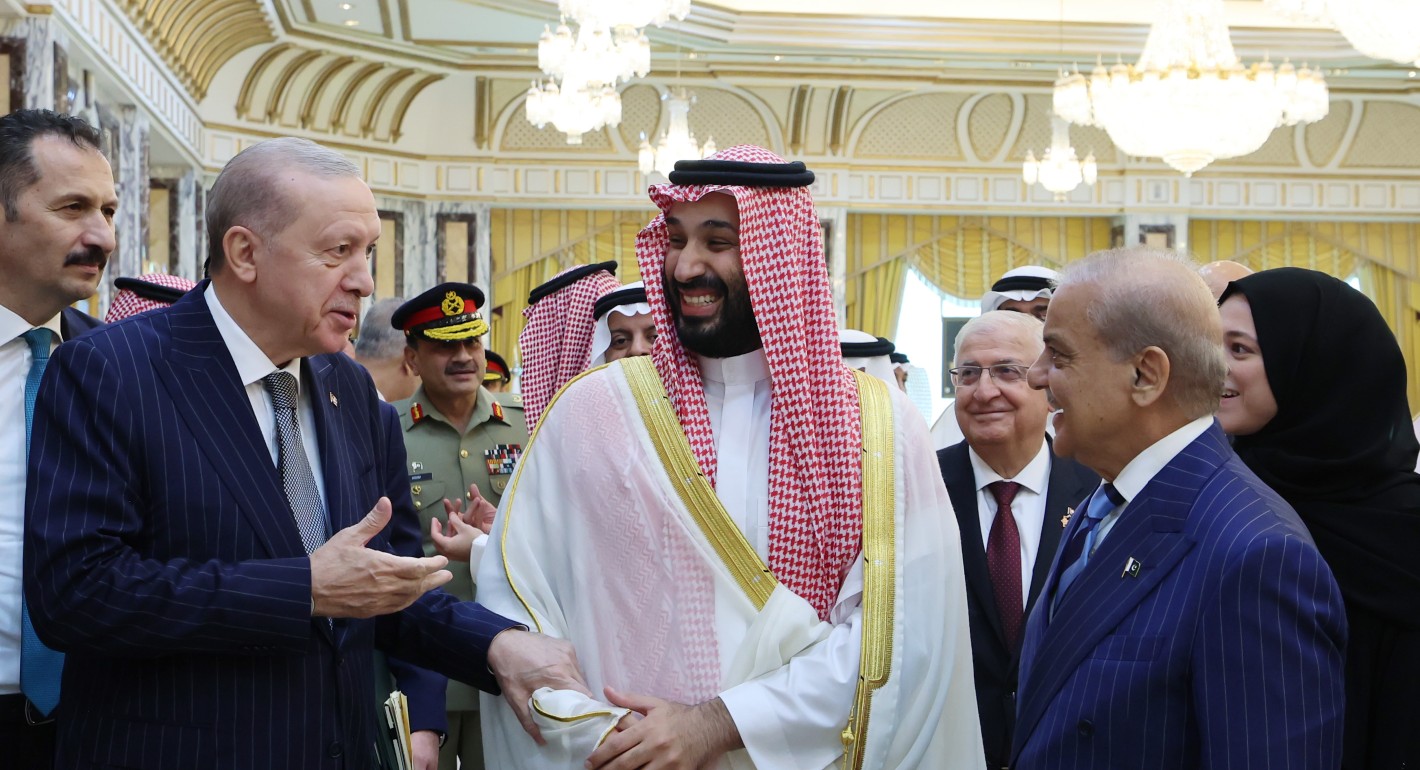
Why Pakistan, Saudi Arabia, and Turkey are joining forces on regional security.


Alper Coşkun, Amr Hamzawy
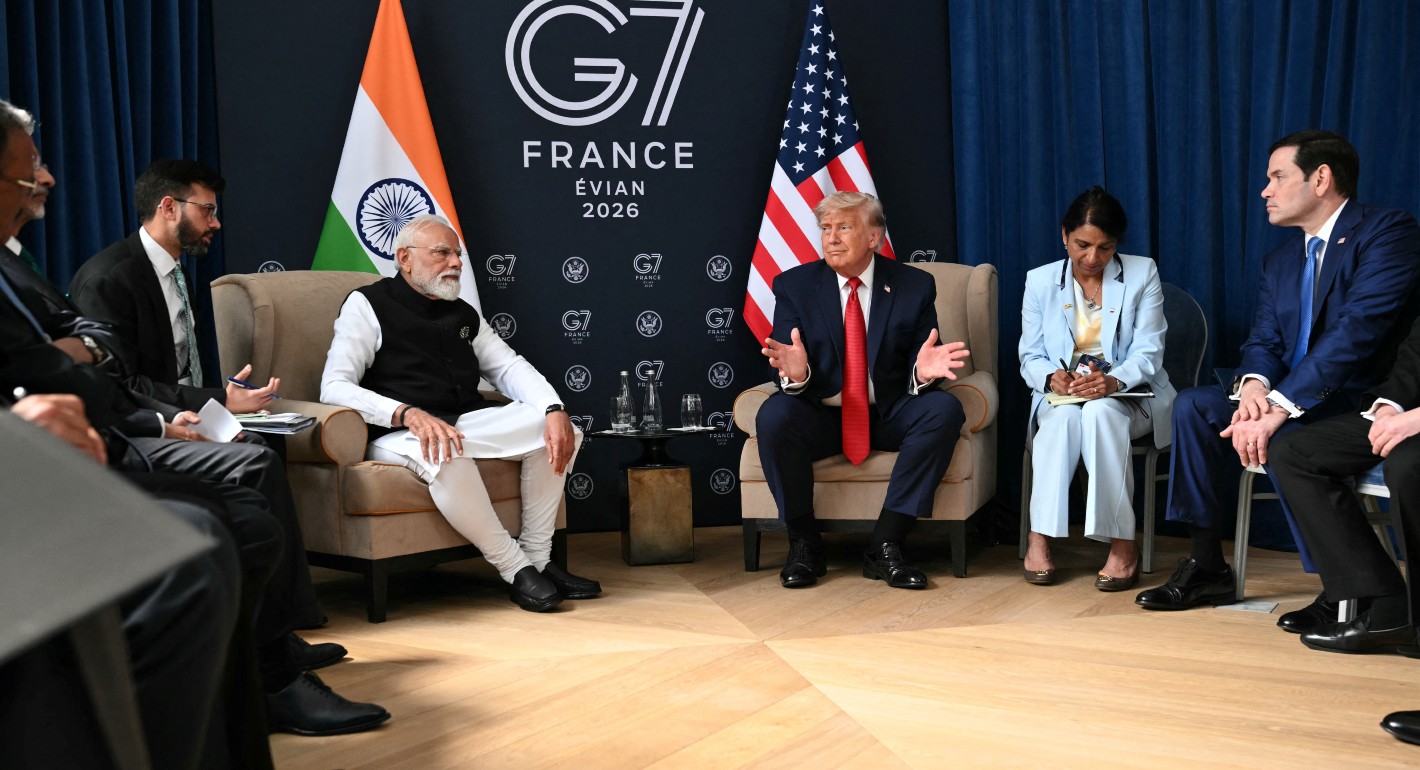
Despite public disputes over trade and immigration, the strategic partnership’s foundations remain sturdy.

Sameer Lalwani
It signals a new era of tech diffusion and warfare.

Steve Feldstein

Despite its flop at the box office, the film raises important questions for the climate community to answer.
Leonardo Martinez-Diaz