• Research
  • About
  • Experts
Carnegie India logoCarnegie lettermark logo
AI
{
  "authors": [],
  "type": "pressRelease",
  "centerAffiliationAll": "",
  "centers": [
    "Carnegie Endowment for International Peace"
  ],
  "collections": [],
  "englishNewsletterAll": "",
  "nonEnglishNewsletterAll": "",
  "primaryCenter": "Carnegie Endowment for International Peace",
  "programAffiliation": "",
  "programs": [],
  "projects": [],
  "regions": [],
  "topics": [
    "Foreign Policy"
  ]
}
REQUIRED IMAGE

REQUIRED IMAGE

Press Release

Press Release: Future of Foreign Policy Gathers at the Carnegie Endowment

Link Copied
Published on Jun 23, 2006

For Immediate Release: June 23, 2006
Contact: Jennifer Linker, 202/939-2372, jlinker@CarnegieEndowment.org


On June 20, 2006, the first annual Carnegie Foreign Policy Conference was held at the Carnegie Endowment under the theme of “Managing U.S. Dominance.” The conference was a gathering of 100 outstanding young professionals who will be responsible for adapting U.S. foreign policy to the future geopolitical environment. The Carnegie Endowment intends to host the conference each June for selected young professionals chosen through an application process.

Organized by Carnegie’s Junior Fellow class of 2005-2006, the conference included keynote speeches by Robert Gallucci, Dean of the Georgetown School of Foreign Service, and Dr. Paul Pillar, former CIA National Intelligence Officer for the Near East and South Asia. Jessica T. Mathews, president of the Carnegie Endowment, opened the conference by welcoming this “group of individuals with an amazing richness of experience, across many sectors.”

During the day, breakout sessions engaged participants in an informative dialogue to generate ideas for confronting future challenges. Topics included democracy promotion, China’s rise, the effectiveness of intergovernmental organizations, U.S. energy policy, and the role of non-state actors, among others. These sessions were led by foreign policy scholars Michael McFaul (Carnegie Endowment), John Judis (Carnegie Endowment), David Bosco (Foreign Policy), Michael O’Hanlon (Brookings Institution), Nathan Brown (Carnegie Endowment), Steve Mufson (Washington Post), Tod Lindberg (Hoover Institution), and Michael Swaine (Carnegie Endowment).

Click here to access the Conference Agenda.

Click here for transcripts and more information about the Carnegie Foreign Policy Conference or go to www.CarnegieEndowment.org/JrFellowsConf.

The Carnegie Junior Fellows Program: Each year the Endowment offers 8-10 one-year fellowships to uniquely qualified graduating seniors and individuals who have graduated during the past academic year. They are selected from a pool of nominees from close to 300 colleges. For more information go to: www.CarnegieEndowment.org

2005-2006 Carnegie Junior Fellows Ben Bain, Dina Bishara, Danielle Cohen, Matthew Gibson, Faaiza Rashid, Meredith Riley, and Katherine Vyborny organized the event.

Press Contact: Jennifer Linker, (202) 939-2372, jlinker@CarnegieEndowment.org

If you have received this message in error, send a message to info@CarnegieEndowment.org
###

Foreign Policy

Carnegie India does not take institutional positions on public policy issues; the views represented herein are those of the author(s) and do not necessarily reflect the views of Carnegie, its staff, or its trustees.

More Work from Carnegie India

  • Paper
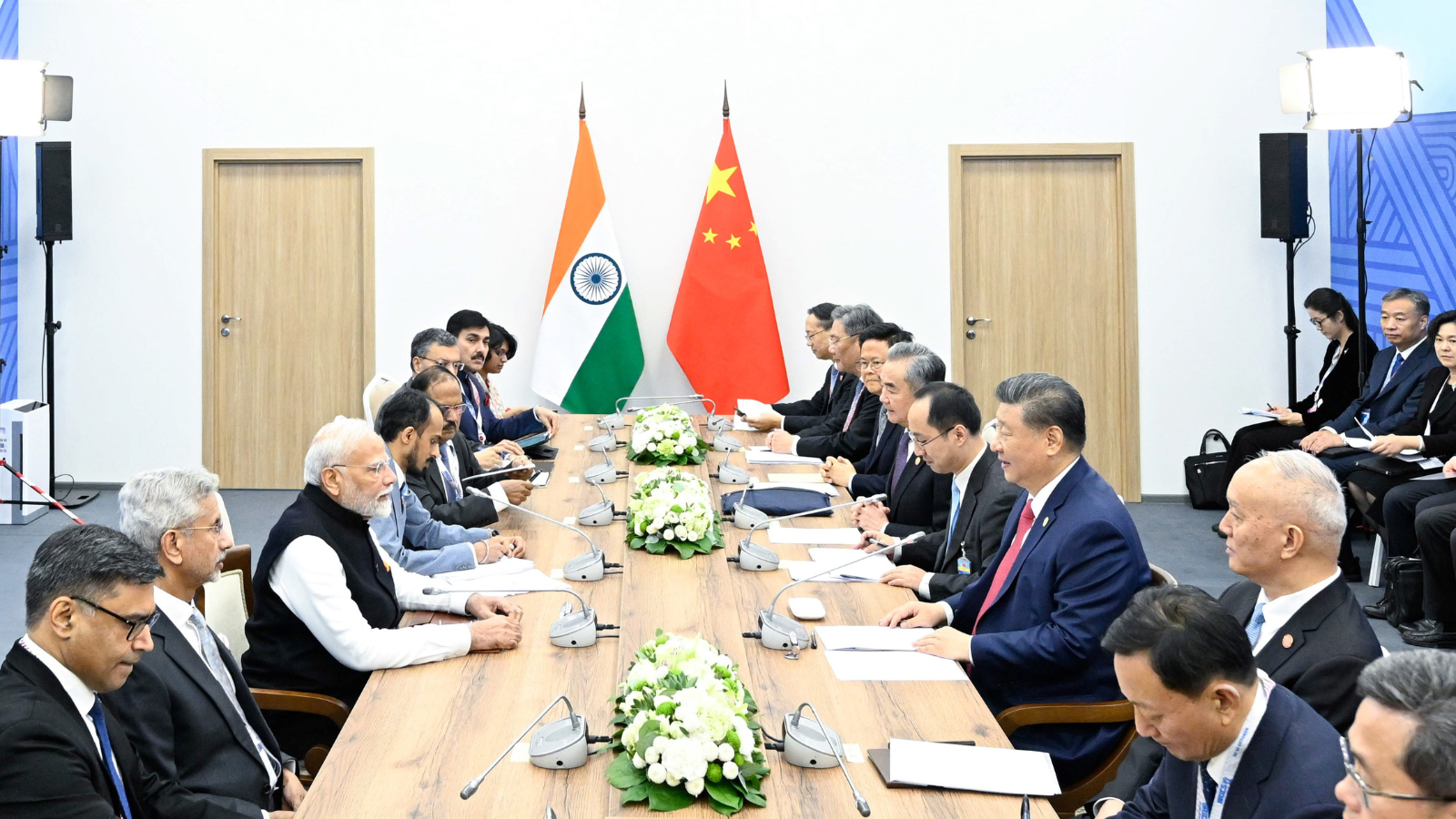
    Threading the Needle: India’s Path Forward with China

    After the chill in ties between 2020 and 2024 that brought India–China relations to their lowest point in several decades, the two countries have engaged each other afresh. This paper argues that there are predominantly four imperatives guiding India’s approach to China, and they exist in an order of priority.

      Saheb Singh Chadha

  • Article
    Managing Divergence: India’s BRICS Presidency in 2026

    This piece argues that India’s central challenge is not managing a single flashpoint but resolving the underlying tension between expansion and institutional coherency of the BRICS grouping.

      Vrinda Sahai

  • Article
    India–Africa Strategic Partnership: Challenges, Potential, and Possible Pathways

    A partnership between India, a country of subcontinental size, and Africa, a continent of fifty-four countries, may seem asymmetric until one notes that both are home to nearly the same number of people—1.4 billion. This essay spells out the existing challenges to the partnership, its optimal potential, and the possible pathways to realize it over the next quarter-century.

      Rajiv Bhatia

  • Commentary
    Emerging From the “Zombie State” of Trade Agreements: The India-EU FTA

    The India–EU Free Trade Agreement (FTA) is shaping up to be one of the most consequential trade negotiations, both economically and strategically. But, what’s in the agreement, what’s missing, and what will determine its success in the years ahead

      Vrinda Sahai, Nicolas Köhler-Suzuki

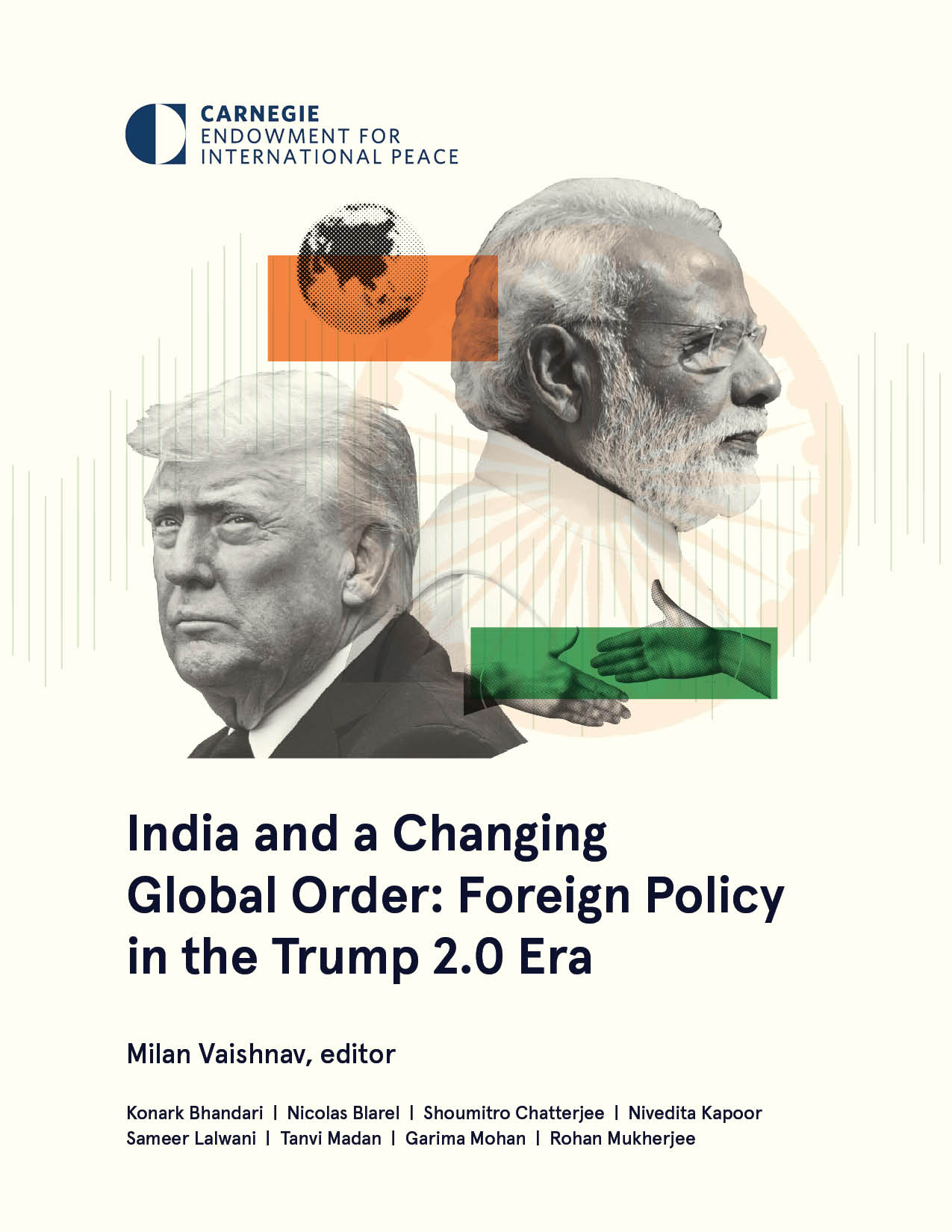
  • India and a Changing Global Order: Foreign Policy in the Trump 2.0 Era
    Research
    India and a Changing Global Order: Foreign Policy in the Trump 2.0 Era

    Trump 2.0 has unsettled India’s external environment—but has not overturned its foreign policy strategy, which continues to rely on diversification, hedging, and calibrated partnerships across a fractured order.

      • Sameer Lalwani
      • +6

      Milan Vaishnav, ed., Sameer Lalwani, Tanvi Madan, …

Get more news and analysis from
Carnegie India Newsletter
Carnegie India logo, white
Unit C-4, 5, 6, EdenparkShaheed Jeet Singh MargNew Delhi – 110016, IndiaPhone: 011-40078687
  • Research
  • About
  • Experts
  • Projects
  • Events
  • Contact
  • Careers
  • Privacy
  • For Media
Get more news and analysis from
Carnegie India Newsletter
© 2026 Carnegie Endowment for International Peace. All rights reserved.