• Research
  • About
  • Experts
Carnegie India logoCarnegie lettermark logo
AI
{
  "authors": [],
  "type": "pressRelease",
  "centerAffiliationAll": "dc",
  "centers": [
    "Carnegie Endowment for International Peace"
  ],
  "collections": [],
  "englishNewsletterAll": "ctw",
  "nonEnglishNewsletterAll": "",
  "primaryCenter": "Carnegie Endowment for International Peace",
  "programAffiliation": "NPP",
  "programs": [
    "Nuclear Policy"
  ],
  "projects": [],
  "regions": [],
  "topics": [
    "Nuclear Policy"
  ]
}
REQUIRED IMAGE

REQUIRED IMAGE

Press Release

Press Release: International Experts Name Top Nonproliferation Priorities

Link Copied
Published on Aug 21, 2007

FOR IMMEDIATE RELEASE: August 21, 2007

- NEWS RELEASE -


WASHINGTON, Aug 21—An unprecedented gathering of 800 nonproliferation experts from 33 countries has identified ten key priorities for the nonproliferation regime, providing specific recommendations for international agencies; the business community; and the United States, EU, and Russia.

The Top Ten Results from the 2007 Carnegie International Nonproliferation Conference identifies the three most critical challenges to the nonproliferation regime, the three best new policy proposals, and the four most important policies to implement by 2010. 

The ten priorities are a result of the June 2007 Carnegie International Nonproliferation Conference, sponsored by the Carnegie Endowment for International Peace, that brought together U.S. and foreign government officials, policy and technical experts, academics, and journalists, as well as representatives from the International Atomic Energy Agency (IAEA), the United Nations, and the European Union to exchange ideas on the most urgent nonproliferation topics.

Top Three Challenges to the Nonproliferation regime:

  • The threat of the A.Q. Khan network—and potentially similar networks—must be more effectively addressed. The international community lacks the appropriate measures to prevent and deter the procurement of illicit materials.
  • The advertised renaissance of nuclear energy will be impeded by a shortage of skilled personnel and materials which could increase tensions between the haves and the have nots. The boom could also encourage new providers to join the market, who may not follow established safeguards.
  • Increasing demand for nuclear fuel can pose a grave proliferation threat and industry and government must shift gears to adopt arrangements to minimize these risks.

Top Three Best New Policy Proposals:

  • The United Nations Security Council (UNSC) should make the consequences of noncompliance concrete and immediate by adopting a binding resolution requiring a standard set of actions when the IAEA reports a state’s non-compliance.
  • To block escape routes for actors the United States has sanctioned in dollar-based markets, the United States, EU, and Japan must coordinate more closely Euro and yen-related sanctions into a common framework.
  • The business community should be mobilized to report suspicious procurement inquiries and tighten nuclear material security. 

Top Four High Impact Ideas to Implement by 2010:

  • The United States should ratify the Comprehensive Nuclear-Test-Ban Treaty. This would pressure other states that have not yet ratified to clarify their nuclear policies to the rest of the world—including China, India, Egypt, Israel, and Iran.
  • The permanent members of the UNSC should remain united on Iran, even if maintaining unity requires a slower tightening of sanctions on Iran than some advocate.
  • Presidents Bush and Putin should task the U.S. Strategic Command and the Russian Strategic Rocket Forces commanders to produce—with a deadline—recommended measures to take all nuclear forces off hair-trigger alert.
  • Leading states—with and without nuclear weapons—should begin to seriously debate nuclear disarmament. 

###

Notes:

  1. Direct link to the results: www.carnegieendowment.org/files/toptenresults2007.pdf
  2. For more information about the Carnegie Nonproliferation Program, please visit: www.carnegieendowment.org/NPP
  3. For more information on the 2007 Carnegie International Nonproliferation Conference, please visit: www.carnegieendowment.org/events
  4. For media inquiries, please contact Trent Perrotto, Communications Manger, +1 202/939-2372, tperrotto@ceip.org
  5. The Carnegie Endowment for International Peace is a private, nonprofit organization dedicated to advancing cooperation between nations and promoting active international engagement by the United States. Founded in 1910, its work is nonpartisan and dedicated to achieving practical results. The Endowment has added operations in Beijing, Beirut, and Brussels to its longstanding offices in Washington and Moscow as part of its transformation into the first global think tank.
Nuclear Policy

Carnegie India does not take institutional positions on public policy issues; the views represented herein are those of the author(s) and do not necessarily reflect the views of Carnegie, its staff, or its trustees.

More Work from Carnegie India

  • Commentary
    After the Border Clash, Will China-India Competition Go Nuclear?

    Asia’s two largest nuclear powers have never threatened each other with nuclear weapons. How much will the recent deadly border clashes between China and India change the security landscape?


      Toby Dalton, Tong Zhao, Rukmani Gupta
  • Commentary
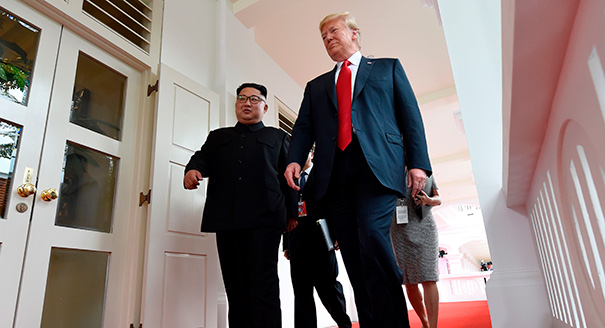
    Reading the Singapore Summit Statement: Three Principles and One Political Gesture

    In the course of one morning in Singapore, U.S. President Donald Trump and the North Korean leader Kim Jong-un have begun to loosen a deeply entrenched and hostile relationship.

      C. Raja Mohan
  • Commentary
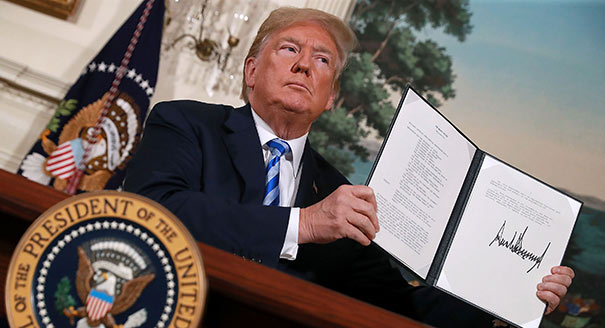
    Raja Mandala: America’s New Powerplay in Tehran

    U.S. President Donald Trump’s decision to pull out of the Iran nuclear deal appears to have put regime change at the very center of the new American power play against Tehran.

      C. Raja Mohan
  • Commentary
    Raja Mandala: Lessons From Korea

    The South Asian stalemate is likely to endure even as South and North Korea appear poised to turn the page.

      C. Raja Mohan

  • Commentary
    Raja Mandala: Curing Rawalpindi

    While the Trump administration’s efforts to get tough on Pakistan face challenges and potential dangers, the change in stance signals a new political will to pursue previously untried measures which offer some hope of success.

      C. Raja Mohan

Get more news and analysis from
Carnegie India
Carnegie India logo, white
Unit C-4, 5, 6, EdenparkShaheed Jeet Singh MargNew Delhi – 110016, IndiaPhone: 011-40078687
  • Research
  • About
  • Experts
  • Projects
  • Events
  • Contact
  • Careers
  • Privacy
  • For Media
Get more news and analysis from
Carnegie India
© 2026 Carnegie Endowment for International Peace. All rights reserved.