

In The Media
Josh Kurlantzick
{
  "authors": [
    "Josh Kurlantzick"
  ],
  "type": "legacyinthemedia",
  "centerAffiliationAll": "dc",
  "centers": [
    "Carnegie Endowment for International Peace"
  ],
  "collections": [],
  "englishNewsletterAll": "asia",
  "nonEnglishNewsletterAll": "",
  "primaryCenter": "Carnegie Endowment for International Peace",
  "programAffiliation": "AP",
  "programs": [
    "Asia"
  ],
  "projects": [],
  "regions": [
    "China"
  ],
  "topics": []
}
Source: Getty
In recent issues of The National Interest, there have been a series of articles that take China’s rise to both regional and global pre-eminence as a given. But it is worth stepping back to take a sober look at some of the very real challenges China faces—and in particular, how China’s neighbors assess these developments. Sometimes the view from Washington and New York can be a bit overly optimistic.
Source: National Interest Online

Of course, over the past six months, that confidence about China’s continued progress was shaken as governments across the world witnessed an explosion of terrifying stories about Chinese exports. News reports detailed toothpaste tainted with poisons, fake baby formula and pet food packed with illegal substances. Though China vowed better safety standards—and executed the head of its own food and drug administration—it also stonewalled in many cases, blaming complaints on overaggressive foreign news reporters and claiming that American exports also can be dangerous.
For leaders in Southeast Asia, the problems of China, its giant neighbor, can have a more immediate impact—as they found out when the SARS crisis, initially covered up by China, quickly spread across Asia and decimated the region’s economies. Over the summer, Southeast Asian reporters learned of another terrifying outbreak of disease in China. A mysterious illness in Guangdong province was causing pigs to bleed to death. Gruesome foreign TV and newspaper reports described bloody pigs staggering around, panicked Chinese farmers trying to sell their hogs en masse and rivers filled with pig carcasses. Southeast Asian officials worried about whether the pig disease would spread into their nations. Yet once again, the Chinese government did almost nothing. In fact, in China itself, few people even seemed to know about the pig illness. Chinese state media had not reported on the Guangdong disaster, and even well-informed businesspeople in Shanghai had heard little about it.
Click on the PDF above for the full text.

Former Visiting Scholar, China Program
A special correspondent for The New Republic, a columnist for Time, and a senior correspondent for The American Prospect, Kurlantzick assesses China’s relationship with the developing world, including Southeast Asia, Africa, and Latin America.
Recent Work
Josh Kurlantzick
Carnegie India does not take institutional positions on public policy issues; the views represented herein are those of the author(s) and do not necessarily reflect the views of Carnegie, its staff, or its trustees.

After the chill in ties between 2020 and 2024 that brought India–China relations to their lowest point in several decades, the two countries have engaged each other afresh. This paper argues that there are predominantly four imperatives guiding India’s approach to China, and they exist in an order of priority.

Saheb Singh Chadha

This piece argues that India’s central challenge is not managing a single flashpoint but resolving the underlying tension between expansion and institutional coherency of the BRICS grouping.

Vrinda Sahai

This paper examines the evolution of India-China economic ties from 2005 to 2025. It explores the impact of global events, bilateral political ties, and domestic policies on distinct spheres of the economic relationship.

Santosh Pai
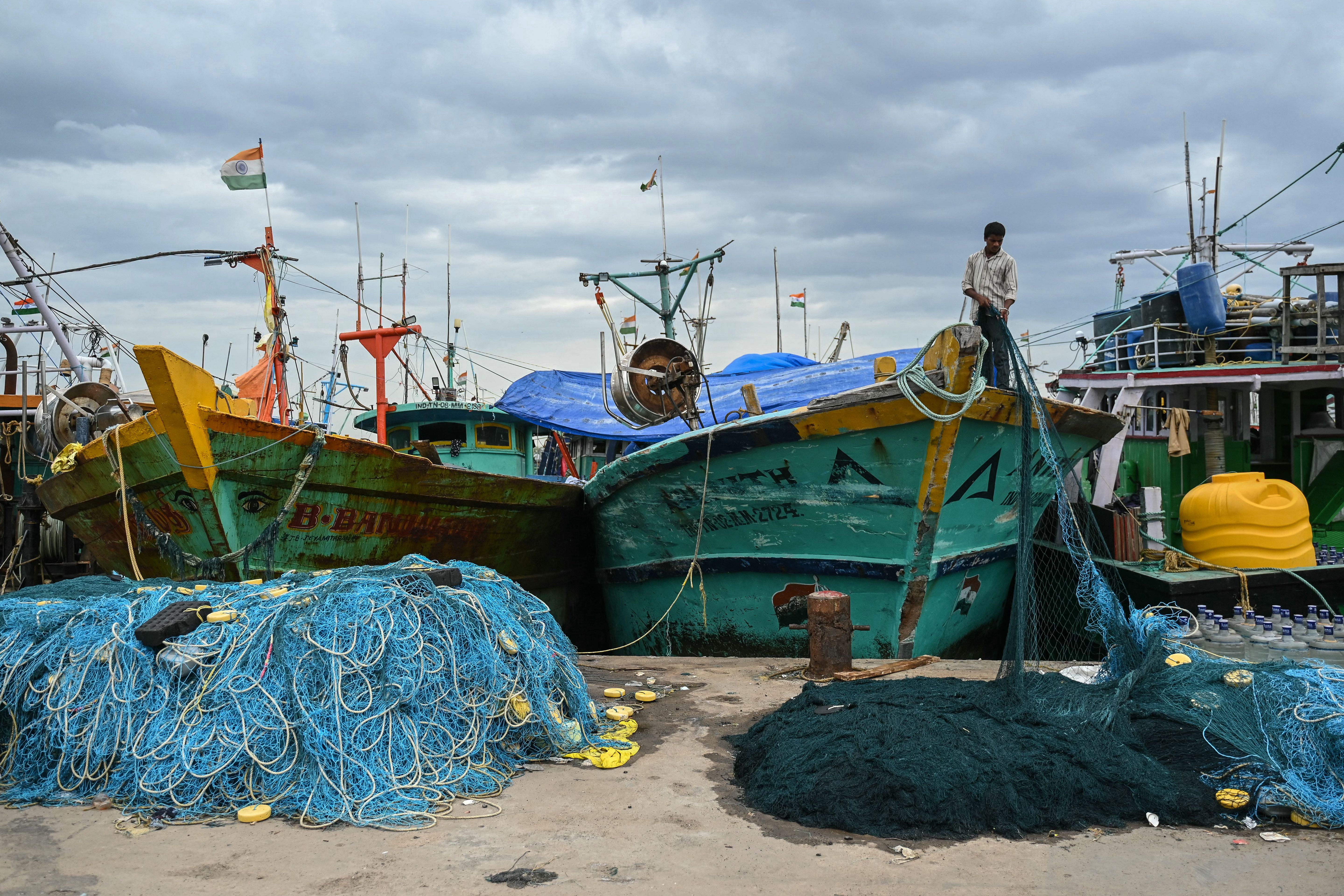
This article examines the scale and impact of Chinese IUU fishing operations globally and identifies the nature of the challenge posed by IUU fishing in the Indian Ocean Region (IOR). It also investigates why existing maritime law and international frameworks have struggled to address this growing threat.


Ajay Kumar, Charukeshi Bhatt

This compendium brings together three essays by scholars who participated in Carnegie India's Security Studies Dialogue in 2024, each examining a different aspect of China’s policies. Drawing on their expertise and research, the authors offer fresh perspectives on key geopolitical challenges.



Vijay Gokhale, Suyash Desai, Amit Kumar, …