

In The Media
John Judis
{
  "authors": [
    "John Judis"
  ],
  "type": "legacyinthemedia",
  "centerAffiliationAll": "",
  "centers": [
    "Carnegie Endowment for International Peace"
  ],
  "collections": [],
  "englishNewsletterAll": "",
  "nonEnglishNewsletterAll": "",
  "primaryCenter": "Carnegie Endowment for International Peace",
  "programAffiliation": "",
  "programs": [],
  "projects": [],
  "regions": [
    "North America",
    "United States"
  ],
  "topics": [
    "Political Reform"
  ]
}
REQUIRED IMAGE
My esteemed colleague Noam Scheiber has suggested that Barack Obama’s results in the Philadelphia suburbs did not possess the significance I attributed to them. Clinton’s advantage there, he suggests, didn’t show that she was cutting into Obama’s prior advantage among affluent, educated voters--voters that have made up much of his white support.
Source: New Republic
My esteemed colleague Noam Scheiber has suggested that Barack Obama’s results in the Philadelphia suburbs did not possess the significance I attributed to them. Clinton’s advantage there, he suggests, didn’t show that she was cutting into Obama’s prior advantage among affluent, educated voters--voters that have made up much of his white support. Noam might be right about these suburbs, although I think that if you looked at the Democratic primary voters in Philadelphia’s Montgomery County (where the Main Line runs), you would find that a lot of them are from the educated, affluent part of the county. I am not prepared to look into the returns that closely. But I don’t think you have to do so to make the general point about Obama’s vote in the Pennsylvania primary that I was trying to make by pointing to these counties. Let’s just look at his margin among college-educated voters and voters with post-graduate degrees in Pennsylvania and in other states.

What these results show is that Obama’s advantage among college-educated voters and voters with post-graduate degrees suddenly disintegrated in Pennsylvania. You’ll find a very similar pattern if you look at the “affluent” side of the vote. In Pennsylvania, Clinton won voters who make between $100,000 and $149,999 by 62 to 38 percent. Obama won these voters in most others states. For instance, in Texas he won them by 53 to 46 percent and in Missouri by 60 to 40 percent.
What might have happened in Pennsylvania, I suggested, was that Obama’s image became tarnished by his being associated in voters’ minds with Pastor Wright and, to a lesser extent, with Tony Rezko and Bill Ayers. I can’t prove this, but I think I have shown that (contrary to the Obama campaign’s press release) a change in the composition of Obama’s vote did take place in Pennsylvania, and it may turn out to be significant.

Former Visiting Scholar
As a visiting scholar at Carnegie, Judis wrote The Folly of Empire: What George W. Bush Could Learn from Theodore Roosevelt and Woodrow Wilson.
Recent Work
John Judis
John Judis
Carnegie India does not take institutional positions on public policy issues; the views represented herein are those of the author(s) and do not necessarily reflect the views of Carnegie, its staff, or its trustees.

On the last day of the India AI Impact Summit, India signed Pax Silica, a U.S.-led declaration seemingly focused on semiconductors. While India’s accession to the same was not entirely unforeseen, becoming a signatory nation this quickly was not on the cards either.

Konark Bhandari

This piece examines India’s response to U.S. sanctions and tariffs, specifically assessing the immediate market consequences, such as alterations in import costs, and the broader strategic implications for India’s energy security and foreign policy orientation.
Vrinda Sahai
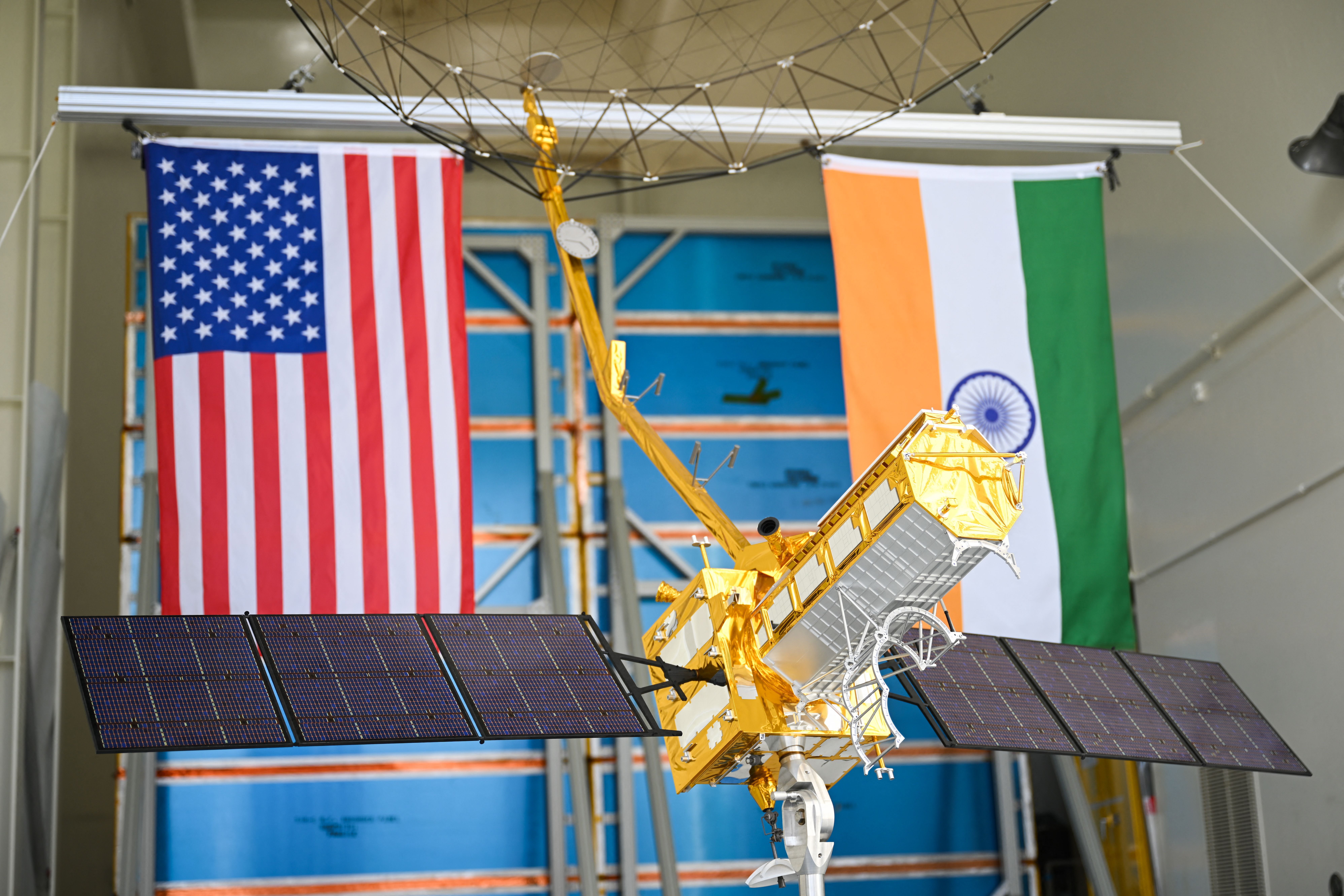
On July 30, 2025, the United States announced 25 percent tariffs on Indian goods. While diplomatic tensions simmered on the trade front, a cosmic calm prevailed at the Sriharikota launch range. Officials from NASA and ISRO were preparing to launch an engineering marvel into space—the NASA-ISRO Synthetic Aperture Radar (NISAR), marking a significant milestone in the India-U.S. bilateral partnership.

Tejas Bharadwaj
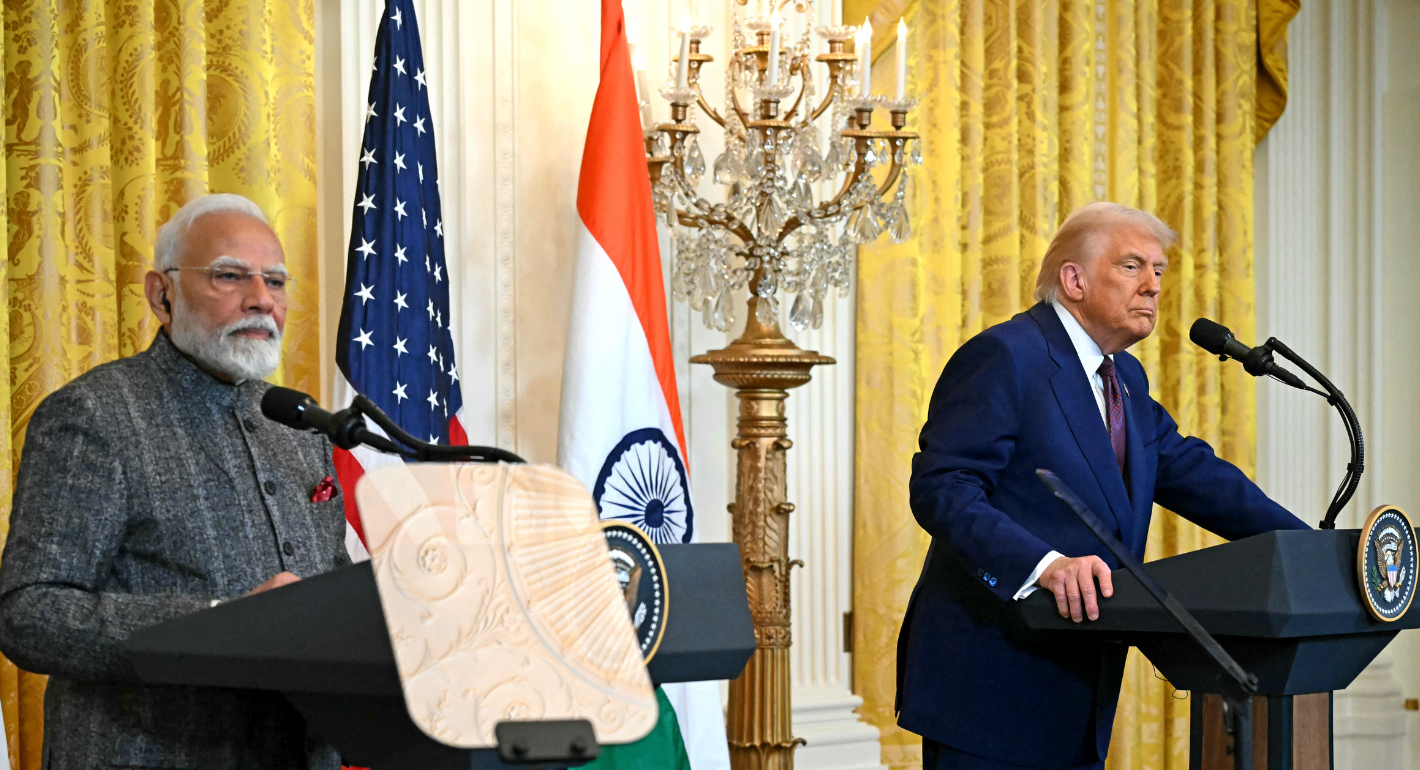
The India-U.S. relationship currently appears buffeted between three “Ts”—TRUST, Tariffs, and Trump.
Arun K. Singh

As part of the TRUST initiative, leaders of the two countries committed to building trusted and resilient supply chains, including for semiconductors and critical minerals. India and the United States have made steady progress in this area over the years. This essay explores the takeaways from discussions on semiconductor supply chains that took place at Carnegie India’s 9th Global Technology Summit.
Konark Bhandari