• Research
  • About
  • Experts
Carnegie India logoCarnegie lettermark logo
AI
{
  "authors": [],
  "type": "pressRelease",
  "centerAffiliationAll": "dc",
  "centers": [
    "Carnegie Endowment for International Peace"
  ],
  "collections": [],
  "englishNewsletterAll": "asia",
  "nonEnglishNewsletterAll": "",
  "primaryCenter": "Carnegie Endowment for International Peace",
  "programAffiliation": "AP",
  "programs": [
    "Asia"
  ],
  "projects": [],
  "regions": [
    "North America",
    "United States",
    "China"
  ],
  "topics": [
    "Economy",
    "Trade"
  ]
}
REQUIRED IMAGE

REQUIRED IMAGE

Press Release

Global Financial Crisis: Lessons for the United States and China

Although its economy will remain strong during the global financial crisis, China’s leaders should not see the situation as a failure of capitalism, concluded Albert Keidel in a recent speech before the U.S.–China Business Council. Instead, both China and the United States should learn from the crisis and improve their political and economic systems.

Link Copied
Published on Oct 27, 2008

WASHINGTON, Oct 27—Although its economy will remain strong during the global financial crisis, China’s leaders should not see the situation as a failure of capitalism, concluded Albert Keidel in a recent speech before the U.S.–China Business Council. Instead, both China and the United States should learn from the crisis and improve their political and economic systems.

The lessons to be learned apply more to the world’s advanced economies than they do to China, which is still in the early stages of economic and political modernization. For the United States and other mature industrial powers, this crisis is an opportunity to improve the competitive and democratic capitalist model.

Recommendations for the United States

  • Restore adequate liquidity through well-targeted infusions of cash, credit, and guarantees for financial institutions and their transactions.
  • Coordinate with leading global economies on large-scale fiscal expenditures to avoid a severe recession; adequate scale is vital.
  • Persuade Germany and Japan to adjust their economies to create long-term trade deficits rather than their traditionally large surpluses. In partnership with the United States, this would provide sustained demand, enabling developing countries to trade their way out of poverty.
  • Reform and limit professional lobbyists’ activities and their access to legislators and policy makers.
  • Lead a coordinated global and integrated reform of the world’s financial regulatory systems.

Recommendations for China

  • Move forward with domestic stimulus plans while simultaneously implementing previously outlined social and environmental reforms.
  • Frequently reiterate that it will manage its foreign exchange reserves in a balanced and responsible way.
  • Weaken non-tariff trade barriers to both help crisis-stricken economies and blunt protectionism.
  • Shift from criticism of American and European financial management to encouragement of what promises to be just the most recent of the world’s crisis-driven improvements in governance systems.

Keidel concludes:

“For well over a hundred years, financial market regulation has improved most when crises have shown its shortcomings. This current crisis will clearly be just another chapter in the gradual, and uneven, process of making an ever increasingly sophisticated financial system function more fairly and more efficiently. This is the most helpful—and most accurate—interpretation of the crisis’ long-term significance. As an outsider to the crisis, China could play the role of objective commentator and strengthen confidence worldwide in the eventual if not speedy recovery all over the world.”

###


bullet
NOTES

  • Direct link to the PDF:
    www.carnegieendowment.org/files/China_and_the_Global_Financial_Crisis3.pdf
  • Albert Keidel is a senior associate at the Carnegie Endowment, where he specializes in Chinese economic issues and related U.S. policy. He formerly served as deputy director and acting director at the Office of East Asian Nations in the U.S. Treasury Department. Before that, he was senior economist at the World Bank office in Beijing.
  • The Carnegie China Program in Beijing and Washington provides policy makers in both countries with a better understanding of the dynamics within China and between the United States and China. In addition to books, policy briefs, papers, and other publications, the Program produces Carnegie China Insight Monthly, a Chinese-language e-newsletter, and hosts the Hong Kong Journal, an online quarterly covering political, economic, and social issues on Hong Kong and its relations with mainland China, the United States, and other governments and international organizations. 
  • Press Contact: Trent Perrotto, 202/939-2372, tperrotto@ceip.org
EconomyTradeNorth AmericaUnited StatesChina

Carnegie India does not take institutional positions on public policy issues; the views represented herein are those of the author(s) and do not necessarily reflect the views of Carnegie, its staff, or its trustees.

More Work from Carnegie India

  • Article
    What Could a Reciprocal Defense Procurement Agreement Do for U.S.-India Ties?

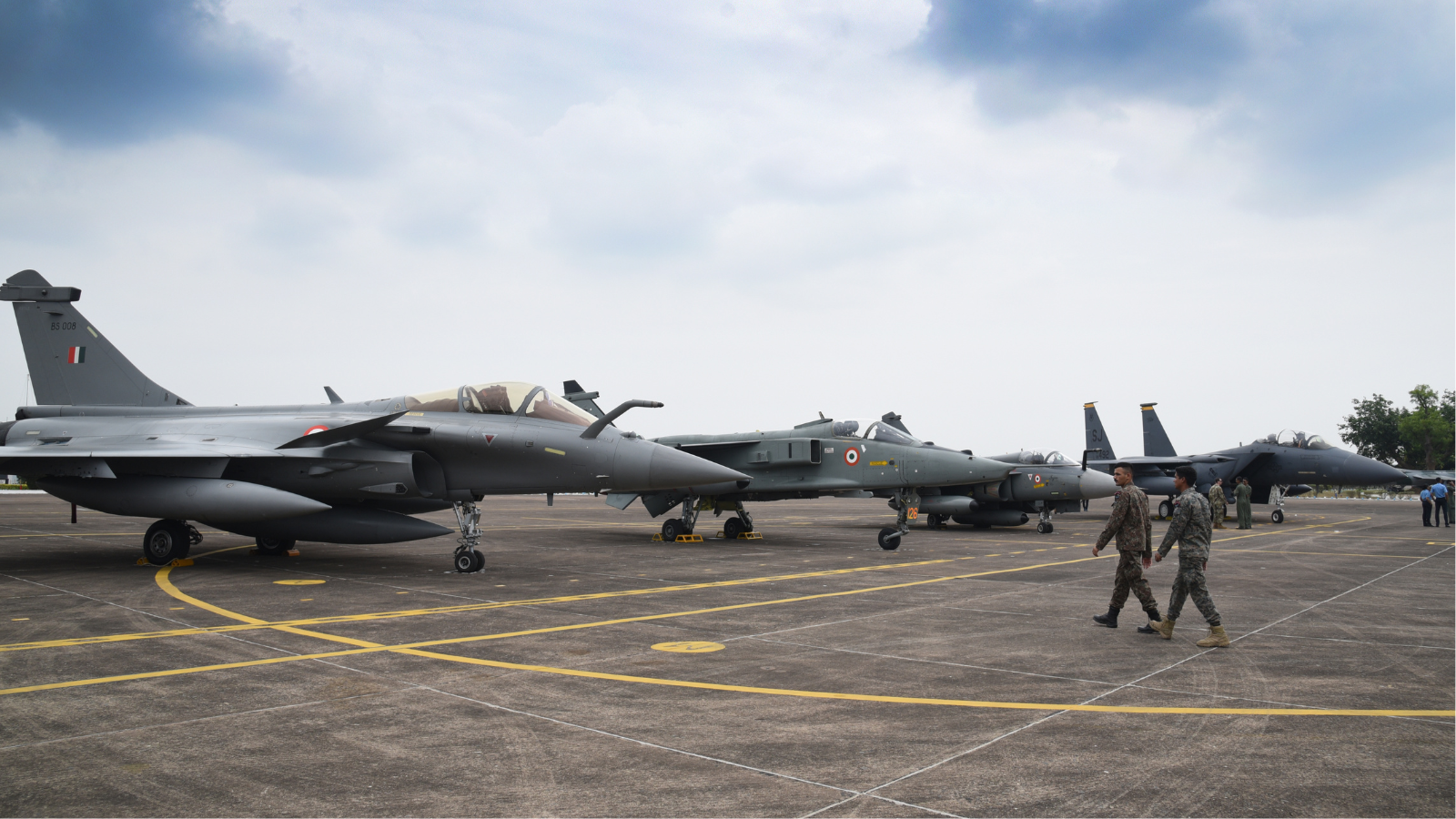
    India and the United States are close to concluding a Reciprocal Defense Procurement Agreement (RDPA) that will allow firms from the two countries to sell to each other’s defense establishments more easily. While this may not remedy the specific grievances both sides may have regarding larger bilateral issues, an RDPA could restore some momentum, following the trade deal announcement.

      Konark Bhandari

  • Commentary
    India Signs the Pax Silica—A Counter to Pax Sinica?

    On the last day of the India AI Impact Summit, India signed Pax Silica, a U.S.-led declaration seemingly focused on semiconductors. While India’s accession to the same was not entirely unforeseen, becoming a signatory nation this quickly was not on the cards either.

      Konark Bhandari

  • Commentary
    The Impact of U.S. Sanctions and Tariffs on India’s Russian Oil Imports

    This piece examines India’s response to U.S. sanctions and tariffs, specifically assessing the immediate market consequences, such as alterations in import costs, and the broader strategic implications for India’s energy security and foreign policy orientation.

      Vrinda Sahai

  • Paper
    India-China Economic Ties: Determinants and Possibilities

    This paper examines the evolution of India-China economic ties from 2005 to 2025. It explores the impact of global events, bilateral political ties, and domestic policies on distinct spheres of the economic relationship.

      Santosh Pai

  • Commentary
    NISAR Soars While India-U.S. Tariff Tensions Simmer

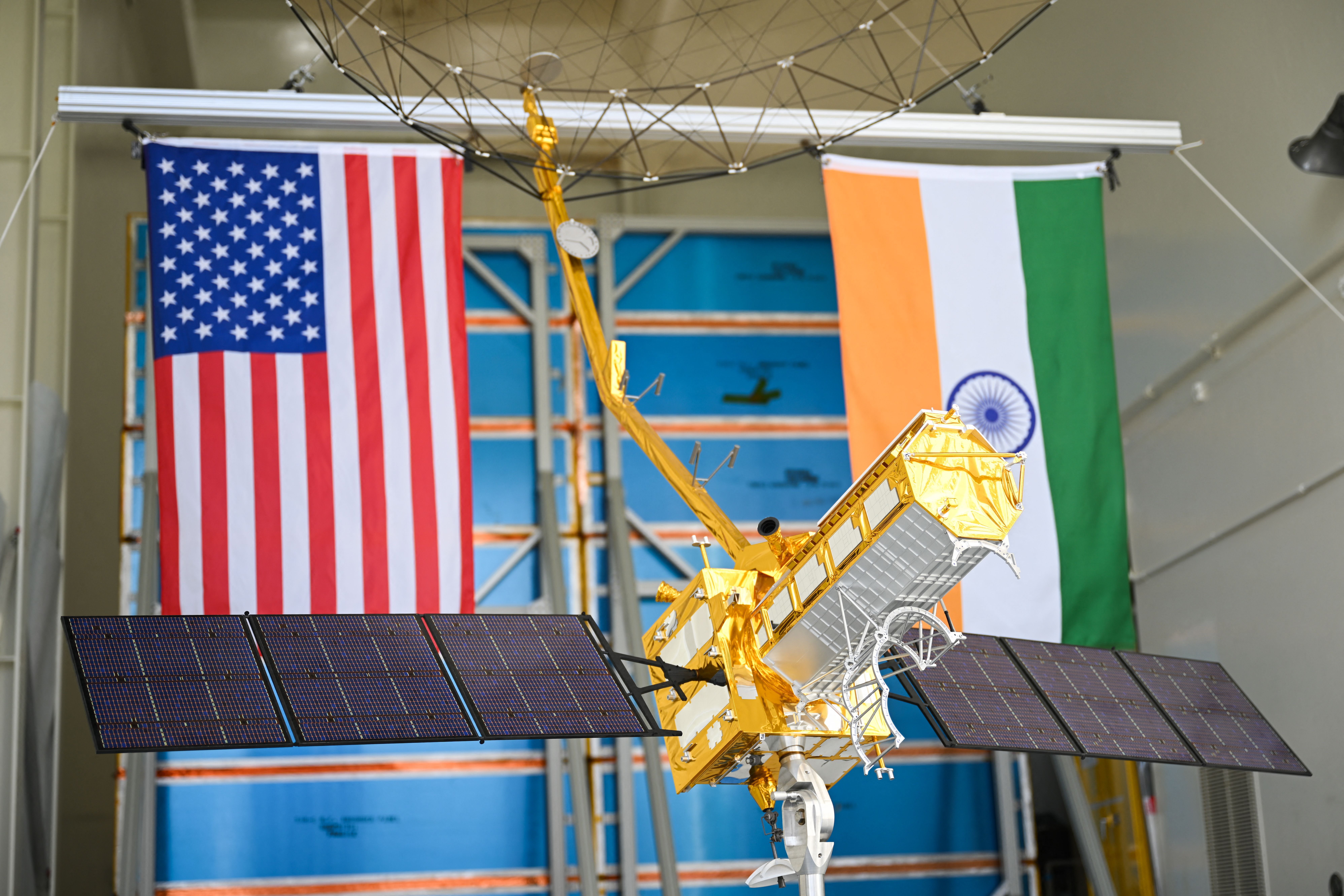
    On July 30, 2025, the United States announced 25 percent tariffs on Indian goods. While diplomatic tensions simmered on the trade front, a cosmic calm prevailed at the Sriharikota launch range. Officials from NASA and ISRO were preparing to launch an engineering marvel into space—the NASA-ISRO Synthetic Aperture Radar (NISAR), marking a significant milestone in the India-U.S. bilateral partnership.

      Tejas Bharadwaj

Get more news and analysis from
Carnegie India
Carnegie India logo, white
Unit C-4, 5, 6, EdenparkShaheed Jeet Singh MargNew Delhi – 110016, IndiaPhone: 011-40078687
  • Research
  • About
  • Experts
  • Projects
  • Events
  • Contact
  • Careers
  • Privacy
  • For Media
Get more news and analysis from
Carnegie India
© 2026 Carnegie Endowment for International Peace. All rights reserved.