Carnegie Appoints Leading Expert on Nuclear Disarmament and Nonproliferation
The Carnegie Endowment for International Peace announced that James Acton, a leading expert on nuclear disarmament and nonproliferation, has joined its Nonproliferation Program. Acton's research focuses on forging practical solutions to strengthen the nonproliferation regime and promote disarmament, particularly on ensuring that nuclear energy programs are used only for peaceful purposes.
Link Copied
Published on Nov 18, 2008
WASHINGTON, Nov 18—The Carnegie Endowment for International Peace announced today that James Acton, a leading expert on nuclear disarmament and nonproliferation, has joined its Nonproliferation Program in Washington, D.C.
Acton will focus on forging practical solutions to strengthen the nonproliferation regime and promote disarmament, particularly on ensuring that nuclear energy programs are used only for peaceful purposes.
With George Perkovich, Acton is the co-author of the recent Adelphi Paper, Abolishing Nuclear Weapons, an unprecedented exploration of whether and how the elimination of all nuclear arsenals could be verified and enforced.
In welcoming the announcement, George Perkovich, vice president for studies and director of the Carnegie Nonproliferation Program, said:
“James’s work will add to the much needed dialogue on the practical steps to move nuclear disarmament forward, particularly within the civil nuclear industry. We are delighted that James will be joining our program at a critical juncture for the nonproliferation regime.”
James Acton said:
“With offices in critical policy-making centers around the globe, Carnegie is uniquely positioned to influence the debate on how best to strengthen the nonproliferation regime and move towards global disarmament. I look forward to being part of the efforts to influence the policy dialogue in collaboration with colleagues in Washington, as well as Carnegie’s offices in Beirut, Beijing, Brussels, and Moscow.”
Acton’s previous research projects include analyses of IAEA safeguards in Iran, verifying disarmament in North Korea, preventing novel forms of radiological terrorism, and the capability of Middle Eastern states to develop nuclear energy.
###
NOTES
James Acton is an associate in the Nonproliferation Program at the Carnegie Endowment. Acton’s research focuses on the interface of technical and political issues, especially arms control verification and IAEA safeguards. Before joining the Endowment in October 2008, Acton was a lecturer at the Centre for Science and Security Studies in the Department of War Studies at King’s College London. There he published the Adelphi Paper, Abolishing Nuclear Weapons, with George Perkovich and was a consultant to the Norwegian government on disarmament issues. Acton is also a frequent contributor to Arms Control Wonk.
The Carnegie Nonproliferation Program is an internationally recognized source of knowledge and policy thinking on efforts to curb the spread and use of nuclear weapons. Carnegie’s analysis consistently stays at the forefront of proliferation developments and nonproliferation policy debates.
Carnegie India does not take institutional positions on public policy issues; the views represented herein are those of the author(s) and do not necessarily reflect the views of Carnegie, its staff, or its trustees.
A partnership between India, a country of subcontinental size, and Africa, a continent of fifty-four countries, may seem asymmetric until one notes that both are home to nearly the same number of people—1.4 billion. This essay spells out the existing challenges to the partnership, its optimal potential, and the possible pathways to realize it over the next quarter-century.
The India–EU Free Trade Agreement (FTA) is shaping up to be one of the most consequential trade negotiations, both economically and strategically. But, what’s in the agreement, what’s missing, and what will determine its success in the years ahead
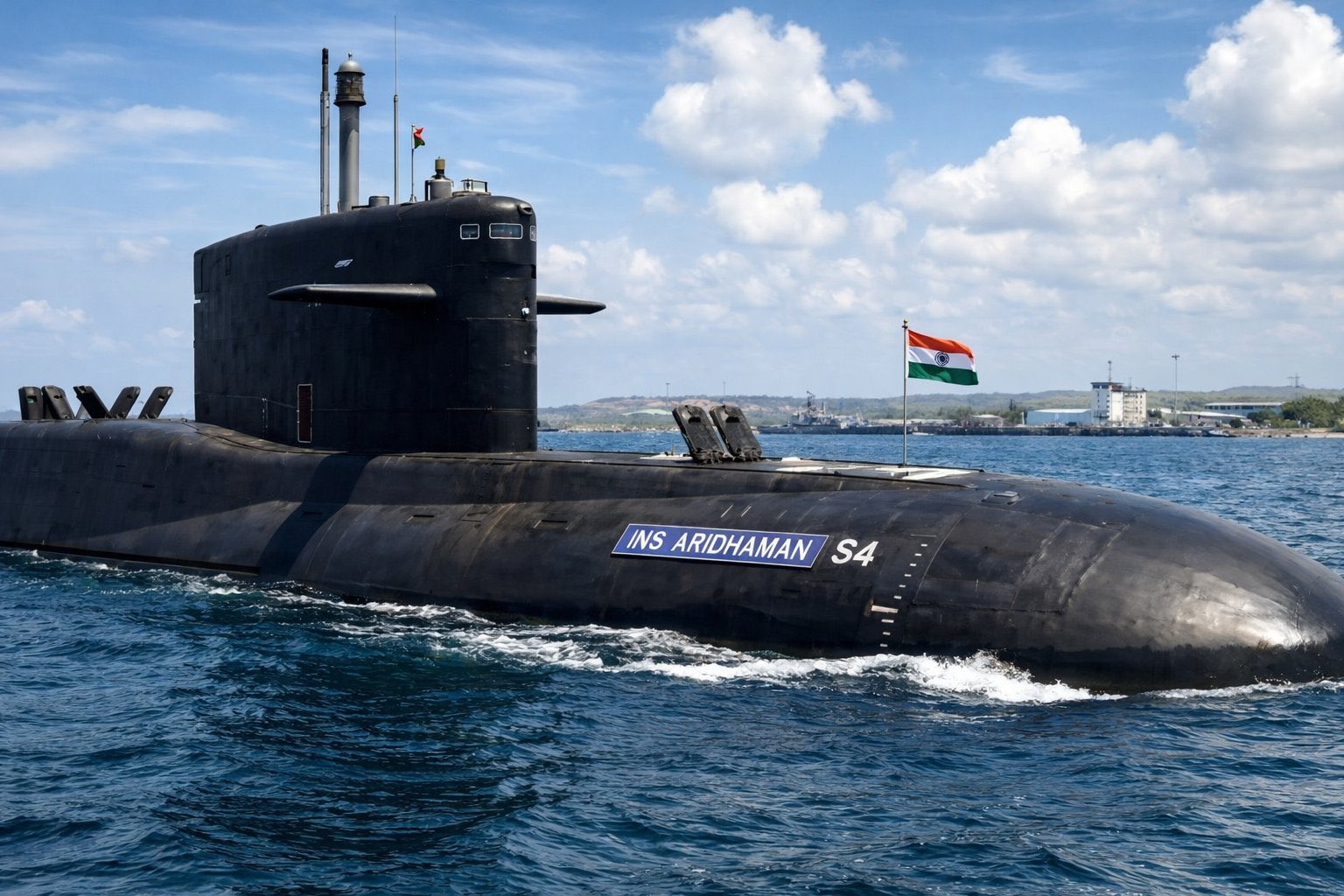
The induction of INS Aridhaman, which features several technological enhancements, now gives India the third nuclear ballistic missile submarine to ensure continuous at-sea deterrent.
Trump 2.0 has unsettled India’sexternal environment—buthas notoverturned its foreign policystrategy,which continuesto relyon diversification, hedging,and calibrated partnerships across a fractured order.
+6
Milan Vaishnav, ed., Sameer Lalwani, Tanvi Madan, …
This piece examines India’s response to U.S. sanctions and tariffs, specifically assessing the immediate market consequences, such as alterations in import costs, and the broader strategic implications for India’s energy security and foreign policy orientation.