

Commentary
Nathan J. Brown
{
  "authors": [
    "Nathan J. Brown"
  ],
  "type": "legacyinthemedia",
  "centerAffiliationAll": "dc",
  "centers": [
    "Carnegie Endowment for International Peace"
  ],
  "collections": [],
  "englishNewsletterAll": "menaTransitions",
  "nonEnglishNewsletterAll": "",
  "primaryCenter": "Carnegie Endowment for International Peace",
  "programAffiliation": "MEP",
  "programs": [
    "Middle East"
  ],
  "projects": [],
  "regions": [
    "Middle East",
    "Israel",
    "Palestine"
  ],
  "topics": [
    "Political Reform",
    "Foreign Policy"
  ]
}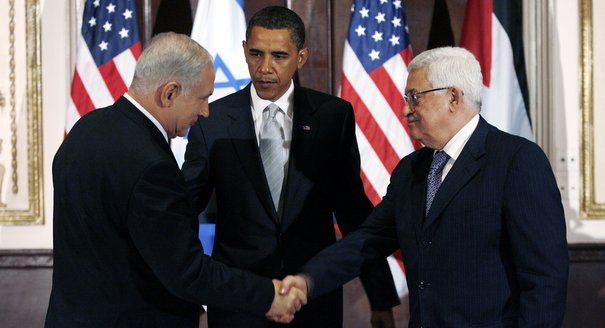
Source: Getty
Parties involved in the Arab-Israeli conflict should focus their efforts on a long-term ceasefire between Hamas and Israel and abandon the idea of a two-state solution, which has come to a dead end for the present time.
Source: Gulf News

Nathan J. Brown, Senior Associate, Carnegie Endowment for International Peace, told Gulf News that he sees no point in keeping the offer of the two-state solution open because such a proposal is not feasible based on the current level of enmity and mistrust between the two parties, especially after the Israeli war on Gaza in December last year.
He said the situation might get even worse unless the United States and other actors in the political scene of the conflict come up with a realistic proposal to resolve it.
The Washington, DC-based Carnegie Endowment for International Peace is a private non-profit organisation, which amongst other objectives, works to promote active international engagement by the United States.
In a telephone interview, Brown told Gulf News the problem does not lie with the solution itself, but it is rather the realities on the ground and the collapse of the diplomatic process because of what he believes is the ignorance of such realities. Brown is the author of a comprehensive study about the horizon of peace in the Middle East titled Palestine and Israel: Time for Plan B, published this month by the institute.
He said leaders of both parties -Israel and Palestine, either do not have the will, are not able - or both, to entice their societies toward the necessary compromises that peace entails.
"In addition to the previous reason, mutual mistrust, political disarray and deliberate actions to impose realities have made the two-state solution impossible. The failure of the former US administration to fulfil its two-state promise has added to the complications of the crisis and resulted in the collapse of the two-state solution for a long time to come."
But why when everybody is talking about peace in the Middle East, can you come up with such a pessimistic view about the horizon of peace? Gulf News asked.
That is an interesting question, Brown replied. He said in his opinion talking about peace was different from achieving it.
"The Bush administration talked about peace for more than a year, but this did help peace to materialise. There was a war instead. I think peace requires the players to concentrate their efforts on establishing a long term ceasefire based on the interests of both Israel and Hamas in order to avoid fighting in the short term."
Brown advised that the ceasefire must be clear and in a written form with Arabs and Europeans playing a major role in achieving it and offer guarantees to both parties. Hamas should be granted access to the outside world through Gaza's border with Egypt while Israel should be assured that no smuggling of arms by Hamas will be allowed.
What about Israel building more colonies on Palestinian land and to what extent does such action undermine the peace process or even a ceasefire?
Brown said he thought the colonies did not help any kind of ceasefire between Palestinians and Israelis and Israel should be forced to face choices between their expansion or a long-term ceasefire.
Brown said a ceasefire came along with the Hamas principle of "hudna" (truce). Arab and EU mediators could sell the idea to Hamas; if the latter's interests were taken into consideration. The ceasefire should last between one to two years with a possible extension for similar periods.
The ceasefire period must be followed with an armistice with Palestinians getting open borders, a freeze of colonies and an opportunity to rebuild institutions. The armistice must be for at least five years.

Nonresident Senior Fellow, Middle East Program
Nathan J. Brown, a professor of political science and international affairs at George Washington University, is a distinguished scholar and author of nine books on Arab politics and governance, as well as editor of five books.
Recent Work
Nathan J. Brown
Nathan J. Brown
Carnegie India does not take institutional positions on public policy issues; the views represented herein are those of the author(s) and do not necessarily reflect the views of Carnegie, its staff, or its trustees.

After the chill in ties between 2020 and 2024 that brought India–China relations to their lowest point in several decades, the two countries have engaged each other afresh. This paper argues that there are predominantly four imperatives guiding India’s approach to China, and they exist in an order of priority.

Saheb Singh Chadha

This piece argues that India’s central challenge is not managing a single flashpoint but resolving the underlying tension between expansion and institutional coherency of the BRICS grouping.

Vrinda Sahai

A partnership between India, a country of subcontinental size, and Africa, a continent of fifty-four countries, may seem asymmetric until one notes that both are home to nearly the same number of people—1.4 billion. This essay spells out the existing challenges to the partnership, its optimal potential, and the possible pathways to realize it over the next quarter-century.

Rajiv Bhatia

The India–EU Free Trade Agreement (FTA) is shaping up to be one of the most consequential trade negotiations, both economically and strategically. But, what’s in the agreement, what’s missing, and what will determine its success in the years ahead
Vrinda Sahai, Nicolas Köhler-Suzuki

Trump 2.0 has unsettled India’s external environment—but has not overturned its foreign policy strategy, which continues to rely on diversification, hedging, and calibrated partnerships across a fractured order.



Milan Vaishnav, ed., Sameer Lalwani, Tanvi Madan, …