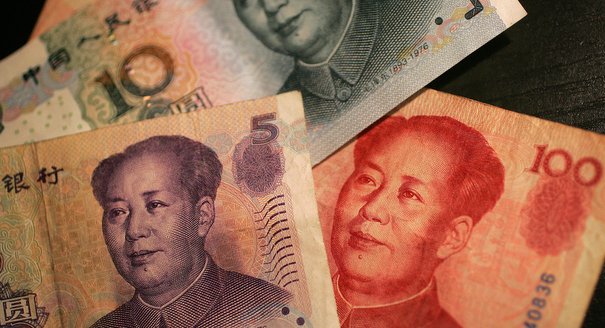
A Freer China Would Stimulate SpendingThe global economic crisis has caused a sharp decline in China’s exports, placing renewed pressure on Beijing to raise domestic demand, particularly household consumption. With net exports accounting for 20-25 per cent of its growth in the past five years, China will have to increase domestic demand significantly to compensate for the loss in external demand.
Although this challenge has acquired greater urgency today, it is not new. Chinese policymakers and Beijing’s biggest trading partners have been warning about the massive imbalance between the country’s levels of exports and domestic consumption.
In 2007, China’s current account surplus, a key indicator of this imbalance, was $372bn (€275bn, £250bn), the world’s largest in absolute terms. With global trade in its worst slump since the second world war, Beijing is now paying for policies that have consistently accorded higher priority to exports than household consumption.
The Chinese government has long recognised the risks of such imbalances and has pledged to reduce them through reforms. But despite Beijing’s rhetoric, China’s rate of household consumption has been falling, not rising. In 1985, household consumption was 51 per cent of gross domestic product; in 2007, it was 35 per cent, the lowest proportion ever for China and for a major country in peacetime.
Why has the government been un-able to stimulate household consumption? Conventional wisdom blames “precautionary savings” – Chinese households save an ever-increasing proportion of their income to pay for healthcare, retirement and higher education because China’s social safety net is inadequate, and its social services are under-provisioned. Although this observation correctly identifies the problem, its explanation is insufficient. One ought to examine what role China’s closed political system plays.
In other words, is there a connection between freedom and consumption? Reviewing data on political freedom, civil liberties and household consumption for the years 1985 to 2005, we find two intriguing clues.
First, China is among a small group of countries that has become less free (as measured by Freedom House’s Freedom Index) and experienced a significant drop in their rates of household consumption (defined here as a decline of 20 per cent or more). The others are Venezuela, Kuwait, Lebanon, Bhutan, Swaziland, Iran, Uzbekistan and Saudi Arabia – not exactly the countries that China should strive to emulate.
Second, although the overall relationship between freedom and consumption is complex, countries that have become freer in the past two decades are more likely to have registered an increase in their consumption rates. Kenya, Rwanda, South Africa, Bulgaria, Hungary, Poland, Romania and Indonesia are some notable examples.
When we confine our focus to those countries for which the data are statistically significant, we find that 71 per cent of the countries that experienced an increase in their consumption rates became freer. Those that experienced larger gains (10 per cent or more) were twice as likely to have become freer.
We offer two possible explanations for these observations. First, political stability appears to be a critical condition for rising household consumption. The advent of democracy may increase stability by facilitating the resolution of longstanding conflicts, making individuals more confident consumers. Most of the countries that saw their consumption rates rise are stable developing countries, whereas the majority of those that experienced the reverse are unstable developing countries.
A second key distinguishing factor is the provision of social safety nets. Of the 20 statistically significant countries that became both freer and managed to raise their consumption rates, most are developing economies that underwent simultaneous transitions to democracy and market economics, and built social safety nets to meet the demands of their newly empowered citizens.
To the extent that its deficient social safety net depresses household consumption, the root cause of China’s problem is political, not economic. The lack of democracy in China not only results in a poor human rights record but also disenfranchises the groups that would otherwise pressure ruling elites to provide the necessary social services.
To rekindle growth, Beijing needs more than just an economic stimulus; it must give its people a voice so that they are free to consume.
Pei is Tom and Margot Pritzker ‘72 Professor of Government and the director of the Keck Center for International and Strategic Studies at Claremont McKenna College.
Carnegie India does not take institutional positions on public policy issues; the views represented herein are those of the author(s) and do not necessarily reflect the views of Carnegie, its staff, or its trustees.
After the chill in ties between 2020 and 2024 that brought India–China relations to their lowest point in several decades, the two countries have engaged each other afresh. This paper argues that there are predominantly four imperatives guiding India’s approach to China, and they exist in an order of priority.
This piece argues that India’s central challenge is not managing a single flashpoint but resolving the underlying tension between expansion and institutional coherency of the BRICS grouping.
On March 10, 2026, India’s Union Cabinet approved amendments to Press Note 3, a regulation that mandated government approval on all foreign direct investment (FDI) from countries sharing a land border with India. This amendment raises questions primarily about whether its stated benefits will materialize and if the risks have been adequately weighed. This piece will address the same.
This piece examines India’s response to U.S. sanctions and tariffs, specifically assessing the immediate market consequences, such as alterations in import costs, and the broader strategic implications for India’s energy security and foreign policy orientation.
This paper examines the evolution of India-China economic ties from 2005 to 2025. It explores the impact of global events, bilateral political ties, and domestic policies on distinct spheres of the economic relationship.