

Commentary
Michael Pettis
{
  "authors": [
    "Michael Pettis"
  ],
  "type": "legacyinthemedia",
  "centerAffiliationAll": "dc",
  "centers": [
    "Carnegie Endowment for International Peace",
    "Carnegie China"
  ],
  "collections": [],
  "englishNewsletterAll": "asia",
  "nonEnglishNewsletterAll": "",
  "primaryCenter": "Carnegie China",
  "programAffiliation": "AP",
  "programs": [
    "Asia"
  ],
  "projects": [],
  "regions": [
    "North America",
    "United States",
    "East Asia",
    "China"
  ],
  "topics": [
    "Economy",
    "Foreign Policy"
  ]
}
Source: Getty
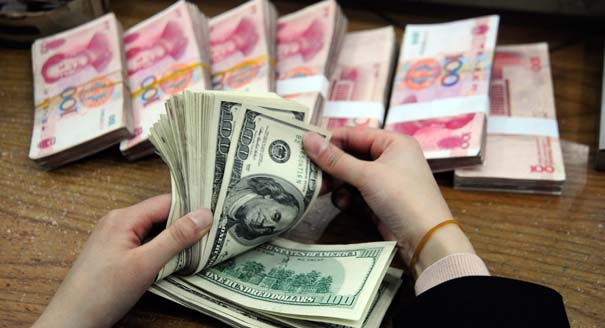
The Strategic and Economic Dialogue should aim to resolve what seem like domestic policy conflicts between China and the United States, but which are ultimately trade rebalancing issues.
Source: Wall Street Journal

Many analysts have long pointed to exchange-rate manipulation as a quick fix for trade imbalances, or the gap between what a country produces and what it consumes. When the Japanese and German currencies soared in value against the dollar after the Plaza Accords of September 1985, many analysts thought that these countries’ trade surpluses with the U.S. would decline. They were partly right. The German trade surplus with the U.S. declined. But even though the value of the yen doubled, Japan’s trade surplus surged.
This should not have been surprising. In response to the Plaza Accords, Tokyo directed a flood of low-interest credit into the manufacturing sector while informally guaranteeing corporate borrowers. Manufacturers increased production for export markets even as household consumption declined. The trade surplus with the U.S. rose.
China is trying to do the same thing, despite a rising yuan. Policies include low lending rates enforced by the central bank, energy and commodity subsidies and most importantly, a flood of implicitly guaranteed credit aimed at investment in infrastructure and the manufacturing sector. Yet consumption is still repressed thanks in part to very low deposit rates, constraints on consumer financing and low wages.
China’s trade surplus with the U.S. won’t necessarily soar. In the short run, American consumers are hamstrung by wage stagnation and rising unemployment. For the next few years, U.S. consumption will grow more slowly than its production, and the trade deficit will narrow.
Still, the U.S. should care what China does even if a rising U.S. savings rate forces the necessary rebalancing. The best-case scenario for the U.S. would see healthy GDP growth buttressed by decent consumption. The worst-case scenario would see a contraction in GDP driven by even faster contraction in consumption. For China, the best-case scenario would be explosive consumption growth driving slightly lower GDP growth. China’s worst-case scenario would be slower consumption growth that drags down GDP growth sharply.
Both countries face balancing acts between short-term employment needs and long-term adjustments. As the U.S. government races to replace debt-fueled household consumption, it helps create jobs and gives more time to China to adjust, but at the expense of lowering the savings rate. As China pours new loans into the system at a rate of more than a quarter of last year’s GDP in just six months, it creates short-term employment but increases additional excess capacity and degrades the government’s balance sheet.
Both countries need time to adjust. If this week’s summit in Washington fails to address the timing of the trade adjustment and coordination among the two countries’ fiscal and monetary policies, both countries will see the inevitable rebalancing—but with slower GDP growth. If rising savings in the U.S. clash with government-induced production hikes in China, both countries could be forced into mutually destructive policies. The consequences, especially for China, could be brutal.
The next few years are going to be difficult in the best of cases. Conflicting adjustment policies, especially if they lead to protectionist trade clashes, could make it much worse. The Strategic and Economic Dialogue should aim to resolve what seem like domestic policy conflicts but which are ultimately trade rebalancing issues.

Nonresident Senior Fellow, Carnegie China
Michael Pettis is a nonresident senior fellow at the Carnegie Endowment for International Peace. An expert on China’s economy, Pettis is professor of finance at Peking University’s Guanghua School of Management, where he specializes in Chinese financial markets.
Recent Work
Michael Pettis
Michael Pettis
Carnegie India does not take institutional positions on public policy issues; the views represented herein are those of the author(s) and do not necessarily reflect the views of Carnegie, its staff, or its trustees.

On the last day of the India AI Impact Summit, India signed Pax Silica, a U.S.-led declaration seemingly focused on semiconductors. While India’s accession to the same was not entirely unforeseen, becoming a signatory nation this quickly was not on the cards either.

Konark Bhandari

This piece examines India’s response to U.S. sanctions and tariffs, specifically assessing the immediate market consequences, such as alterations in import costs, and the broader strategic implications for India’s energy security and foreign policy orientation.

Vrinda Sahai

This paper examines the evolution of India-China economic ties from 2005 to 2025. It explores the impact of global events, bilateral political ties, and domestic policies on distinct spheres of the economic relationship.

Santosh Pai
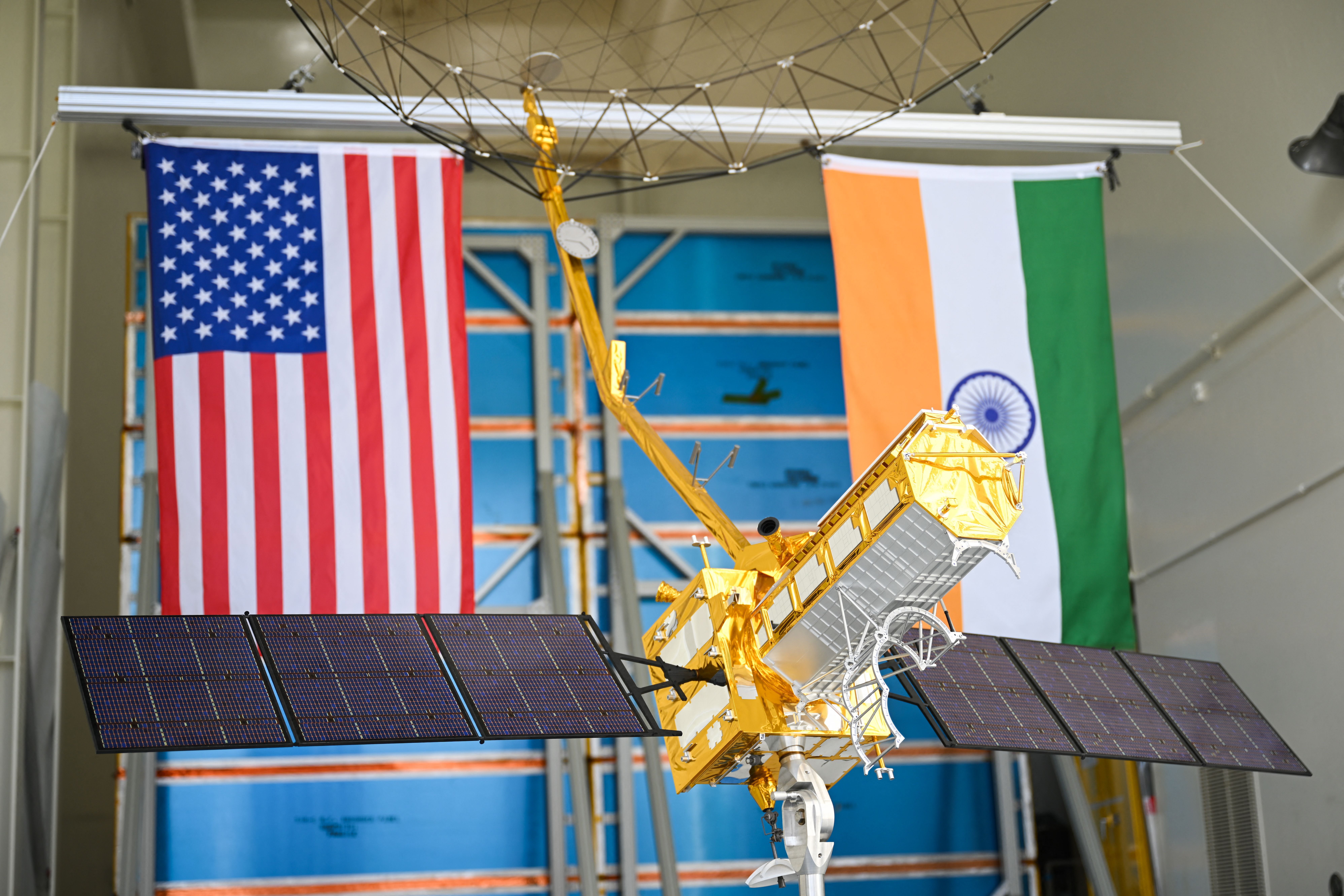
On July 30, 2025, the United States announced 25 percent tariffs on Indian goods. While diplomatic tensions simmered on the trade front, a cosmic calm prevailed at the Sriharikota launch range. Officials from NASA and ISRO were preparing to launch an engineering marvel into space—the NASA-ISRO Synthetic Aperture Radar (NISAR), marking a significant milestone in the India-U.S. bilateral partnership.

Tejas Bharadwaj

This article examines the scale and impact of Chinese IUU fishing operations globally and identifies the nature of the challenge posed by IUU fishing in the Indian Ocean Region (IOR). It also investigates why existing maritime law and international frameworks have struggled to address this growing threat.


Ajay Kumar, Charukeshi Bhatt