

Article
This piece argues that India’s central challenge is not managing a single flashpoint but resolving the underlying tension between expansion and institutional coherency of the BRICS grouping.
Vrinda Sahai
{
  "authors": [
    "Fabrice Pothier",
    "Daniel Korski"
  ],
  "type": "legacyinthemedia",
  "centerAffiliationAll": "",
  "centers": [
    "Carnegie Endowment for International Peace",
    "Carnegie Europe"
  ],
  "collections": [],
  "englishNewsletterAll": "",
  "nonEnglishNewsletterAll": "",
  "primaryCenter": "Carnegie Europe",
  "programAffiliation": "",
  "programs": [],
  "projects": [],
  "regions": [
    "Asia",
    "Europe",
    "South Asia",
    "Afghanistan",
    "Western Europe"
  ],
  "topics": [
    "Foreign Policy"
  ]
}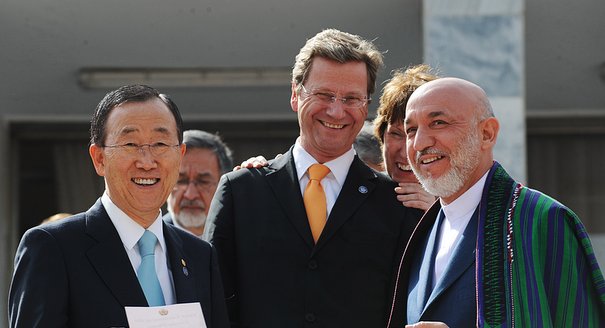
Source: Getty
The EU should commit itself to a ‘civilian surge', but with Afghan rather than European civilians.
Source: The European Voice

When EU foreign ministers meet in Stockholm this week, they are likely to focus on how to deal with the immediate fall-out from the contested result of the presidential election in Afghanistan. But the real question is what strategy the EU should adopt in the light of the US troops surge, an insurgency that shows no signs of abating and the election of a president who, regardless of his identity, will be discredited by the intimidation and fraud in the election and by the low turn-out. Instead of focusing on the new Afghan leader or following on the heels of US strategy, the EU should do what it does best – namely, help build up local institutions.
A map of where the Afghan government's writ runs, with lighter grey indicating areas under its control, would show that large, contiguous areas of dark grey dominate. That is especially true in the south of the country, but darker blotches would now also be visible in the north. The result was a low turn-out even in areas close to Kabul and with a reinforced security presence.
A lack of security and control is just part of the problem. An equally important element is the inability of national and provincial governments to provide services consistently in the country's many outlying areas. This is where the EU should focus its work in the future.
There has been much talk of a European ‘civilian surge' to complement the deployment of an additional 21,000 US troops. But what the Afghan government really needs is to be able to surge itself, from Kabul into the provinces and then from provincial capitals into the districts.
This is crucial for two reasons. One is to take back space occupied by the Taliban among rural Pushtun communities in southern Afghanistan. The second is to establish an Afghan civilian and military presence that will develop from the bottom up and allow an incremental phase-out of combat operations by international troops.
To do that, the EU should support the creation of a Civil Service Academy in Kabul, with regional branches in Kandahar, Mazar-e-Sharif and Jalalabad. Training government officials at all levels would enable a ‘civilian surge' to put down roots in local communities and make the surge sustainable. What Afghanistan needs is more technocrats, not more guns.
To make sure the best and brightest young Afghans choose an Afghan career first, the EU, as one of the main international donors, should lean on the rest of the international community, including non-governmental organisations, to regulate pay so that they do not drain local talent away from local institutions.
But training civil servants will not be enough. There is currently no way to track the appointment, promotion and (often) removal of local officials, or to identify clashes of interests and battles for sinecures in opium-rich areas. To address this, the EU should also sponsor a central register of appointments and re-assignments.
Despite appearances, all is not lost in Afghanistan. But, realistically speaking, only a few years remain before ordinary Afghans, Europeans and Americans lose patience with the international mission. To turn things around, EU foreign ministers need to focus attention on helping Afghans mend the gaping holes in Afghanistan's democratic fabric, holes not easily mended by outsiders.
Fabrice Pothier is director of Carnegie Europe and Daniel Korski is a senior research fellow at the European Council on Foreign Relations.
Former Director, Carnegie Europe
Pothier, director of Carnegie Europe, is a noted commentator on European policy in Afghanistan and Pakistan, transatlantic issues, and global drug policy.
Daniel Korski
Carnegie India does not take institutional positions on public policy issues; the views represented herein are those of the author(s) and do not necessarily reflect the views of Carnegie, its staff, or its trustees.

This piece argues that India’s central challenge is not managing a single flashpoint but resolving the underlying tension between expansion and institutional coherency of the BRICS grouping.

Vrinda Sahai
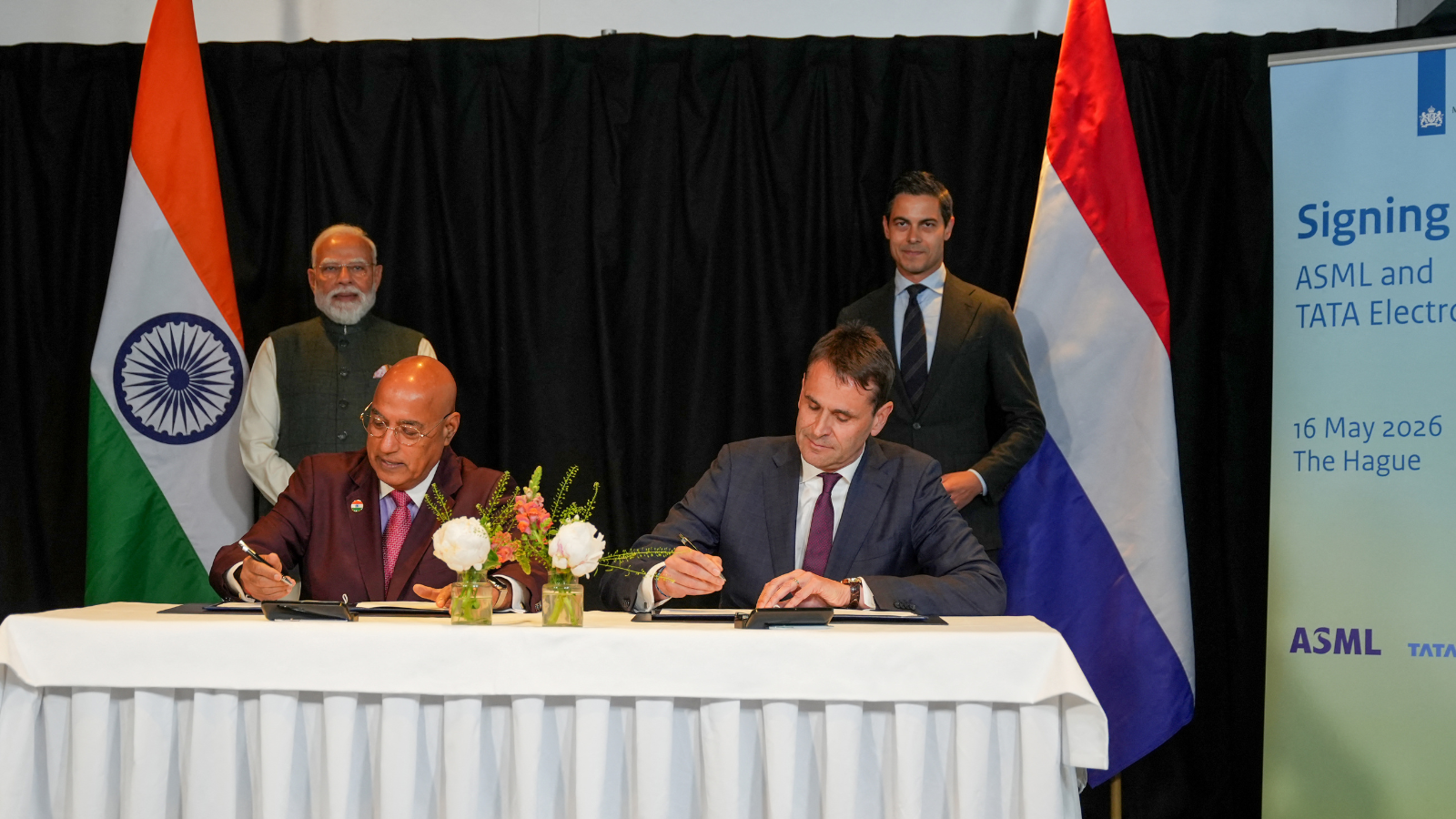
The ASML MoU with Tata Electronics is an indicator of how far the Indian semiconductor ecosystem has come. This ecosystem has been years in the making and represents real commercial logic.

Konark Bhandari

A partnership between India, a country of subcontinental size, and Africa, a continent of fifty-four countries, may seem asymmetric until one notes that both are home to nearly the same number of people—1.4 billion. This essay spells out the existing challenges to the partnership, its optimal potential, and the possible pathways to realize it over the next quarter-century.

Rajiv Bhatia

The India–EU Free Trade Agreement (FTA) is shaping up to be one of the most consequential trade negotiations, both economically and strategically. But, what’s in the agreement, what’s missing, and what will determine its success in the years ahead
Vrinda Sahai, Nicolas Köhler-Suzuki
Trump 2.0 has unsettled India’s external environment—but has not overturned its foreign policy strategy, which continues to rely on diversification, hedging, and calibrated partnerships across a fractured order.



Milan Vaishnav, ed., Sameer Lalwani, Tanvi Madan, …