

Commentary
Michael Pettis
{
  "authors": [
    "Michael Pettis"
  ],
  "type": "legacyinthemedia",
  "centerAffiliationAll": "dc",
  "centers": [
    "Carnegie Endowment for International Peace",
    "Carnegie China"
  ],
  "collections": [],
  "englishNewsletterAll": "asia",
  "nonEnglishNewsletterAll": "",
  "primaryCenter": "Carnegie China",
  "programAffiliation": "AP",
  "programs": [
    "Asia"
  ],
  "projects": [],
  "regions": [
    "East Asia",
    "China"
  ],
  "topics": [
    "Economy"
  ]
}
Source: Getty
China’s present model of economic development forces households to subsidize large amounts of often inefficient investment. If Beijing sticks to this policy, domestic consumption will continue to stagnate and constrain overall growth.
Source: New York Times

Is China, 30 years after its opening to the West, becoming a consumer society? What policies might help in that transformation, and what are the consequences for other nations?
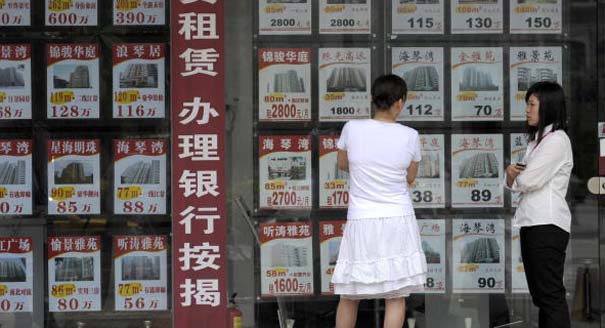
PETTIS: The Chinese are already eager consumers, eager to buy many of the same things that Western consumers buy — with an especial fondness for overpriced brand labels. Any visit to the throngs of wistful window-shoppers in Beijing’s Wanfujing or Shanghai’s Nanjinglu, the country’s premier shopping streets, will make this very obvious. So why are the Chinese consuming at what may well be the lowest rate as a share of G.D.P. ever recorded?
Consumption growth in any country is necessarily limited by the growth in household income and wealth, neither of which has grown nearly as rapidly in China as the country’s economy. China’s development model is a steroid-fueled version of the classic export-led model common to many high-saving Asian countries. This model involves systematically subsidizing production and investment, often leading to very inefficient investment.
Of course subsidies must be paid for, and in China households pay for them in the form of taxes and low wage growth, among other factors. Increasing the growth rate of the economy through investment subsidies paid for by households reduces the share of consumption in the overall economy.
Since the contraction of the U.S. trade deficit almost certainly means that in the medium term China’s growth will be limited by its domestic consumption growth, Beijing has embarked, almost desperately, on a number of policies to goose domestic consumption.
Will these policies work? Perhaps in very specific cases they will cause consumption to increase, but in general Chinese consumption is unlikely to accelerate unless the government reverses policies that forced households to subsidize inefficient producers. But reversing those policies would almost certainly cause unemployment to rise in the short term.
So Beijing is doing the opposite. To prevent rising unemployment caused by the collapse in exports, Beijing has increased the subsidies and support for domestic manufacturing while sharply increasing China’s already-record-breaking levels of investment. It is almost certain that much of the new investment will generate low or even negative returns.
This will not help rebalance the economy. As long as Chinese households must subsidize large amounts of inefficient investment, it will be hard for consumption to take off.

Nonresident Senior Fellow, Carnegie China
Michael Pettis is a nonresident senior fellow at the Carnegie Endowment for International Peace. An expert on China’s economy, Pettis is professor of finance at Peking University’s Guanghua School of Management, where he specializes in Chinese financial markets.
Recent Work
Michael Pettis
Michael Pettis

After the chill in ties between 2020 and 2024 that brought India–China relations to their lowest point in several decades, the two countries have engaged each other afresh. This paper argues that there are predominantly four imperatives guiding India’s approach to China, and they exist in an order of priority.

Saheb Singh Chadha

This piece argues that India’s central challenge is not managing a single flashpoint but resolving the underlying tension between expansion and institutional coherency of the BRICS grouping.

Vrinda Sahai

On March 10, 2026, India’s Union Cabinet approved amendments to Press Note 3, a regulation that mandated government approval on all foreign direct investment (FDI) from countries sharing a land border with India. This amendment raises questions primarily about whether its stated benefits will materialize and if the risks have been adequately weighed. This piece will address the same.

Konark Bhandari

This piece examines India’s response to U.S. sanctions and tariffs, specifically assessing the immediate market consequences, such as alterations in import costs, and the broader strategic implications for India’s energy security and foreign policy orientation.
Vrinda Sahai

This paper examines the evolution of India-China economic ties from 2005 to 2025. It explores the impact of global events, bilateral political ties, and domestic policies on distinct spheres of the economic relationship.

Santosh Pai