

Article
Henri J. Barkey
{
  "authors": [
    "Henri J. Barkey"
  ],
  "type": "legacyinthemedia",
  "centerAffiliationAll": "dc",
  "centers": [
    "Carnegie Endowment for International Peace"
  ],
  "collections": [],
  "englishNewsletterAll": "menaTransitions",
  "nonEnglishNewsletterAll": "",
  "primaryCenter": "Carnegie Endowment for International Peace",
  "programAffiliation": "MEP",
  "programs": [
    "Middle East"
  ],
  "projects": [],
  "regions": [
    "United States"
  ],
  "topics": [
    "Foreign Policy",
    "Nuclear Policy"
  ]
}
Source: Getty
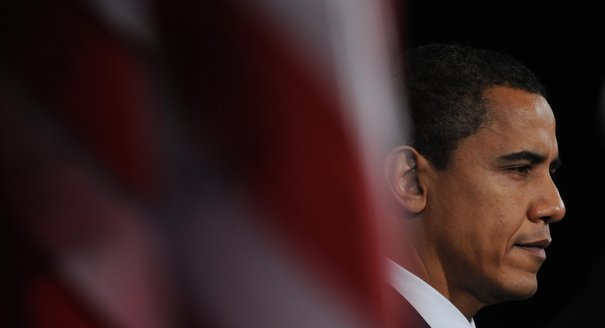
The recent awarding of the Nobel Peace Prize puts a great additional burden on President Obama. He must now live up to the expectations of the prize and harness the power of the award.
Source: The Hill

This was not a prize he sought, much less wanted at this stage of his presidency precisely because it would engender such criticisms and increase expectations. He did the right thing; he accepted it with a great deal humility and modesty.
The fact remains that the Nobel Committee has put a great additional burden on his shoulders. As if he did not have enough problems to deal with, he has to live up to the expectations of the prize, which no matter what one says about the selections over the years, it is one of the most important institutions in the Western world.
The important issue for the President now is how to harness the power of the award without succumbing to its potentially destructive expectations aspect. Let us face it, once behind closed doors, a Nobel Prize does not add any negotiating power to its recipient. What it does do is create a moment of aura at the very moment the award is conferred. The speech he will deliver at Oslo is the magical moment when the prize will literally have its most influence.
Hence, in his speech he needs to outline two very specific initiatives. One which he has significant control over-such as a reduction in nuclear weapons and one of the important reasons he was awarded the prize-and one that is far more ambitious but which he intends to carry through. My recommendation would be the Arab-Israeli peace process because so much depends on it.

Former Visiting Scholar, Middle East Program
Barkey served as a member of the U.S. State Department Policy Planning Staff, working primarily on issues related to the Middle East, the Eastern Mediterranean, and intelligence from 1998 to 2000.
Recent Work
Henri J. Barkey
Henri J. Barkey
Carnegie India does not take institutional positions on public policy issues; the views represented herein are those of the author(s) and do not necessarily reflect the views of Carnegie, its staff, or its trustees.

How is AI reshaping space security, creating governance challenges, and where does international diplomacy stand today?


Tejas Bharadwaj, Almudena Azcárate Ortega

After the chill in ties between 2020 and 2024 that brought India–China relations to their lowest point in several decades, the two countries have engaged each other afresh. This paper argues that there are predominantly four imperatives guiding India’s approach to China, and they exist in an order of priority.

Saheb Singh Chadha

This piece argues that India’s central challenge is not managing a single flashpoint but resolving the underlying tension between expansion and institutional coherency of the BRICS grouping.

Vrinda Sahai

A partnership between India, a country of subcontinental size, and Africa, a continent of fifty-four countries, may seem asymmetric until one notes that both are home to nearly the same number of people—1.4 billion. This essay spells out the existing challenges to the partnership, its optimal potential, and the possible pathways to realize it over the next quarter-century.

Rajiv Bhatia

The U.S.–India semiconductor cooperation story is well-stocked with top-level strategic intent. What remains unresolved, however, are some underlying challenges that will determine whether the cooperation actually functions. Three such friction points stand out.

Shruti Mittal