

Commentary
Michael Pettis
{
  "authors": [
    "Michael Pettis"
  ],
  "type": "legacyinthemedia",
  "centerAffiliationAll": "dc",
  "centers": [
    "Carnegie Endowment for International Peace"
  ],
  "collections": [],
  "englishNewsletterAll": "asia",
  "nonEnglishNewsletterAll": "",
  "primaryCenter": "Carnegie Endowment for International Peace",
  "programAffiliation": "AP",
  "programs": [
    "Asia"
  ],
  "projects": [],
  "regions": [
    "North America",
    "United States",
    "East Asia",
    "China"
  ],
  "topics": [
    "Economy",
    "Trade",
    "Foreign Policy"
  ]
}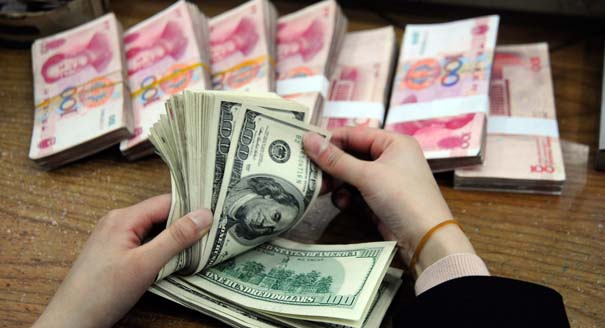
Source: Getty
Despite recent Chinese criticism of low U.S. interest rates, changing these rates in either direction would have adverse effects on China’s economy, underscoring the deep imbalances in the global financial system.
Source: The New York Times

PETTIS: The criticism by China’s top bank regulator, Liu Mingkang, of too-low U.S. interest rates indicates how terribly confused the debate has become. Low U.S. interest rates and the expected depreciation of the American dollar encourage investors to borrow dollars and invest in Asia, where it may be encouraging additional investment in China, a country that is already drowning in too much investment.
But low interest rates in the U.S. will help reverse the sharp fall in U.S. consumption that has been catastrophic for China’s export sector.
China’s overinvestment problem was created as part of the imbalance that had Chinese overproduction feeding American overconsumption for many years. China’s huge stimulus is likely to increase production even further at the expense of domestic consumption, putting even more pressure on China to sell its excess capacity to American consumers.
So which hurts China, lower or higher U.S. interest rates? Unfortunately, both. That is the problem with imbalances getting out of hand. They are never easy to fix.

Nonresident Senior Fellow, Carnegie China
Michael Pettis is a nonresident senior fellow at the Carnegie Endowment for International Peace. An expert on China’s economy, Pettis is professor of finance at Peking University’s Guanghua School of Management, where he specializes in Chinese financial markets.
Recent Work
Michael Pettis
Michael Pettis
Carnegie India does not take institutional positions on public policy issues; the views represented herein are those of the author(s) and do not necessarily reflect the views of Carnegie, its staff, or its trustees.

How is AI reshaping space security, creating governance challenges, and where does international diplomacy stand today?


Tejas Bharadwaj, Almudena Azcárate Ortega

After the chill in ties between 2020 and 2024 that brought India–China relations to their lowest point in several decades, the two countries have engaged each other afresh. This paper argues that there are predominantly four imperatives guiding India’s approach to China, and they exist in an order of priority.

Saheb Singh Chadha

This piece argues that India’s central challenge is not managing a single flashpoint but resolving the underlying tension between expansion and institutional coherency of the BRICS grouping.

Vrinda Sahai

A partnership between India, a country of subcontinental size, and Africa, a continent of fifty-four countries, may seem asymmetric until one notes that both are home to nearly the same number of people—1.4 billion. This essay spells out the existing challenges to the partnership, its optimal potential, and the possible pathways to realize it over the next quarter-century.

Rajiv Bhatia

The U.S.–India semiconductor cooperation story is well-stocked with top-level strategic intent. What remains unresolved, however, are some underlying challenges that will determine whether the cooperation actually functions. Three such friction points stand out.

Shruti Mittal