

Commentary
Uri Dadush
{
  "authors": [
    "Uri Dadush"
  ],
  "type": "legacyinthemedia",
  "centerAffiliationAll": "dc",
  "centers": [
    "Carnegie Endowment for International Peace"
  ],
  "collections": [],
  "englishNewsletterAll": "asia",
  "nonEnglishNewsletterAll": "",
  "primaryCenter": "Carnegie Endowment for International Peace",
  "programAffiliation": "AP",
  "programs": [
    "Asia"
  ],
  "projects": [],
  "regions": [
    "North America",
    "United States",
    "East Asia",
    "China",
    "Western Europe"
  ],
  "topics": [
    "Economy",
    "Trade"
  ]
}
Source: Getty
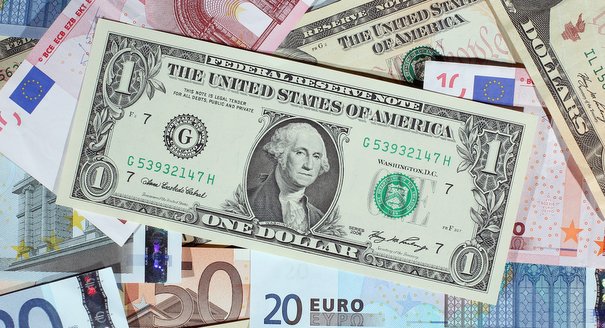
While China's role in global trade is continuing to grow, the dollar, not the yuan or the euro, will remain the world’s leading reserve currency for the foreseeable future.
Source: Financial Express

Uri Dadush: The list is long— including limited convertibility, capital account restrictions, shallow capital markets, and lingering concerns — justified or not — about the durability of China’s political system as we know it today. Essentially, you would like to keep your assets in a currency and a system that allows you easy entry and exit, and that has a long track record of stability, and China’s track record is still work in progress.
Malhotra: Do you agree with Barack Obama’s recent statement that a Chinese currency that reflected ‘economic fundamentals’ would aid the global economy?
Dadush: Yes, I agree. It would reduce protectionist pressures. Most of all though, it would help China rebalance its economy from excessive and inefficient investment to consumption. Ironically, a stronger yuan would do little for the US, as its deficit is due to much deeper domestic issues in the US.
Malhotra: Is the world on its way for a new global currency?
Dadush: No. I believe the current system will persist in the foreseeable future, with perhaps a little more euro, a little more SDRs [Special Drawing Rights], and even a little more yuan in China’s neighbourhood, and a little less dollar. But the dollar will remain firmly in the lead.
Malhotra: What role will euro play in the changing dynamics?
Dadush: The euro is the only viable alternative to the dollar today especially in the EU neighbourhood, and, on balance, appears to have navigated a historic crisis successfully. However, the euro is also still a young currency, work-in-progress, and there are still concerns — justified or not — that some of the less competitive euro-area economies may one day buckle under the pressure of a currency that is too strong for them and that may be retarding their growth. European capital markets are still too fragmented and individually too shallow to compete with the US. You prefer to hold your assets in an economy that is large, fully integrated, and has a common regulatory framework, a foreign and security policy; Europe is still a way from that.
Malhotra: Can SDRs be the new global currency? Will SDRs play a bigger role in the world financial systems, with China, Russia and India calling for replacing the dollar as the main reserve currency after the financial crisis?
Dadush: I doubt it. In the end, the SDR is a claim on the shareholders of the IMF, ie. the International Community — I doubt that there is enough trust in each other, and enough trust in the IMF as an institution— even though it plays a crucial role — for nations to rely on an International Community Currency (ICC). I also strongly suspect that the US prefers to trade in dollars, and the EU in euros than in SDRs/ ICCs. As the biggest IMF shareholders, the US and Europeans will be on the hook each time new SDRs are issued, and they may not want to leave those decisions to majority voting (though the US has an effective veto, which is another issue that reduces the attractiveness of SDRs in the eyes of other countries).
Malhotra: But, SDRs is enjoying a renaissance after falling into near oblivion for decades. What accounts for this?
Dadush: A massive financial crisis that originated in the US, and shook the faith in its system to its foundations. Also, the large new issue of SDR which was agreed during the crisis, when a real possibility existed that a simultaneous run on several exposed countries would draw the world economy into the abyss. But the world economy has survived and is growing again, and, remarkably, the US remained a safe haven as the crisis unfolded.
Special Drawing Rights
SDR is an international reserve asset, created by the IMF in 1969 to supplement its member countries’ official reserves. Its value is based on a basket of four key international currencies: US dollar, euro, yen, and pound; SDRs can be exchanged for freely usable currencies. Following a special allocation on
September 9, 2009, the amount of SDRs increased from SDR 21.4 billion to SDR 204.1 billion (currently equivalent to about $324 billion). The determination of the currencies in the SDR basket and their amount is made by the IMF Executive Board every five years.
The next review will take place in 2010.
The SDR is neither a currency, nor a claim on the IMF; it is a potential claim on the freely usable currencies of IMF members. 100.00 XDR = 158.251 USD. Holders of SDRs can also obtain these currencies through the arrangement of voluntary exchanges between members. SDR, serves as the unit of account of the IMF and other international organisations.

Former Senior Associate, International Economics Program
Dadush was a senior associate at the Carnegie Endowment for International Peace. He focuses on trends in the global economy and is currently tracking developments in the eurozone crisis.
Recent Work
Uri Dadush
Uri Dadush
Carnegie India does not take institutional positions on public policy issues; the views represented herein are those of the author(s) and do not necessarily reflect the views of Carnegie, its staff, or its trustees.

How is AI reshaping space security, creating governance challenges, and where does international diplomacy stand today?


Tejas Bharadwaj, Almudena Azcárate Ortega

After the chill in ties between 2020 and 2024 that brought India–China relations to their lowest point in several decades, the two countries have engaged each other afresh. This paper argues that there are predominantly four imperatives guiding India’s approach to China, and they exist in an order of priority.

Saheb Singh Chadha

This piece argues that India’s central challenge is not managing a single flashpoint but resolving the underlying tension between expansion and institutional coherency of the BRICS grouping.

Vrinda Sahai

The U.S.–India semiconductor cooperation story is well-stocked with top-level strategic intent. What remains unresolved, however, are some underlying challenges that will determine whether the cooperation actually functions. Three such friction points stand out.

Shruti Mittal

On March 10, 2026, India’s Union Cabinet approved amendments to Press Note 3, a regulation that mandated government approval on all foreign direct investment (FDI) from countries sharing a land border with India. This amendment raises questions primarily about whether its stated benefits will materialize and if the risks have been adequately weighed. This piece will address the same.

Konark Bhandari