

Commentary
Amr Hamzawy
{
  "authors": [
    "Amr Hamzawy"
  ],
  "type": "legacyinthemedia",
  "centerAffiliationAll": "",
  "centers": [
    "Carnegie Endowment for International Peace",
    "Malcolm H. Kerr Carnegie Middle East Center"
  ],
  "collections": [],
  "englishNewsletterAll": "",
  "nonEnglishNewsletterAll": "",
  "primaryCenter": "Carnegie Endowment for International Peace",
  "programAffiliation": "",
  "programs": [],
  "projects": [],
  "regions": [
    "Egypt"
  ],
  "topics": [
    "Political Reform"
  ]
}
Source: Getty
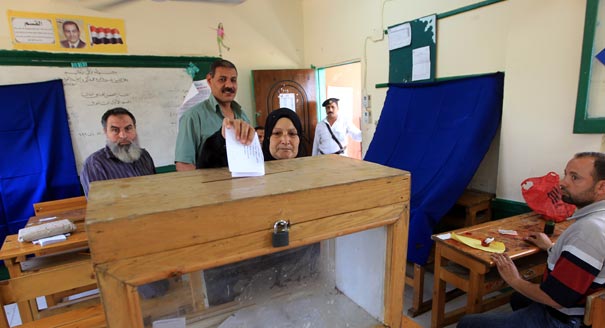
Both the Egyptian ruling class and the opposition agree that Egypt does not need a political savior to lead the nation towards social justice and democracy. Only the Egyptian people themselves can bring about economic, social, and political progress.
Source: The National

Steering clear of the “superhero illusion” underlines the political maturity of the Egyptian elite, both in the government and the opposition. Mubarak did not only question the importance of finding a savior and deemed the people as the only hero, he also denied any heroism or superpowers he might have as current president. Compared to the way former Egyptian presidents or leaders of countries in the region reportedly view themselves, Mubarak’s view is quite exceptional. On the other hand, Baradei wittingly fought the tendency within the non-partisan opposition to portray him as the long-awaited hero of change. Instead, he used the rising public demand for change to highlight the importance of collective work within the opposition to pave the way for a general consensus on change in social justice and democracy. Though Mubarak and Baradei’s rejection of heroism holds many positive aspects, several pitfalls characterize their somehow divergent views of the social and political scenery in Egypt.
President Mubarak and the civil and military governing elite do not offer a real solution to the deteriorating economic and social conditions, such as the increasing poverty and unemployment rates and poor services in vital sectors such as education, public health and transportation. Their speeches rely primarily on promises of progress and future development. In official declarations, gradual reform and calculated democratization are recurrent. Examples are given to prove that the governing elite are serious in this regard. First, they say since President Mubarak came into office, he has not appointed any vice-president, not wanting to impose an heir. Second, constitutional amendments were adopted in 2005 and 2007 to allow several candidates to run in the presidential elections, which were restricted since the 1950s to a one-candidate public referendum. Third, partisan and non-partisan opposition is increasingly represented in the People’s Assembly, exceeding 20% in the 2005-2010 term. Fourth, several local councils for human rights and women’s empowerment were created, and quotas for women in government were adopted. Fifth, larger organizational freedom was granted in civil society and the role of independent media was promoted.
These examples have undoubtedly had a positive effect. Yet, altogether they lack credibility and are rather restricted evidence of past or future democratization. In fact, the political scenery in Egypt is still characterized by a monopoly on power by the governing elite, limited competition, lack of rotation of power, weak oversight mechanisms, lack of accountability, and the encroachment of the security apparatus on civil affairs under the state of emergency declared since 1981. Despite speeches of political reform, this situation has not changed drastically in the past few years. Instead, some of the examples mentioned before have had reverse consequences. For example, constitutional amendments imposed several restrictions on independent presidential candidates, political rights of citizens and judiciary oversight of elections.
Yet, the Egyptian president still considers the people as the sole hero capable of achieving progress. This view is regularly echoed by governing elites and often expressed under different variations, particularly by the official campaign for citizenship promotion and some slogans adopted by the governing party such as “Citizens Come First” (Al-Muwaten Awalan) and “Together for Progress in Egypt” (Masr Btetkaddam Bina). Nevertheless, in light of these social and political conditions, this view becomes a mere mental image, or rather an expression, of a beautiful, unrealistic narrative where the hero is a people crippled by deteriorating social and economic conditions, restrictions on their political rights, and diminished interest in public affairs.
On the other hand, Baradei’s view of the social and political situation in Egypt is also questionable, shared by non-partisan opposition activists who have lately established the “National Association for Change” headed by Baradei himself. The Association’s founding charter mourns the lack of social justice and criticizes the poor living conditions of the vast majority of Egyptians. The Association highlights its aim to change the status quo, however without offering any coherent and organized vision to translate this noble cause into general policies and practical steps. The charter, Baradei’s media comments before and after his return to Egypt, and the position of some members of the Association leave citizens perplexed; as they all lack a clear and detailed method of implementation. Does the Association aim at overthrowing the market-based and privatization-centered economic policy to restore the role of the State and public sector as the leading economic decision-makers? Does it aim at achieving greater social justice, bridging the gap between rich and poor by reforming taxation, expanding social security networks and mainstreaming the market economy by fighting corruption, monopoly, and power collusion? What are the most efficient development strategies to fight a nearly twenty-percent poverty rate, and a nearly fifteen-percent national unemployment rate, that even reaches 40% among certain categories such as the nation’s youth? Though enjoying intensive media coverage, Baradei and figures of the National Association pay no heed to all these questions. Instead, they circumvent their lack of coherent and organized vision by demagogically pointing the fingers at the governing elite for the deteriorating social and economic conditions. Regardless of these realities, they also establish a simplistic causal link between the changing elite and changing conditions. They give promises of future social justice and development, in the same line as the governing elite, though with a different form and content.
In their call for political reform and democratization, Baradei and the National Association use shiny political slogans while providing no clear means of implementation. There is no doubt that essential political reforms for power rotation and real democratization are needed. The adoption of legal and constitutional amendments allowing independent candidates to run in presidential elections and enabling partisan and non-partisan opposition to effectively compete in the 2010 legislative and 2011 presidential elections by lifting the emergency law and any restrictions on the activity of political parties and movements are all essential in guaranteeing the integrity of the electoral process. However, the persisting demand for reform as proof of the governing elite’s goodwill, and the ongoing threats of a societal upheaval in case of failure expressed by Baradei and some Association members, are rather quixotic and politically unrealistic. Once again, this unrealistic vision is adopted to mask the absence of real programs and actual means allowing citizens to lobby for change, such as the issuance of electoral cards and volunteering for electoral monitoring. Instead, they demand the governing elite to implement change, without engaging in a serious dialogue with them. On the other hand they threaten the elite, which have managed for a long time to maintain stability despite deteriorating economic and social conditions, of a popular explosion of unknown origins. The people, also viewed by the opposition as the sole hero capable of achieving change by rallying to the Association, are deemed a deaf bloc ready to explode “on demand”, a view which essentially contradicts all aspects of democratization.

Director, Middle East Program
Amr Hamzawy is a senior fellow and the director of the Carnegie Middle East Program. His research and writings focus on Egypt’s and other middle powers’ involvement in regional security in the Middle East, particularly through collective diplomacy and multilateral conflict resolution
Recent Work
Amr Hamzawy
Amr Hamzawy
Carnegie India does not take institutional positions on public policy issues; the views represented herein are those of the author(s) and do not necessarily reflect the views of Carnegie, its staff, or its trustees.

As India’s economy recovers from the coronavirus pandemic, Indian businesses need efficient financial structures to regain their ground. Key reforms to India’s Insolvency and Bankruptcy Code could fill these gaps.
Anirudh Burman

Access to cross-border data is an integral piece of the law enforcement puzzle. India is well placed to lead the discussions on international data agreements subject to undertaking necessary surveillance reforms.
Smriti Parsheera, Prateek Jha
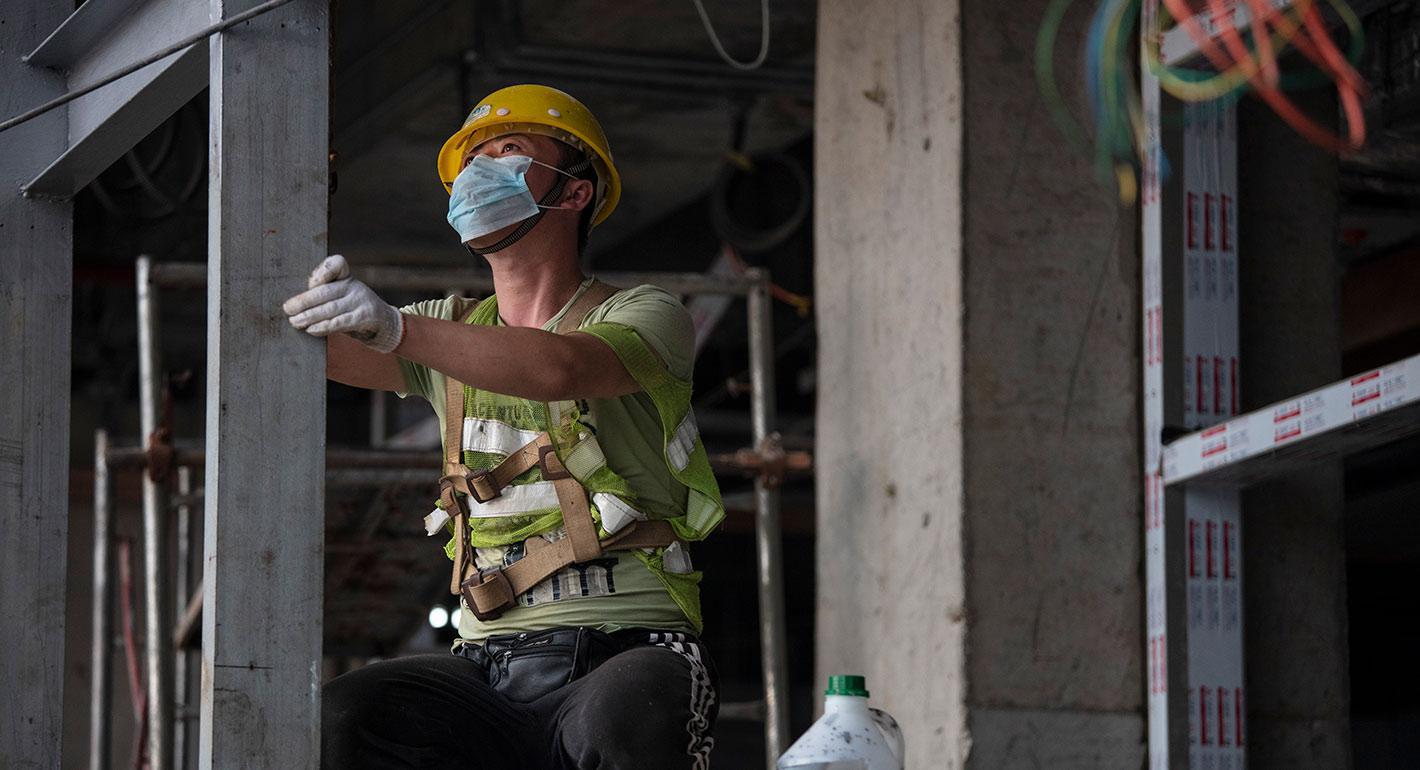
After the coronavirus pandemic wanes, how will China’s reorientation of the Belt and Road Initiative to address global health concerns influence its relationships with South Asian countries?
Deep Pal, Rahul Bhatia
Early in the outbreak, government researchers forecast several high-risk scenarios that were downplayed or ignored in public messaging.
Gautam I. Menon
Governments around the world are turning to new forms of digital surveillance to monitor the spread of the coronavirus, though they are mostly using existing laws to do so.
Anirudh Burman