

Commentary
Michael Pettis
{
  "authors": [
    "Michael Pettis"
  ],
  "type": "legacyinthemedia",
  "centerAffiliationAll": "dc",
  "centers": [
    "Carnegie Endowment for International Peace"
  ],
  "collections": [],
  "englishNewsletterAll": "asia",
  "nonEnglishNewsletterAll": "",
  "primaryCenter": "Carnegie Endowment for International Peace",
  "programAffiliation": "AP",
  "programs": [
    "Asia"
  ],
  "projects": [],
  "regions": [
    "East Asia",
    "China"
  ],
  "topics": [
    "Economy"
  ]
}
Source: Getty
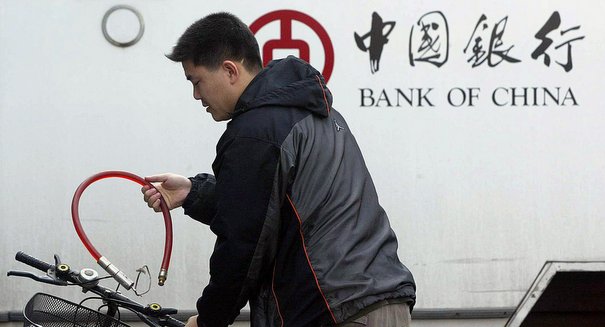
Although China could easily avoid a banking collapse in the face of rising non-performing loans, that effort would place even more pressure on low-consuming Chinese households and make economic rebalancing more difficult.
Source: Financial Times

But did it? The optimists have almost certainly failed to understand how Beijing paid for its earlier banking crises. In fact, the cost of resolving the previous surges in non-performing loans exacerbated China’s domestic imbalances. The current build-up of bad debt may very well do the same.
Beijing used three main tools to manage previous increases in bad loans, all of which passed costs on to bank depositors. First, the central bank slowed the accumulation of non-performing loans by keeping lending rates low. Low borrowing costs made it easier for struggling businesses to roll over the debt as the economy grew and reduced the real value of debt payments.
Second, policymakers infused the banks with additional equity, partly directly and partly by purchasing bad loans at above their liquidation value. They financed these capital infusions by borrowing, which at artificially low rates has the effect of passing the repayment burden on to lenders. Finally and most importantly, the central bank mandated a wide spread between the bank lending and the deposit rate, which increased the profitability of banks substantially and so helped to recapitalise them.
Beijing’s strategy was very successful and certainly prevented a banking crisis, but there was nonetheless a cost. The bail-out implicitly required that bank depositors subsidise the cleaning up of the banking industry. This in effect represented a large transfer of income from the household sector to the banks, to government and to businesses. It is perhaps not surprising, then, that during the period of the bail-out household income, already a relatively low share of gross domestic product, declined to alarming levels.
This is the real risk of rising non-performing loans in China. It is not that China’s banks are likely to collapse. Debt levels are certainly high and highly pro-cyclical – normally a toxic combination – but Beijing largely controls domestic funding and can protect itself from the bank runs that plagued the US and Europe. Like Tokyo in the 1990s, Beijing is in a strong position to continue to fund its rising bank-related liabilities and will not have a debt problem any time soon.
The danger is that the cost of cleaning up the banking system will fall, as in the past, on the household sector. China must reduce its excessive reliance on exports and investment to fuel its continued growth, and the only way that can happen is if household consumption rises as a share of GDP. But since growth in household consumption has always been constrained by growth in household income, it may be unreasonable to expect a surge in consumption when households are also required to clean up a sharp increase in bad loans.
Over the next few years, as trade tensions increase and the world finds it increasingly difficult to absorb China’s rising capacity, the country’s growth will rely more than ever on the growth of household consumption. If the worriers are right and non-performing loans surge, China can nonetheless easily avoid a banking collapse. But that does not mean the cost of cleaning up the banks will be negligible. On the contrary, it will put even more pressure on low-consuming Chinese households and will make the inevitable rebalancing of China’s economy much more difficult than many expect.
Japan showed how difficult. Since 1990 Japanese consumption growth has limped along at between 1 and 2 per cent annually as households have been forced indirectly to clean up their own bad loans. The economy grew much more slowly. Just as Japan slowly rebalanced its economy towards consumption, so must China.
If future Chinese consumption growth also slows because households are forced to foot the new bad-debt bill, we may see the real cost of the current explosion in bad loans – several years of sub-par growth.

Nonresident Senior Fellow, Carnegie China
Michael Pettis is a nonresident senior fellow at the Carnegie Endowment for International Peace. An expert on China’s economy, Pettis is professor of finance at Peking University’s Guanghua School of Management, where he specializes in Chinese financial markets.
Recent Work
Michael Pettis
Michael Pettis

After the chill in ties between 2020 and 2024 that brought India–China relations to their lowest point in several decades, the two countries have engaged each other afresh. This paper argues that there are predominantly four imperatives guiding India’s approach to China, and they exist in an order of priority.

Saheb Singh Chadha

This piece argues that India’s central challenge is not managing a single flashpoint but resolving the underlying tension between expansion and institutional coherency of the BRICS grouping.

Vrinda Sahai

On March 10, 2026, India’s Union Cabinet approved amendments to Press Note 3, a regulation that mandated government approval on all foreign direct investment (FDI) from countries sharing a land border with India. This amendment raises questions primarily about whether its stated benefits will materialize and if the risks have been adequately weighed. This piece will address the same.

Konark Bhandari

This piece examines India’s response to U.S. sanctions and tariffs, specifically assessing the immediate market consequences, such as alterations in import costs, and the broader strategic implications for India’s energy security and foreign policy orientation.
Vrinda Sahai
This paper examines the evolution of India-China economic ties from 2005 to 2025. It explores the impact of global events, bilateral political ties, and domestic policies on distinct spheres of the economic relationship.

Santosh Pai