• Research
  • About
  • Experts
Carnegie India logoCarnegie lettermark logo
AI
{
  "authors": [],
  "type": "pressRelease",
  "centerAffiliationAll": "dc",
  "centers": [
    "Carnegie Endowment for International Peace"
  ],
  "collections": [],
  "englishNewsletterAll": "menaTransitions",
  "nonEnglishNewsletterAll": "",
  "primaryCenter": "Carnegie Endowment for International Peace",
  "programAffiliation": "MEP",
  "programs": [
    "Middle East"
  ],
  "projects": [],
  "regions": [
    "Middle East",
    "Palestine"
  ],
  "topics": []
}
REQUIRED IMAGE

REQUIRED IMAGE

Press Release

Fayyad failing to rebuild West Bank

The international community’s understandable admiration for Palestinian Prime Minister Salam Fayyad and his efforts to rebuild the West Bank obscures a dangerous regression in democracy and human rights.

Link Copied
Published on Jul 1, 2010

WASHINGTON, July 1—The international community’s understandable admiration for Palestinian Prime Minister Salam Fayyad and his efforts to rebuild the West Bank obscures a dangerous regression in democracy and human rights. Just back from the West Bank, Nathan J. Brown contends that the United States is once again confusing support for an admirable individual with sound policy.

Key Conclusions

  • Government circumventing democracy. The unaccountable governing process that Fayyad has had to invent is not just postponing a democratic system—it is actively denying it.
  • Isolated successes do not create rule of law. The increasing number of cases seen and submitted to the courts indicates growing efficiency and confidence, but security services continue to act outside the law under the guise of cracking down on Hamas.
  • Lack of institution building. While Fayyad’s cabinet has managed to make a few existing institutions more effective and less corrupt, there has been regression in other governing bodies. Palestinian civil society is showing signs of decay as well. Ironically, there was more institution building and civil society development under Yasser Arafat than there has been since the West Bank-Gaza split in 2007.
  • Disillusionment increasing among Palestinians. Popular support for Fayyad is growing but he still has no organized base. And Palestinians are increasingly cynical about the prospects for long-term development.
  • Fatah is in disarray. The party remains bitterly divided. Party leaders recently forced Fayyad’s cabinet to cancel local elections when Fatah could not organize itself on time.

“To the extent that Fayyadism is building institutions, it is unmistakably doing so in an authoritarian context,” writes Brown. “There is no reason to associate Fayyad personally with the most egregious aspects of this new authoritarianism, but there is no way his cabinet could have been created or sustained in a more democratic environment.”

“Palestinian authoritarianism in 2010 is different from Palestinian authoritarianism under Arafat—it is less venal and probably less capricious. But it is also more stultifying.”

###


NOTES

  • Click here to read the commentary online
  • Nathan J. Brown is a professor of political science and international affairs at the George Washington University, a nonresident senior associate at the Carnegie Endowment, and a distinguished scholar and author of four well-received books on Arab politics.
  • The Carnegie Middle East Program combines in-depth local knowledge with incisive comparative analysis to examine economic, socio-political, and strategic interests in the Arab world to provide analysis and recommendations in both English and Arabic that are deeply informed by knowledge and views from the region.
  • The Carnegie Middle East Center based in Beirut, Lebanon, aims to better inform the process of political change in the Middle East.
  • Carnegie's Arab Reform Bulletin analyzes political reform in the Middle East.
  • Press Contact: David Kampf, 202-939-2233, pressoffice@ceip.org
Middle EastPalestine

Carnegie India does not take institutional positions on public policy issues; the views represented herein are those of the author(s) and do not necessarily reflect the views of Carnegie, its staff, or its trustees.

More Work from Carnegie India

  • Article
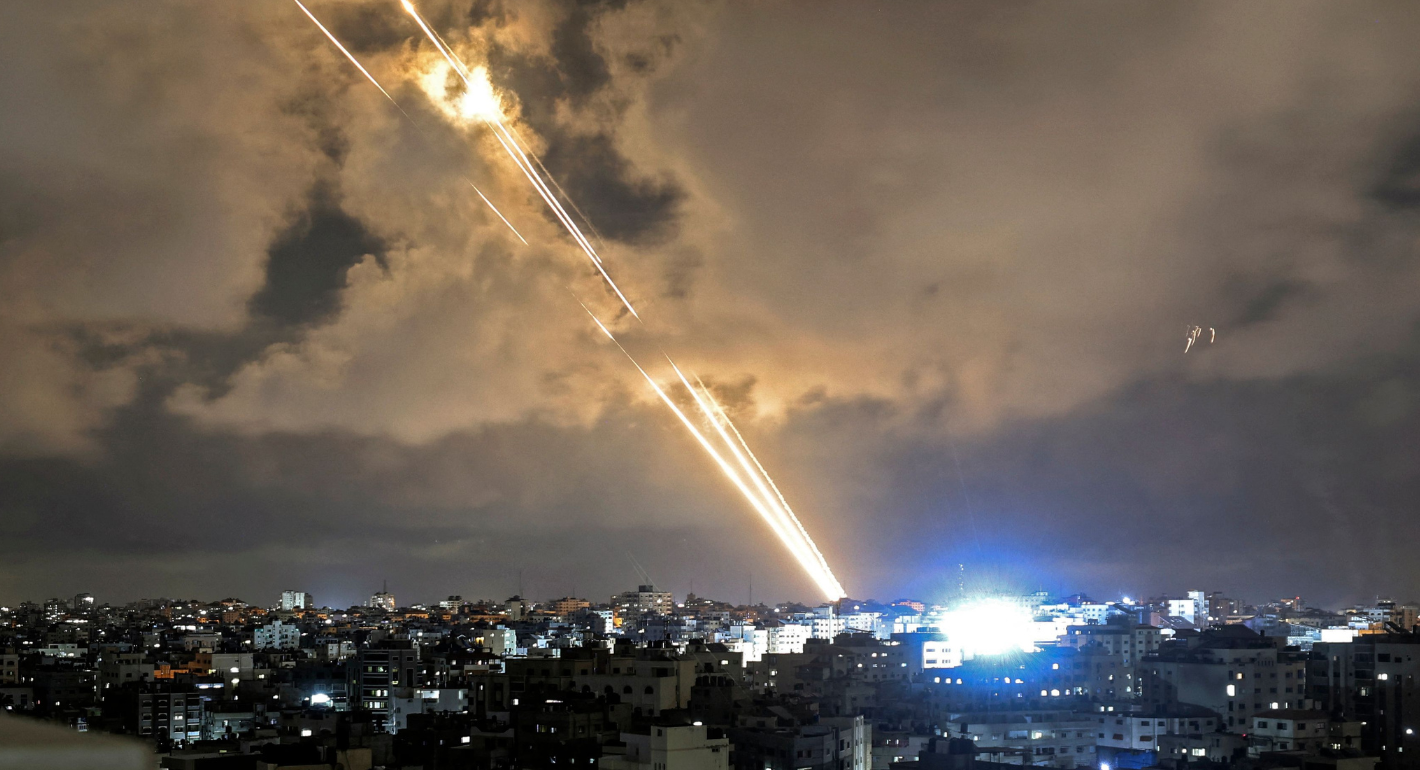
    Risk and Retaliation: Israel, Iran, and the Evolving Situation in West Asia

    An Israeli response to Iran’s October 1 attack is imminent. The key question is of its intensity and potential fallout, both within Iran, in terms of nuclear security policy changes, and across the broader region. The coming days are likely to reshape West Asia irreversibly.

      Gaddam Dharmendra
  • Commentary
    India’s View on Soleimani, Iran, and the United States

    For India, the equation is pretty simple: better diplomatic relations between the United States and Iran would let New Delhi deal more smoothly with both countries. A decline in the relationship adversely affects Indian interests.

      Rudra Chaudhuri

  • Commentary
    What Would a Larger Chinese Presence Mean for the Middle East?

    The recent developments around the Strait of Hormuz have once again highlighted the importance of maritime chokepoints and their connection to regional geopolitics.

      Darshana M. Baruah

  • Commentary
    As US-Iran Tensions Mount, What India Can Learn from the Oil ‘Tanker War’ in 1980s

    Last week, Britain impounded an Iranian oil tanker in Gibraltar, claiming that the vessel was carrying oil to Syria in violation of the European Union’s sanctions.

      Srinath Raghavan

  • Commentary
    Under Modi, India Has Shed its Traditional Defensiveness Towards the Middle East

    It has been a rather long learning curve for New Delhi to separate presumed transcendental religious solidarity and the logic of national self-interest in engaging the Middle East.

      C. Raja Mohan

Get more news and analysis from
Carnegie India
Carnegie India logo, white
Unit C-4, 5, 6, EdenparkShaheed Jeet Singh MargNew Delhi – 110016, IndiaPhone: 011-40078687
  • Research
  • About
  • Experts
  • Projects
  • Events
  • Contact
  • Careers
  • Privacy
  • For Media
Get more news and analysis from
Carnegie India
© 2026 Carnegie Endowment for International Peace. All rights reserved.