

In The Media
David Rothkopf
{
  "authors": [
    "David Rothkopf"
  ],
  "type": "legacyinthemedia",
  "centerAffiliationAll": "",
  "centers": [
    "Carnegie Endowment for International Peace"
  ],
  "collections": [],
  "englishNewsletterAll": "",
  "nonEnglishNewsletterAll": "",
  "primaryCenter": "Carnegie Endowment for International Peace",
  "programAffiliation": "",
  "programs": [],
  "projects": [],
  "regions": [
    "North America",
    "United States",
    "Western Europe",
    "United Kingdom"
  ],
  "topics": [
    "Economy"
  ]
}
Source: Getty
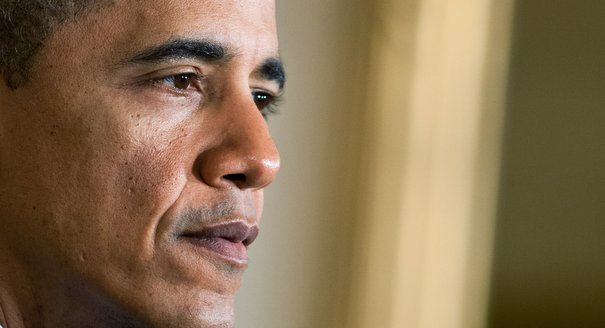
As both the United States and the United Kingdom struggle to find ways to restart their economies, President Obama may be able to learn from the changes being introduced by Prime Minister Cameron.
Source: Financial Times

Mr Obama was hailed as the man of tomorrow. Mr Cameron, with his apparent scepticism towards the European Union and seemingly backward-looking sensibilities, appeared to critics – like me – to be a relic of yesteryear. Yet now, just two months after Mr Cameron’s election, it is London that has a claim to be the capital city of change you can believe in and Washington that seems to be stuck in time. For once, in a relationship that has often seen UK prime ministers following in the footsteps of US presidents, it may be time for America to confound perceived recent tradition and follow the lead of the UK. At least that seems to be the case when it comes to tackling the core problem facing either country: getting their respective economic houses back in order.
In Washington, Mr Obama is teetering on the brink of a full-fledged war with business. It was hinted at early in the administration as, one by one, top posts were filled without any going to candidates with serious business leadership experience. Meanwhile, by contrast, still in the formative days of his tenure, Mr Cameron has just announced the hiring of Lord Browne, the former BP chief executive, as part of a programme to bring business leaders into the government to help with budget cuts and to instill a more businesslike way of thinking within his ministries.
The choice of Lord Browne is, of course, all the more resonant in Washington, where BP is a leading target because of the oil spill in the Gulf of Mexico.
On the eve of Mr Cameron’s first visit to Washington next week, other differences of approach to grappling with the looming challenges of our time have emerged, each suggesting that Mr Cameron has assumed the role of bold innovator.
Within weeks of taking office, he announced a plan to cut back the budget to fight the deficit, while Mr Obama and the US Congress have effectively embraced the deficit as if it were a life-preserver in economically storm-tossed seas. The American president has promised to consider cuts but real action looks unlikely soon.
While Mr Obama decried “politics as usual” as a source of many of America’s economic imbalances and policy gaps, meaningful political reform has been left off the agenda and deals with special interests have continued to drive legislation. Mr Cameron, on the other hand, has effectively embraced bipartisanship via his coalition with the Liberal Democrats, Britain’s third party, and has just announced a referendum on sweeping and overdue changes to the political system.
Mr Cameron may flame out. Mr Obama may fulfil his great promise. It must also be acknowledged that many of the obstacles he faces are due to a political system that excels at producing the antibodies to kill anything that looks like real change. No doubt there is much in Mr Obama’s expansive and principled worldview that Mr Cameron should emulate.
Nonetheless, Mr Obama would do well to watch closely the Cameron experiments because they are in areas in which the US could use strong and innovative action. Indeed, a lot is riding on the ability of both young leaders to capitalise on their own differences and learn from each other as they grapple with the 21st-century challenges their nations face.
In particular, it is essential that Mr Obama recognises that for all the missteps of business in the recent past, his greatest problem is restarting the economy. In the end, businesses rather than governments do that. Further, the businesslike view that men such as Lord Browne will bring to the UK government will not only be about how to reduce red ink, it will also be about understanding that not every outlay is the same. Some constitute wasteful spending. But some are investments and there is a difference.
Government leaders need to master the concept of providing taxpayers with a return on their investment – through spending on infrastructure, education, realigned energy policies and other moves that will create jobs now and attract private investment and build growth over many years to come. That really does require the best of business thinking – which in turn might seem to mean that, for now at least, America also needs some of the best of British thinking.

Former Visiting Scholar
David Rothkopf was a visiting scholar at the Carnegie Endowment as well as the former CEO and editor in chief of the FP Group.
Recent Work
David Rothkopf
David Rothkopf
Carnegie India does not take institutional positions on public policy issues; the views represented herein are those of the author(s) and do not necessarily reflect the views of Carnegie, its staff, or its trustees.

How is AI reshaping space security, creating governance challenges, and where does international diplomacy stand today?


Tejas Bharadwaj, Almudena Azcárate Ortega

The U.S.–India semiconductor cooperation story is well-stocked with top-level strategic intent. What remains unresolved, however, are some underlying challenges that will determine whether the cooperation actually functions. Three such friction points stand out.

Shruti Mittal

On March 10, 2026, India’s Union Cabinet approved amendments to Press Note 3, a regulation that mandated government approval on all foreign direct investment (FDI) from countries sharing a land border with India. This amendment raises questions primarily about whether its stated benefits will materialize and if the risks have been adequately weighed. This piece will address the same.

Konark Bhandari

India and the United States are close to concluding a Reciprocal Defense Procurement Agreement (RDPA) that will allow firms from the two countries to sell to each other’s defense establishments more easily. While this may not remedy the specific grievances both sides may have regarding larger bilateral issues, an RDPA could restore some momentum, following the trade deal announcement.
Konark Bhandari

On the last day of the India AI Impact Summit, India signed Pax Silica, a U.S.-led declaration seemingly focused on semiconductors. While India’s accession to the same was not entirely unforeseen, becoming a signatory nation this quickly was not on the cards either.
Konark Bhandari