

Commentary
Michael Pettis
{
  "authors": [
    "Michael Pettis"
  ],
  "type": "legacyinthemedia",
  "centerAffiliationAll": "dc",
  "centers": [
    "Carnegie Endowment for International Peace"
  ],
  "collections": [],
  "englishNewsletterAll": "asia",
  "nonEnglishNewsletterAll": "",
  "primaryCenter": "Carnegie Endowment for International Peace",
  "programAffiliation": "AP",
  "programs": [
    "Asia"
  ],
  "projects": [],
  "regions": [
    "East Asia",
    "China",
    "North America"
  ],
  "topics": [
    "Economy"
  ]
}
Source: Getty
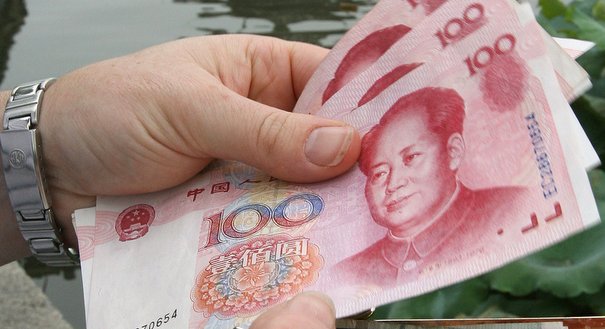
Global growth is stimulated by increased demand, and while China is currently the largest component of global growth due to its strong economy, it is not a major net contributor to growth outside its borders.
Source: The Economist

But what does it mean to contribute to global growth? For many years the world was balanced between countries with excess demand relative to their production of goods and services and countries with deficient demand. The 2007-09 crisis seems to have ended the period of foolish overconsumption by the US and several countries in Europe, who jointly accounted for an outsized share of global consumption growth in the previous decade. When we consider that for the next several years the largest economies in the world, the US, Europe, China, Japan, and the UK, as well as many smaller ones, will be forced to recapitalise their ailing or insolvent banking systems, and that banking systems are always cleaned up directly or indirectly by transfers from the household sector, over the next several years we should not expect a major recovery of household consumption. Long-suffering households will have too little disposable income left over from the banking sector recapitalisation to engage in a consumption spree.
So what the world really needs is more demand. In that sense countries with excess demand, or at least demand growth relative to growth in production, contribute to global growth, while countries with deficient demand convert foreign demand into domestic growth. As an economy with deficient demand and by far the world’s largest trade surplus, China is not a major net contributor to growth outside its borders. It is a major growth booster mainly for commodity producers, but it is a greater drag on growth for manufacturers.
China is eager to remedy this. It has engaged in a massive investment boom, but concerns about capital misallocation make this unsustainable. It is eager to boost domestic household consumption, but this will require a slow and difficult transformation of the country’s growth model. Over the next few years if China can rebalance its economy, and reduce its trade surplus, it will contribute real growth and employment to the rest of the world. For now, however, it is hard to argue that the global economy depends too much on China’s economic growth.

Nonresident Senior Fellow, Carnegie China
Michael Pettis is a nonresident senior fellow at the Carnegie Endowment for International Peace. An expert on China’s economy, Pettis is professor of finance at Peking University’s Guanghua School of Management, where he specializes in Chinese financial markets.
Recent Work
Michael Pettis
Michael Pettis
Carnegie India does not take institutional positions on public policy issues; the views represented herein are those of the author(s) and do not necessarily reflect the views of Carnegie, its staff, or its trustees.

After the chill in ties between 2020 and 2024 that brought India–China relations to their lowest point in several decades, the two countries have engaged each other afresh. This paper argues that there are predominantly four imperatives guiding India’s approach to China, and they exist in an order of priority.

Saheb Singh Chadha

This piece argues that India’s central challenge is not managing a single flashpoint but resolving the underlying tension between expansion and institutional coherency of the BRICS grouping.

Vrinda Sahai

On March 10, 2026, India’s Union Cabinet approved amendments to Press Note 3, a regulation that mandated government approval on all foreign direct investment (FDI) from countries sharing a land border with India. This amendment raises questions primarily about whether its stated benefits will materialize and if the risks have been adequately weighed. This piece will address the same.

Konark Bhandari

This piece examines India’s response to U.S. sanctions and tariffs, specifically assessing the immediate market consequences, such as alterations in import costs, and the broader strategic implications for India’s energy security and foreign policy orientation.
Vrinda Sahai

This paper examines the evolution of India-China economic ties from 2005 to 2025. It explores the impact of global events, bilateral political ties, and domestic policies on distinct spheres of the economic relationship.

Santosh Pai