

Q&A
Mark Medish
{
  "authors": [
    "Mark Medish"
  ],
  "type": "legacyinthemedia",
  "centerAffiliationAll": "",
  "centers": [
    "Carnegie Endowment for International Peace"
  ],
  "collections": [],
  "englishNewsletterAll": "",
  "nonEnglishNewsletterAll": "",
  "primaryCenter": "Carnegie Endowment for International Peace",
  "programAffiliation": "",
  "programs": [],
  "projects": [],
  "regions": [
    "North America",
    "United States"
  ],
  "topics": [
    "Political Reform"
  ]
}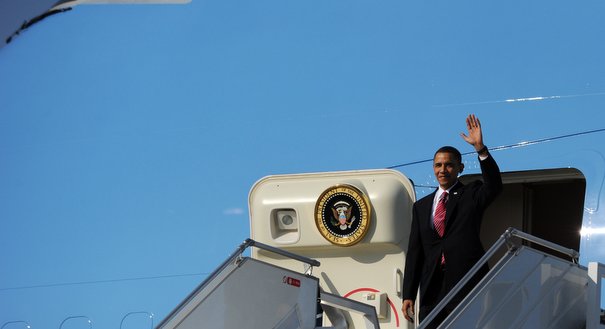
Source: Getty
Despite poor midterm poll prospects for the Democrats and a number of domestic and foreign policy promises that remain unfulfilled, President Obama may still emerge as the transformative leader many voters expected.
Source: The New York Times

Yet it is also too late for the exuberant optimism of 2008 that the former law professor would be the “once-in-a-generation” agent of change able to turn around America’s incipient decline.
Obama’s soaring campaign rhetoric about national renewal and transformation rings increasingly hollow against a thin track record and mounting new problems.
True, the challenges have been gigantic, and the administration has managed to check several big boxes on the domestic agenda: stimulus, health care, financial regulatory reform. Most important, Obama’s bailouts probably averted a full-scale depression.
But the economy remains flat, with the unemployment rate around 10 percent. The fiscal stimulus has been too meek. Expansive monetary policy is rewarding banks and capital markets without immediate jobs benefits for the rest of the economy.
The health care reform, while a move in the right direction, has not been a game-changer. Universal care remains distant, and private insurers will continue to dictate terms of coverage.
The salient lesson of the health legislation was that the White House fumbled its strategy and was lucky to pass the bill. The president himself did not even push for his signature initiative until his back was against the wall.
The voluminous Dodd-Frank banking reform is the regulatory equivalent of the Versailles Treaty: punching the aggressors in the stomach and hoping they will not misbehave again. The titans of Wall Street, many of whom refuse to admit they were saved by the taxpayers, are laughing all the way to the bank.
The early push for strategic energy and environmental reforms petered out. Immigration overhaul is likewise on the back burner.
In short, the White House has broadly violated former chief of staff Rahm Emmanuel’s wise dictum about never wasting a crisis.
Obama may be a paradigm-shifter by ambition, but so far he has turned out to be a tinkerer by temperament.
Most ominously, Obama has failed to rebalance U.S. global engagement away from over-reliance on the military tools favored by his predecessor. While sensibly ramping down in Iraq, he has paid lip service to the illusion that foreign military expeditions dressed in nation-building narratives are a sustainable path to peace and security.
For me, as a Democrat and Obama supporter, the ultimate bad karma moment was the Nobel committee’s decision to award the president the Peace Prize even as he announced a fresh surge of troops in Afghanistan. Rather than deferring the award, Obama chose to accept it and deliver a homily on America’s contribution to “just war” theory.
As Bob Woodward’s new book, “Obama’s Wars,” reveals, the president has yet to come to grips with the bloated U.S. military-intelligence establishment. The flagrant lèse majesté of senior officers, such as the sacked Afghanistan commander Stanley McChrystal, hints at the depth of the problem confronting the president.
Obama’s broken promise to close the Guantánamo secret prison facility, too, is emblematic of his overall reluctance to firmly grasp the reins of power and stamp his vision on reality.
Two contrasting images of Obama are prevalent among his die-hard fans and his increasingly vociferous critics.
For true believers, Obama is a Zen master of modern politics. He is like Tolstoy’s portrait of General Kutuzov in “War and Peace” — a leader deeply in touch with the natural flows of history, patiently waiting for the right moment to act.
To his critics, Obama is more like Chance the Gardener, the holy fool made famous by Peter Sellers in the film based on Jerzy Kosinski’s “Being There” — Chance is sublime at gardening, but he is an accidental tourist in the world of Washington power.
The truth about Obama’s leadership style lies elsewhere. He is no Zen master. His regal aloofness during the Gulf of Mexico oil spill suggests he can be more of a cold fish than a cool cat.
Nor is the president a fool; he is world-wise and manifestly smart (disclosure: we overlapped in law school). However, on the job he exudes professorial self-absorption and a tentative nature. The president’s penchant for strategic patience comes across as weakness.
These days Obama also appears seriously isolated in the Oval Office, relying on a small circle of loyalists. According to a senior White House staffer, “the president has rapport with almost nobody” outside the inner sanctum.
America has endured eight years of uninformed certainty under George W. Bush and almost two years of enlightened indecision under Barack Obama. The result has been a costly decade of mistakes and missed opportunities.
If Obama has yet to emerge as the transformative leader many voters expected, neither has the country shown its true spirit as a great nation, descending instead into forms of political atavism, tribalism and isolationism. As Pogo said, “We have met the enemy — and he is us.”
The perception of a general American malaise is perhaps the biggest risk to global security today. The free world can ill afford another two years of Obama Lite.
This American president still enjoys enormous goodwill at home and abroad. Like a Grand Slam tennis champion, down two sets to one, he needs to dig deep and show us what he is really made of.
Above all, Obama must not shy away from the unique power of the presidency to inspire and, by acting, to lead the way.
Former Visiting Scholar
Medish served in the Clinton administration as special assistant to the President and senior director for Russian, Ukrainian, and Eurasian Affairs on the National Security Council from 2000 to 2001.
Recent Work
Carnegie India does not take institutional positions on public policy issues; the views represented herein are those of the author(s) and do not necessarily reflect the views of Carnegie, its staff, or its trustees.

How is AI reshaping space security, creating governance challenges, and where does international diplomacy stand today?


Tejas Bharadwaj, Almudena Azcárate Ortega

The U.S.–India semiconductor cooperation story is well-stocked with top-level strategic intent. What remains unresolved, however, are some underlying challenges that will determine whether the cooperation actually functions. Three such friction points stand out.

Shruti Mittal

India and the United States are close to concluding a Reciprocal Defense Procurement Agreement (RDPA) that will allow firms from the two countries to sell to each other’s defense establishments more easily. While this may not remedy the specific grievances both sides may have regarding larger bilateral issues, an RDPA could restore some momentum, following the trade deal announcement.

Konark Bhandari

On the last day of the India AI Impact Summit, India signed Pax Silica, a U.S.-led declaration seemingly focused on semiconductors. While India’s accession to the same was not entirely unforeseen, becoming a signatory nation this quickly was not on the cards either.
Konark Bhandari

This piece examines India’s response to U.S. sanctions and tariffs, specifically assessing the immediate market consequences, such as alterations in import costs, and the broader strategic implications for India’s energy security and foreign policy orientation.

Vrinda Sahai