• Research
  • About
  • Experts
Carnegie India logoCarnegie lettermark logo
AI
{
  "authors": [
    "Therese Miranda"
  ],
  "type": "other",
  "centerAffiliationAll": "dc",
  "centers": [
    "Carnegie Endowment for International Peace"
  ],
  "collections": [],
  "englishNewsletterAll": "",
  "nonEnglishNewsletterAll": "",
  "primaryCenter": "Carnegie Endowment for International Peace",
  "programAffiliation": "SCP",
  "programs": [
    "Sustainability, Climate, and Geopolitics"
  ],
  "projects": [],
  "regions": [
    "North America",
    "United States"
  ],
  "topics": [
    "Climate Change"
  ]
}
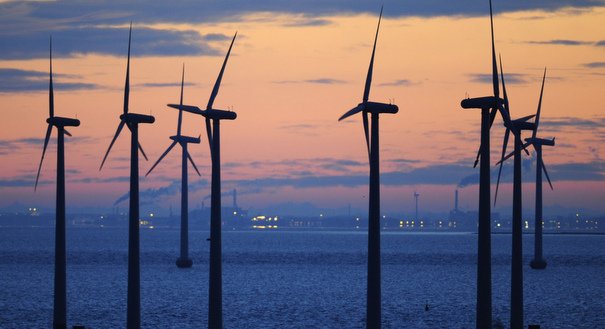
Source: Getty

Other

Designing a National Renewable Electricity Standard: Five Key Components

A national renewable electricity standard offers many advantages over the current patchwork system of state standards, including the creation of a market for renewable energy credits which would reduce the overall cost of compliance.

Link Copied
By Therese Miranda
Published on Nov 2, 2010

A national renewable electricity standard (RES) offers many advantages over the current patchwork system of state standards—a system that leads to unique regulatory requirements in each state. The advantages of a national standard stem primarily from the creation of a large, standardized market for renewable energy credits (RECs), which reduces complexity and allows the market to operate more efficiently, thereby reducing the overall cost of compliance.

Creating a national RES also presents many challenges, however, given the prevalence of state programs. To operate successfully, a national RES must be carefully designed and include five key components:

  • Clarity and consistency: The requirements and regulation under the national RES must be easy to understand and consistent over time. Clarity alleviates excessive confusion and litigation, and minimizes the intellectual capital necessary to understand the system. Additionally, the RES should provide assurance that the requirements and market for RECs will exist in a consistent manner over time—specific requirements may change over time, but this change should take place in a predictable fashion. Consistency allows renewable generators, utilities, and investors to make long-term business decisions with greater confidence. Both factors are essential to minimizing barriers to investment in and development of renewable energy capacity.
     
  • Treatment of pre-existing systems: In 26 states, an operational RES is already in place, and many renewable facilities currently operate in the United States. A national RES must address how these pre-existing state systems will be incorporated into the new national plan. Federal preemption of state standards combined with some form of grandfathering for RECs would address the need for standardization while avoiding punishing early-adopter states, as would occur if renewable capacity installed under the state RES were ineligible for federal RECs.
     
  • Harmonization with complementary policies: Renewable energy policies should be designed in a holistic manner to minimize disruption to the industry during periods of transition. This approach will help create consistency and prevent competition between policy tools, but is near-impossible to achieve in stand-alone bills dealing with only a single aspect of energy policy.
     
  • Range of eligible technologies: The RES should support the broadest possible range of technologies while still retaining the integrity of the term renewable—technologies not based on renewable fuel sources, such as carbon capture and sequestration or nuclear power, should not be included under a renewable energy standard. These technologies may be viable options to include in an alternative or clean energy standard. Depending on the primary goals of regulation, an RES, AES (Alternative Energy Standard), or CES (Clean Energy Standard) may be the optimal policy choice. Additionally, the system should be flexible enough to adapt to evolving technologies. In its most basic form, an RES promotes the development of lowest-cost installations first. However, by adjusting the details of regulation, other goals, such as local job creation, diversification of energy sources, or increased energy security can also be achieved, making the RES a remarkably versatile policy tool. These secondary goals are generally achieved through the use of carve-outs or multipliers. Of the two options, multipliers offer greater simplicity.
     
  • Grid integration: Without provisions to clarify responsibility for transmission construction and to ensure that new renewable construction can be successfully connected to the grid and transported to demand centers, the RES is unlikely to succeed. These issues must be addressed in a national system to speed the permitting process and minimize litigation.

To address these issues and create a successful national standard, policy makers should pass legislation quickly. The proposed federal RES introduced by Senators Bingaman and Brownback in September 2010 addresses some of these issues adeptly, but falls short on others. Although passage this year appears increasingly unlikely, the bill represents the best example of bipartisan legislation thus far, and is likely to serve as the starting point for legislation next year. Comparing Bingaman-Brownback to the ideal features of RES legislation therefore provides a useful starting point for understanding how these concepts will play out in legislation.

About the Author

Therese Miranda

Former Junior Fellow, Energy and Climate Program

Therese Miranda
Former Junior Fellow, Energy and Climate Program
Climate ChangeNorth AmericaUnited States

Carnegie India does not take institutional positions on public policy issues; the views represented herein are those of the author(s) and do not necessarily reflect the views of Carnegie, its staff, or its trustees.

More Work from Carnegie India

  • Commentary
    India Signs the Pax Silica—A Counter to Pax Sinica?

    On the last day of the India AI Impact Summit, India signed Pax Silica, a U.S.-led declaration seemingly focused on semiconductors. While India’s accession to the same was not entirely unforeseen, becoming a signatory nation this quickly was not on the cards either.

      Konark Bhandari

  • Commentary
    The Impact of U.S. Sanctions and Tariffs on India’s Russian Oil Imports

    This piece examines India’s response to U.S. sanctions and tariffs, specifically assessing the immediate market consequences, such as alterations in import costs, and the broader strategic implications for India’s energy security and foreign policy orientation.

      Vrinda Sahai

  • Commentary
    NISAR Soars While India-U.S. Tariff Tensions Simmer

    On July 30, 2025, the United States announced 25 percent tariffs on Indian goods. While diplomatic tensions simmered on the trade front, a cosmic calm prevailed at the Sriharikota launch range. Officials from NASA and ISRO were preparing to launch an engineering marvel into space—the NASA-ISRO Synthetic Aperture Radar (NISAR), marking a significant milestone in the India-U.S. bilateral partnership.

      Tejas Bharadwaj

  • Commentary
    TRUST and Tariffs

    The India-U.S. relationship currently appears buffeted between three “Ts”—TRUST, Tariffs, and Trump.

      Arun K. Singh

  • Commentary
    The India-U.S. TRUST Initiative: Advancing Semiconductor Supply Chain Cooperation

    As part of the TRUST initiative, leaders of the two countries committed to building trusted and resilient supply chains, including for semiconductors and critical minerals. India and the United States have made steady progress in this area over the years. This essay explores the takeaways from discussions on semiconductor supply chains that took place at Carnegie India’s 9th Global Technology Summit.

      Konark Bhandari

Get more news and analysis from
Carnegie India
Carnegie India logo, white
Unit C-4, 5, 6, EdenparkShaheed Jeet Singh MargNew Delhi – 110016, IndiaPhone: 011-40078687
  • Research
  • About
  • Experts
  • Projects
  • Events
  • Contact
  • Careers
  • Privacy
  • For Media
Get more news and analysis from
Carnegie India
© 2026 Carnegie Endowment for International Peace. All rights reserved.






