

Article
Thomas Carothers
{
  "authors": [
    "Thomas Carothers"
  ],
  "type": "legacyinthemedia",
  "centerAffiliationAll": "dc",
  "centers": [
    "Carnegie Endowment for International Peace"
  ],
  "collections": [],
  "englishNewsletterAll": "democracy",
  "nonEnglishNewsletterAll": "",
  "primaryCenter": "Carnegie Endowment for International Peace",
  "programAffiliation": "DCG",
  "programs": [
    "Democracy, Conflict, and Governance"
  ],
  "projects": [],
  "regions": [
    "North America",
    "United States",
    "Western Europe",
    "United Kingdom"
  ],
  "topics": [
    "Economy",
    "Foreign Policy"
  ]
}
Source: Getty
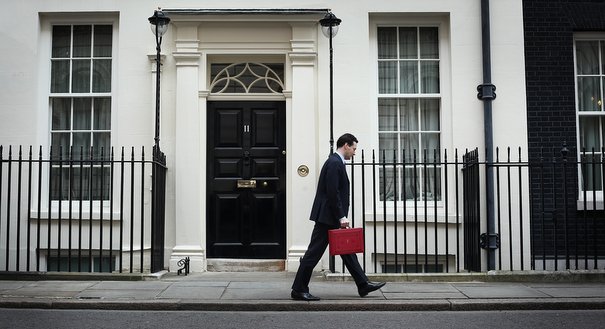
Congressional Republicans should follow the example of British conservatives, who have taken the extraordinary step of exempting foreign aid from their far-reaching budget cuts because they recognize its strategic and moral importance.
Source: New Republic

After coming to power last summer, British conservatives have not just talked about slashing Britain’s budget, they have delivered. They are well into the implementation of deep budget cuts which will average 19 percent across almost every area of government spending and are projected to eliminate the UK’s current deficit by 2015. These cuts dwarf any mainstream proposals currently under consideration in Washington, on either side of the political aisle.
The Tory-led austerity hits hard at Britain’s international affairs budget. Defense spending is down 7.5 percent over the next four years. The diplomatic budget will shrink by 24 percent in the same period. Yet note this: Spending on foreign aid has been “ringfenced” from reductions—one of only two areas of spending, alongside national health, to be spared. In fact, the British government will increase foreign-aid outlays by 37 percent in real terms over the next four years, even as the rest of the budget stabilizes or shrinks further. And British aid was hardly miserly to start with—it was already roughly double U.S. foreign aid as a percentage of GDP before the planned increases.
Why are frugal, hardheaded British conservatives carrying out one of the biggest non-crisis induced budget reductions in the history of established democracies exempting foreign aid from the axe? For three main reasons, all instructive in the U.S. context.
First, British conservatives recognize that cutting foreign aid is penny-wise pound-foolish for a power with significant, wide-ranging international security interests, especially relating to terrorism. What makes better financial sense—spending several billion dollars per year helping an array of fragile states in troubled regions build their state capacity or forking out tens or hundreds of billions of dollars on emergency interventions when one of those states collapses or erupts? The British defense review completed last October flags development aid as an essential tool in heading off trouble in a range of shaky states.
Second, they also know that, in a world where surging new powers are competing with the West to gain favor with and access to people and markets all over, aid is a crucial tool for building good will, creating a rich cross-border web of organizational and personal ties, and shaping young minds. The rapid increase in Chinese aid to Africa and elsewhere makes clear that China understands this, too. Having what is widely considered the most effective foreign aid agency in the world is widely understood in British policy circles as critical to Britain’s continued success in “punching above its weight” on the international stage.
Third, Prime Minister David Cameron and his team remain committed to robust foreign-aid spending because they feel a moral commitment to reduce poverty in the world and know foreign aid is a major way for their government to do that. A sense of compassion for the enormous suffering across the globe and a determination to help reduce it is neither a liberal cause nor a conservative one. It is a human cause. Last summer, I asked an incoming senior conservative British official why his government was taking this surprising line on foreign aid and mentioned the various pragmatic rationales they might have in mind. He acknowledged those but then noted very simply that it’s also the right thing to do, full stop, as the British say.
U.S. foreign aid can certainly be improved, especially the use of large dollops of security aid to try to buy friendships with dubious governments. The Obama administration’s efforts to date on aid reform merit debate and scrutiny. Yet slashing and burning is not the answer. If House Republicans want to get serious about developing a cost-conscious but still responsible approach to financing America’s global role, they should abandon their trash talk about foreign aid and get serious about weighing costs and benefits across the spectrum of the international affairs budget. Taking a page from their British counterparts would be a good way to start.

Harvey V. Fineberg Chair for Democracy Studies; Senior Fellow, Democracy, Conflict, and Governance Program
Thomas Carothers, a senior fellow in the Carnegie Endowment for International Peace’s Democracy, Conflict, and Governance Program, is a leading expert on comparative democratization and international support for democracy.
Recent Work
Thomas Carothers
Thomas Carothers
Carnegie India does not take institutional positions on public policy issues; the views represented herein are those of the author(s) and do not necessarily reflect the views of Carnegie, its staff, or its trustees.

How is AI reshaping space security, creating governance challenges, and where does international diplomacy stand today?


Tejas Bharadwaj, Almudena Azcárate Ortega

After the chill in ties between 2020 and 2024 that brought India–China relations to their lowest point in several decades, the two countries have engaged each other afresh. This paper argues that there are predominantly four imperatives guiding India’s approach to China, and they exist in an order of priority.

Saheb Singh Chadha

This piece argues that India’s central challenge is not managing a single flashpoint but resolving the underlying tension between expansion and institutional coherency of the BRICS grouping.

Vrinda Sahai

A partnership between India, a country of subcontinental size, and Africa, a continent of fifty-four countries, may seem asymmetric until one notes that both are home to nearly the same number of people—1.4 billion. This essay spells out the existing challenges to the partnership, its optimal potential, and the possible pathways to realize it over the next quarter-century.

Rajiv Bhatia

The U.S.–India semiconductor cooperation story is well-stocked with top-level strategic intent. What remains unresolved, however, are some underlying challenges that will determine whether the cooperation actually functions. Three such friction points stand out.

Shruti Mittal