• Research
  • About
  • Experts
Carnegie India logoCarnegie lettermark logo
{
  "authors": [
    "Paul Salem"
  ],
  "type": "legacyinthemedia",
  "centerAffiliationAll": "",
  "centers": [
    "Carnegie Endowment for International Peace",
    "Malcolm H. Kerr Carnegie Middle East Center"
  ],
  "collections": [],
  "englishNewsletterAll": "",
  "nonEnglishNewsletterAll": "",
  "primaryCenter": "Malcolm H. Kerr Carnegie Middle East Center",
  "programAffiliation": "",
  "programs": [],
  "projects": [],
  "regions": [
    "Levant",
    "Maghreb"
  ],
  "topics": [
    "Security"
  ]
}
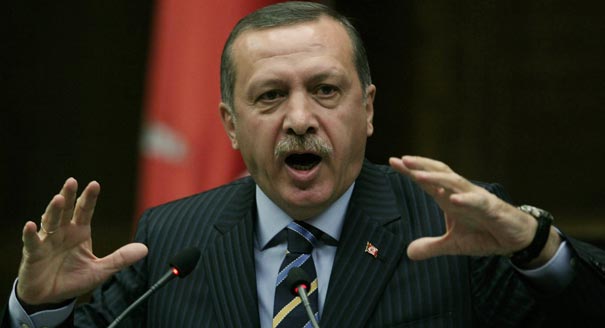
Source: Getty

In The Media
Malcolm H. Kerr Carnegie Middle East Center

Turkey Should Participate in Libyan No-fly Zone

Taking the lead in implementing a no-fly zone over Libya would allow Turkey to reassert its leadership role in the Middle East and demonstrate Ankara's ability to put principle and long-term strategic interests above its short-term economic interests.

Link Copied
By Paul Salem
Published on Mar 13, 2011

Source: Hurriyet

Turkey Should Participate in Libyan No-fly Zone
As Libyan leader Moammar Gadhafi threatens the increased use of his air force against his own civilian population, it is becoming clear that regional and international opinion is moving in favor of supporting the imposition of a no-fly zone over Libya. Despite its business interests in Libya, Turkey should recognize the broader values at stake, reverse its opposition, and play a leading role in implementing a no fly zone.
 
Col. Gadhafi has clearly lost whatever shreds of legitimacy he had with the majority of his own people; however, through sheer military brutality he might be able to put down these popular uprisings, like Saddam did in southern Iraq after 1991, or the Soviets did in Hungary and Czechoslovakia during the Cold War. His air force is his only military advantage over his people. If he uses it more widely against civilian populations, it will become an unavoidable moral imperative to help save the Libyan people from such massacre.
 
The League of Arab States, the Gulf Cooperation Council and the Organization of Islamic Conference have indicated that they would be in favor a no-fly zone. And United Nations Security Council members are discussing the outlines of a potential resolution. Turkey has, so far, said that it was not in favor of such a no-fly zone.
 
I have written many times in recent months and years how Turkey has inspired many in the region as a model of democratic change; how it has also provided an example of responsible foreign policy in an otherwise polarized region. And how it has emphasized that we in the region should play a larger role in managing our own affairs, rather than leaving them to Western or other external intervention.
 
Now is the time for Turkey to build on its leadership role in the region, and recognize that helping to save large sections of the civilian population in Libya from the vengeful attacks of a spent and deranged leader, and to help the Libyans bring stability and democracy to Libya is not only a moral imperative but serves the interests of stability and democratization that Turkey has been exemplifying for years. And it is correct for Ankara to recognize that being a regional power entails responsibilities as well as advantages.
 
One can understand that in the first days of the Libyan uprising, Turkey was concerned about evacuating the 20,000-25,000 Turks that worked in Libya. We also know that Turkish companies have over $10 billion of contracts in Libya. And we know that the Turkish leadership is in the run-up to parliamentary elections in June. 
 
But this is a time to put principle and long-term strategic interests of stability and regional democratization above business and other narrow interests. People in the region have always accused the West of putting economic interests above principle; Turkey has come too far in helping build a new paradigm of democratization and regional order in the Middle East to fall under the same misperception.
 
And if a no-fly zone becomes a necessity to protect the Libyan people, we in the region should not wash our hands of it and ask the West to come do the work for us. At the very least, a no-fly zone should be implemented in full partnership: this should include full Turkish participation, as well as at least some participation from Egypt and Tunisia – the two countries that have unleashed the tide of democratization in the Arab world.
 
Building a democratic and stable Middle East will take regional leadership. Prime Minister Recep Tayyip Erdoğan, President Abdullah Gül, and Foreign Minister Ahmet Davutoğlu have talked about Turkey’s leadership role in a changing region. Now is the time to put words into action.

About the Author

Paul Salem

Senior Fellow at the Middle East Institute

Paul Salem is a senior fellow at the Middle East Institute.

    Recent Work

  • Paper
    Iraq’s Tangled Foreign Interests and Relations

      Paul Salem

  • Article
    Bracing for Impact in Syria

      Paul Salem

Paul Salem
Senior Fellow at the Middle East Institute
Paul Salem
SecurityLevantMaghreb

Carnegie India does not take institutional positions on public policy issues; the views represented herein are those of the author(s) and do not necessarily reflect the views of Carnegie, its staff, or its trustees.

More Work from Carnegie India

  • Commentary
    The Impact of U.S. Sanctions and Tariffs on India’s Russian Oil Imports

    This piece examines India’s response to U.S. sanctions and tariffs, specifically assessing the immediate market consequences, such as alterations in import costs, and the broader strategic implications for India’s energy security and foreign policy orientation.

      Vrinda Sahai
  • Article
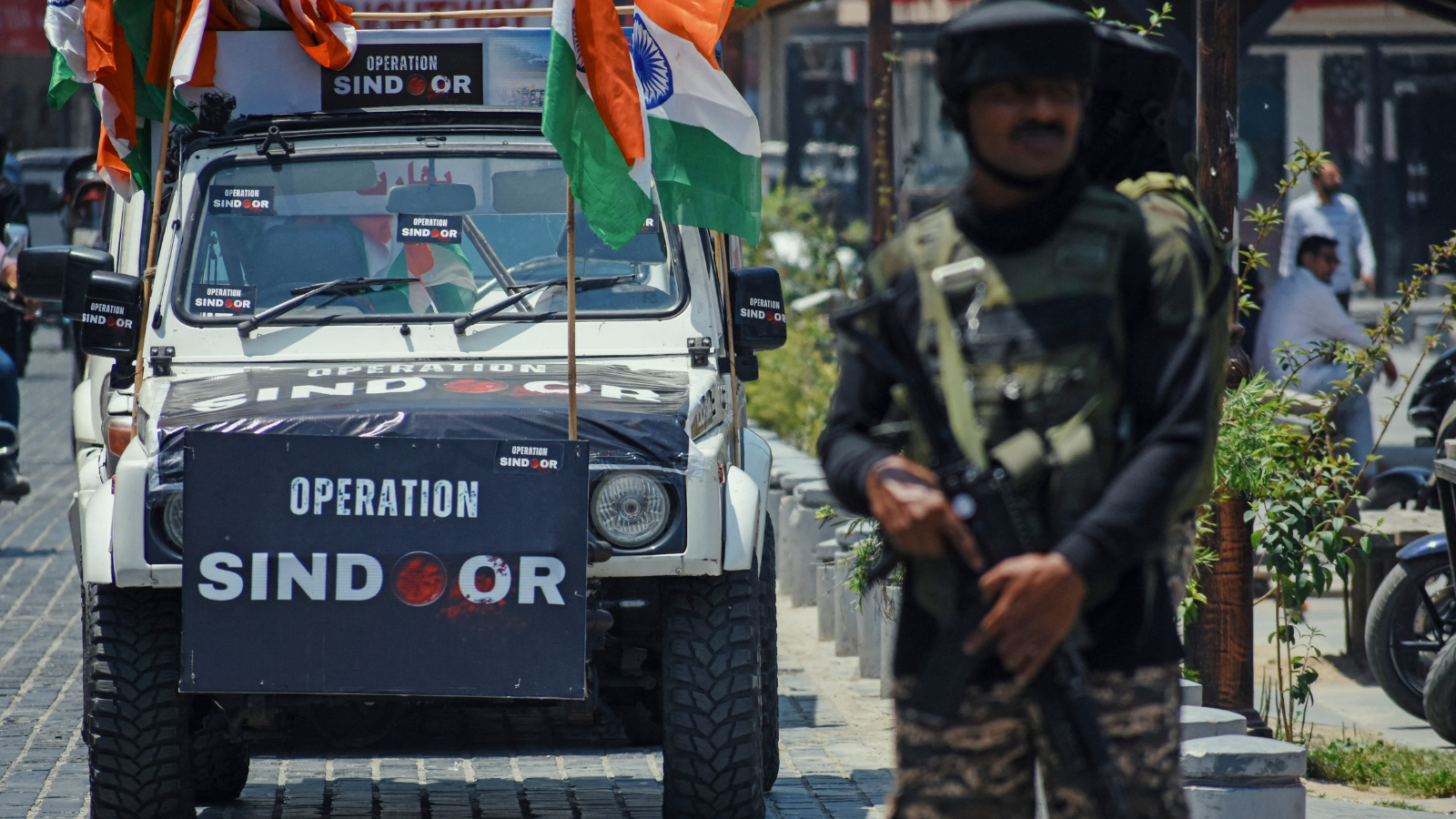
    Military Lessons from Operation Sindoor

    The India-Pakistan conflict that played out between May 6 and May 10, 2025, offers several military lessons. This article presents key takeaways from Operation Sindoor and breaks down how India’s preparations shaped the outcome and what more is needed to strengthen future readiness.

      Dinakar Peri

  • Book
    India and the Sovereignty Principle: The Disaggregation Imperative

    This book offers a comprehensive analysis of India's evolving relationship with sovereignty in a complex global order. Moving beyond conventional narratives, it examines how the sovereignty principle shapes India's behavior across four critical domains—from traditional military power to contemporary data governance.

      Rudra Chaudhuri, Nabarun Roy

  • Article
    Hidden Tides: IUU Fishing and Regional Security Dynamics for India

    This article examines the scale and impact of Chinese IUU fishing operations globally and identifies the nature of the challenge posed by IUU fishing in the Indian Ocean Region (IOR). It also investigates why existing maritime law and international frameworks have struggled to address this growing threat.

      Ajay Kumar, Charukeshi Bhatt

  • Book
    Violence and Development Along the India-Pakistan Border in Jammu and Kashmir

    This book examines the impact of cross-border violence on communities living along the Line of Control and the International Border in Jammu and Kashmir, India.

      Deep Pal, Surya Valliappan Krishna, Saheb Singh Chadha

Get more news and analysis from
Carnegie India
Carnegie India logo, white
Unit C-4, 5, 6, EdenparkShaheed Jeet Singh MargNew Delhi – 110016, IndiaPhone: 011-40078687
  • Research
  • About
  • Experts
  • Projects
  • Events
  • Contact
  • Careers
  • Privacy
  • For Media
Get more news and analysis from
Carnegie India
© 2026 Carnegie Endowment for International Peace. All rights reserved.