

Research
- +10
Rosa Balfour, Frances Z. Brown, Yasmine Farouk, …
{
  "authors": [
    "Moisés Naím"
  ],
  "type": "legacyinthemedia",
  "centerAffiliationAll": "",
  "centers": [
    "Carnegie Endowment for International Peace",
    "Carnegie Europe",
    "Carnegie Russia Eurasia Center"
  ],
  "collections": [],
  "englishNewsletterAll": "",
  "nonEnglishNewsletterAll": "",
  "primaryCenter": "Carnegie Endowment for International Peace",
  "programAffiliation": "",
  "programs": [],
  "projects": [],
  "regions": [
    "Western Europe",
    "Europe",
    "North America"
  ],
  "topics": [
    "Economy",
    "Trade"
  ]
}
Source: Getty
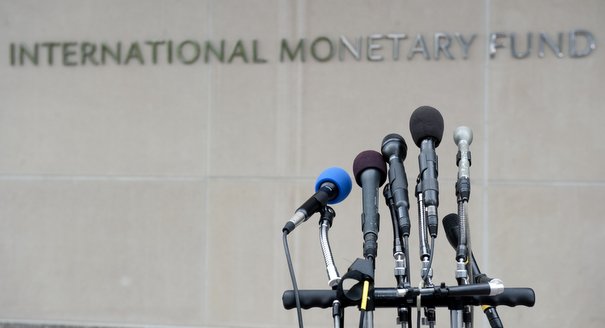
The leadership of the International Monetary Fund should be open to any qualified candidate from anywhere in the world and the selection process should be inclusive, transparent, and based on no other considerations than the candidate’s professional merits, experience, and integrity.
Source: Washington Post

This legacy — a product of an antiquated, post-World War II bargain struck among the world’s richest countries — means that only a European can become the new managing director of the IMF, an institution owned by 187 member nations. This arrangement, which effectively discriminates against 93 percent of humanity, has enjoyed the support of the United States, the IMF’s largest shareholder.
In its daily work, the IMF demands that the governments that seek its financial assistance adopt market principles of efficiency, transparency and meritocracy in exchange for its help. Yet that same institution selects its leader through a process completely at odds with those values. According to the agreement between Western Europe and the United States, the IMF’s top job always goes to a European, while the presidency of the World Bank is reserved for an American. This has been the case since these institutions were created in the mid-1940s, and while the deal might have reflected the world’s realpolitik at the time, it is now obsolete, unacceptable and counterproductive to the cause of global economic stability.
Even the leaders of the Group of 20, the assembly of nations that accounts for more than 80 percent of the world’s economy and two-thirds of its population, recognize that leadership selection at these institutions must change. When they met in early 2009 in London on the heels of the financial crisis, the G-20 leaders asserted that “the heads and senior leadership of the international financial institutions should be appointed through an open, transparent and merit-based selection process.”
That this is not already the standard is outrageous. No more outrageous, of course, than how European countries are offering countless excuses for why Strauss-Kahn’s replacement must carry a European passport.
Didier Reynders, Belgium’s finance minister, offered the prevailing European view when he said that “it would be preferable if we continued to hold these posts.” German Chancellor Angela Merkel has stressed that a person from the developing world can indeed ascend to the IMF’s top job, but only “in the medium term.” For now, she asserts, it should be a European. French Finance Minister Christine Lagarde is already being touted as a favorite by the U.S. and international press, and even a top Brazilian official admitted to Reuters that “Europe is likely to keep its deep stranglehold on the position.”
Influential European columnists such as Martin Wolf and Wolfgang Munchau have argued in the Financial Times that given the IMF’s critical role in the rescue of the continent’s troubled economies, only someone with vast political contacts in the region can operate effectively there. “Certainly, no non-European could play the role Mr. Strauss-Kahn did in the eurozone,” Wolf writes. Or as Munchau puts it, “I wonder to what extent a highly competent Mexican central banker, for example, would be able to fulfill this role?”
Funny how such consideration never seemed to come up when Asia and Latin America had their own financial crises in the 1990s. Somehow, it didn’t much matter then that the IMF was run by a Frenchman or a German lacking extensive political contacts in those regions. Now, of course, such familiarity is deemed essential: “The new IMF chief will deal with mostly European issues for most of his or her first term,” Munchau writes, and “will have to bang heads together in meetings of European finance ministers, and will have to converse effectively with some notoriously difficult heads of government and state.”
So from this Eurocentric perspective, Agustin Carstens, the governor of Mexico’s central bank and formerly a top IMF official, and Kemal Dervis, Turkey’s respected former finance minister, simply lack the intellectual or political wherewithal to strike a deal with Greek or Portuguese colleagues, or cannot hope to win the respect of German or French policymakers.
Another unwarranted assumption is that European politicians will put up greater resistance than their Asian and Latin American counterparts did to the unpopular economic measures that come with any IMF bailout — and that only a fellow European can make them see the light. So is the tacit implication that Europeans deserve gentler treatment than what the IMF proffered to the governments of South Korea and Brazil when they needed bailouts.
In fact, Europe can do no better than having as the IMF chief one of the many highly trained and deeply experienced economic players from a developing country that has already successfully managed a crisis. India, Brazil and South Africa have a deep bench of talent that can help Europe navigate its problems. Furthermore, even though Europe is experiencing the crisis du jour, the new IMF chief will have to deal with economic troubles that may erupt in some of the developing countries that are now booming.
And then there is the small detail that while Europe’s weight in the global economy is rapidly shrinking, that of countries such as China, India and Brazil is expanding ever faster. Why should rising economic powers be kept out of the decision-making positions of the world’s main financial institutions?
The argument that the next head of the IMF must hail from a predetermined region or nation is fallacious, because it can be made in favor of virtually any region. Instead, the position should be open to any qualified candidate from anywhere in the world — and the selection process must be inclusive, transparent and based on no other considerations than the candidate’s professional merits, experience and integrity.
It would be nice, too, if the candidates were required to make a strong commitment to actually finish their five-year terms in the IMF’s top slot. The past three heads of the IMF (all Western Europeans, of course) resigned before completing their terms.

Distinguished Fellow
Moisés Naím is a distinguished fellow at the Carnegie Endowment for International Peace, a best-selling author, and an internationally syndicated columnist.
Recent Work



Rosa Balfour, Frances Z. Brown, Yasmine Farouk, …
Moisés Naím
Carnegie India does not take institutional positions on public policy issues; the views represented herein are those of the author(s) and do not necessarily reflect the views of Carnegie, its staff, or its trustees.

The ASML MoU with Tata Electronics is an indicator of how far the Indian semiconductor ecosystem has come. This ecosystem has been years in the making and represents real commercial logic.

Konark Bhandari

The India–EU Free Trade Agreement (FTA) is shaping up to be one of the most consequential trade negotiations, both economically and strategically. But, what’s in the agreement, what’s missing, and what will determine its success in the years ahead

Vrinda Sahai, Nicolas Köhler-Suzuki

On March 10, 2026, India’s Union Cabinet approved amendments to Press Note 3, a regulation that mandated government approval on all foreign direct investment (FDI) from countries sharing a land border with India. This amendment raises questions primarily about whether its stated benefits will materialize and if the risks have been adequately weighed. This piece will address the same.
Konark Bhandari

This piece examines India’s response to U.S. sanctions and tariffs, specifically assessing the immediate market consequences, such as alterations in import costs, and the broader strategic implications for India’s energy security and foreign policy orientation.
Vrinda Sahai

This paper examines the evolution of India-China economic ties from 2005 to 2025. It explores the impact of global events, bilateral political ties, and domestic policies on distinct spheres of the economic relationship.

Santosh Pai