


• Research
  • About
  • Experts
Carnegie India logoCarnegie lettermark logo
{
  "authors": [
    "Deborah Gordon",
    "Daniel Sperling"
  ],
  "type": "legacyinthemedia",
  "centerAffiliationAll": "dc",
  "centers": [
    "Carnegie Endowment for International Peace",
    "Carnegie Europe"
  ],
  "collections": [],
  "englishNewsletterAll": "ctw",
  "nonEnglishNewsletterAll": "",
  "primaryCenter": "Carnegie Endowment for International Peace",
  "programAffiliation": "SCP",
  "programs": [
    "Sustainability, Climate, and Geopolitics"
  ],
  "projects": [
    "Carnegie Oil Initiative"
  ],
  "regions": [
    "North America",
    "United States",
    "South Asia",
    "India",
    "East Asia",
    "China",
    "Western Europe"
  ],
  "topics": [
    "Economy",
    "Climate Change"
  ]
}

Source: Getty

In The Media

Critical Crossroad: Advancing Global Opportunities to Transform Transportation

Emerging countries must decide if they want to follow developed, auto-dependent nations down an unsustainable path or if they will instead transform their national transportation system to encourage environmentally and economically sound choices.

Link Copied
By Deborah Gordon and Daniel Sperling
Published on Oct 20, 2011
Project hero Image

Project

Carnegie Oil Initiative

The Carnegie Oil Initiative analyzed global oils, assessing their differences from climate, environmental, economic, and geopolitical perspectives. This knowledge provides strategic guidance and policy frameworks for decision making.

Learn More

Source: European Financial Review

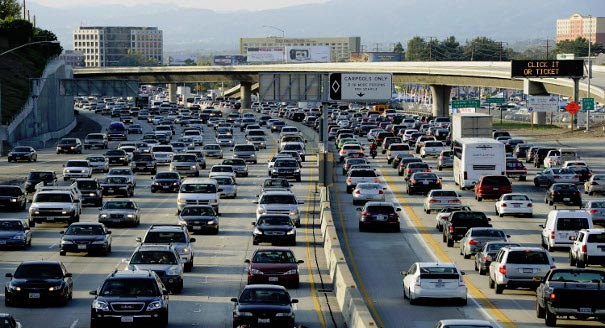
Critical Crossroad: Advancing Global OpportunitiesThe world is rapidly motorizing. At the start of the twenty-first century, some one billion vehicles occupied the roads. But this number will likely double in the next decade. By mid-century the Earth could be home to billions more cars, trucks, and motorized two-wheelers, which will collectively have profound effects on global oil demands, energy security, climate stability, and urban mobility.

We are at a critical crossroad. The global proliferation of vehicles presents many risks and opportunities. One seemingly easy way forward is to adopt last-century approaches that seek to accommodate the high demand for vehicles through cheap oil, free roads, sprawled development, and subsidized home ownership. A preferred alternative course beckons, however, one that promises new, low-carbon, location-efficient, economically productive mobility. Government, industry, and consumers—especially in emerging economies—can reinvent transportation models and employ innovative solutions to avoid a foreboding car monoculture.

About the Authors

Deborah Gordon

Former Director and Senior Fellow, Energy and Climate Program

Gordon was director of Carnegie’s Energy and Climate Program, where her research focuses on oil and climate change issues in North America and globally.

Daniel Sperling

Former Visiting Scholar , Energy and Climate Program

Sperling was a visiting scholar in the Energy and Climate Program at the Carnegie Endowment. He is professor of civil engineering and environmental science and policy at the University of California, Davis. He is also founding director of the university’s Institute of Transportation Studies.

Authors

Deborah Gordon
Former Director and Senior Fellow, Energy and Climate Program
Deborah Gordon
Daniel Sperling
Former Visiting Scholar , Energy and Climate Program
Daniel Sperling
EconomyClimate ChangeNorth AmericaUnited StatesSouth AsiaIndiaEast AsiaChinaWestern Europe

Carnegie India does not take institutional positions on public policy issues; the views represented herein are those of the author(s) and do not necessarily reflect the views of Carnegie, its staff, or its trustees.

More Work from Carnegie India

  • Commentary
    India Signs the Pax Silica—A Counter to Pax Sinica?

    On the last day of the India AI Impact Summit, India signed Pax Silica, a U.S.-led declaration seemingly focused on semiconductors. While India’s accession to the same was not entirely unforeseen, becoming a signatory nation this quickly was not on the cards either.

      Konark Bhandari

  • Commentary
    The PSLV Setback: Restoring India’s Workhorse

    On January 12, 2026, India's "workhorse," the Polar Satellite Launch Vehicle, experienced a consecutive mission failure for the first time in its history. This commentary explores the implications of this incident on India’s space sector and how India can effectively address issues stemming from the incident.

      Tejas Bharadwaj

  • Commentary
    AI Adoption Journey for Population Scale

    Connecting real-world AI use cases across sectors such as health, education, agriculture, and livelihoods can help policymakers, innovators, and institutions align around a shared goal. This article looks at a framework ensuring that AI works for everyone.

      Shalini Kapoor, Tanvi Lall

  • Commentary
    The Impact of U.S. Sanctions and Tariffs on India’s Russian Oil Imports

    This piece examines India’s response to U.S. sanctions and tariffs, specifically assessing the immediate market consequences, such as alterations in import costs, and the broader strategic implications for India’s energy security and foreign policy orientation.

      Vrinda Sahai

  • Article
    Revisiting the Usage of Refurbished Equipment in India’s Semiconductor Ecosystem

    This article looks at the progress of the Semiconductor Laboratory fab modernization plan based on publicly available documents, and potential learnings for future upgrades to government-owned fabs and India’s larger semiconductor ecosystem, especially regarding the use of refurbished equipment.

      Shruti Mittal, Konark Bhandari

Get more news and analysis from
Carnegie India
Carnegie India logo, white
Unit C-4, 5, 6, EdenparkShaheed Jeet Singh MargNew Delhi – 110016, IndiaPhone: 011-40078687
  • Research
  • About
  • Experts
  • Projects
  • Events
  • Contact
  • Careers
  • Privacy
  • For Media
Get more news and analysis from
Carnegie India
© 2026 Carnegie Endowment for International Peace. All rights reserved.







