

Commentary
Yukon Huang, Isaac B. Kardon, Matt Sheehan
{
  "authors": [
    "Yukon Huang"
  ],
  "type": "legacyinthemedia",
  "centerAffiliationAll": "dc",
  "centers": [
    "Carnegie Endowment for International Peace",
    "Carnegie China"
  ],
  "collections": [],
  "englishNewsletterAll": "asia",
  "nonEnglishNewsletterAll": "",
  "primaryCenter": "Carnegie China",
  "programAffiliation": "AP",
  "programs": [
    "Asia"
  ],
  "projects": [],
  "regions": [
    "East Asia",
    "China"
  ],
  "topics": [
    "Economy"
  ]
}
Source: Getty
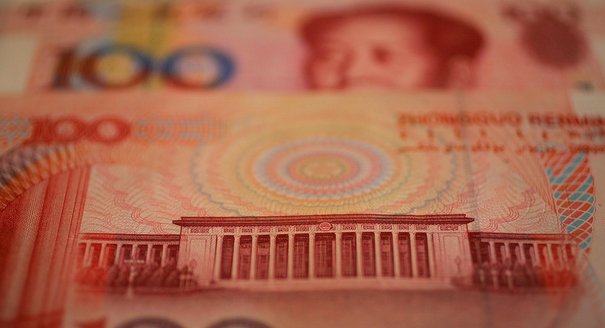
The recent cut in China’s bank reserve ratio indicates that Beijing has prioritized stimulating economic growth over moderating a potentially overheated economy.
Source: Financial Times
IMGXYZ8873IMGZYXOver the past year Beijing has been caught between sticking to restrictive policies to achieve a ‘soft landing’ and switching gears to deal with the repercussions of the eurozone crisis. The cut in China’s bank reserve ratio by 50 basis points, which came a surprise to some, signals that the risks of a major economic slowdown are now of greater concern than an overheated economy. Data showing that Chinese manufacturing activity contracted last month for the first time in almost three years only added to those fears.
China has been doing well in moderating inflation while moving to a more sustainable, but still robust growth rate. Inflation has fallen steadily to 5.5 per cent and should continue to slow. Growth has also slowed from 10.6 per cent in last year, to an estimated 9.3 per cent this year and eight to 8.5 per cent next year. But Beijing has been hesitant in moving to more accommodating policies for fear that the underlying forces that could lead to an overheated economy have not been fully addressed.
The leadership is particularly keen on reducing speculative activity in the property sector. Modest declines in house prices would be welcome, but a widespread collapse would foster serious problems.
Recent statements that the property bubble and the debt servicing problems faced by local authorities still needed attention raised doubts that less restrictive policies were imminent.
Two things have changed to accelerate the timetable. On a broader scale, the seemingly intractable financial crisis in Europe has convinced the leadership that the consequences could be much worse than envisaged just a few months ago. On a more limited, but possibly more alarming scale for this political system, the slowdown in manufacturing activity, as well as reports of dramatic falls in exports and the immediate impact it has already had on firms in Guangdong have raised the prospect of labour unrest.
Beijing has handled economic downturns reasonably well, but it will be hard pressed to deal with something bigger than the crash of 2008. It has not yet fully dealt with the negative repercussions of the 4,000bn renminbi stimulus package implemented largely through the financial system. While that programme is credited with preventing a major downturn, it has weakened confidence in the banking sector. Thus there would be little support for another stimulus package of a similar nature.
While further monetary relaxation is likely, given the six increases in the reserve requirements over the past year, China has less flexibility in using either interest or exchange rate adjustments to support its objectives. Although the benchmark interest rate has been raised three times this year, the adjustments were small and deposit rates remain strongly negative. Ironically at a time when the US is putting pressure on China to let the renminbi appreciate, the concern now is that exports are falling too fast. China’s trade surplus may total only 1.5 per cent of gross domestic output this year and could even disappear in the near term.
While market forces might suggest a stable or even depreciating exchange rate, China could feel uncomfortable diplomatically in deviating from its stated intentions for a gradual appreciation.
Beijing may be forced to resort to fiscal policies to deal with downside risks this time around, even though budgetary options are far more cumbersome to work with.

Senior Fellow, Asia Program
Huang is a senior fellow in the Carnegie Asia Program where his research focuses on China’s economy and its regional and global impact.
Recent Work


Yukon Huang, Isaac B. Kardon, Matt Sheehan
Yukon Huang, Genevieve Slosberg

After the chill in ties between 2020 and 2024 that brought India–China relations to their lowest point in several decades, the two countries have engaged each other afresh. This paper argues that there are predominantly four imperatives guiding India’s approach to China, and they exist in an order of priority.

Saheb Singh Chadha

This piece argues that India’s central challenge is not managing a single flashpoint but resolving the underlying tension between expansion and institutional coherency of the BRICS grouping.

Vrinda Sahai

On March 10, 2026, India’s Union Cabinet approved amendments to Press Note 3, a regulation that mandated government approval on all foreign direct investment (FDI) from countries sharing a land border with India. This amendment raises questions primarily about whether its stated benefits will materialize and if the risks have been adequately weighed. This piece will address the same.

Konark Bhandari

This piece examines India’s response to U.S. sanctions and tariffs, specifically assessing the immediate market consequences, such as alterations in import costs, and the broader strategic implications for India’s energy security and foreign policy orientation.
Vrinda Sahai

This paper examines the evolution of India-China economic ties from 2005 to 2025. It explores the impact of global events, bilateral political ties, and domestic policies on distinct spheres of the economic relationship.

Santosh Pai