

• Research
  • About
  • Experts
Carnegie India logoCarnegie lettermark logo
{
  "authors": [
    "Uri Dadush",
    "Hans Timmer"
  ],
  "type": "other",
  "centerAffiliationAll": "",
  "centers": [
    "Carnegie Endowment for International Peace"
  ],
  "collections": [],
  "englishNewsletterAll": "",
  "nonEnglishNewsletterAll": "",
  "primaryCenter": "Carnegie Endowment for International Peace",
  "programAffiliation": "",
  "programs": [],
  "projects": [],
  "regions": [
    "Western Europe",
    "France",
    "Germany",
    "North America"
  ],
  "topics": [
    "Economy"
  ]
}

Source: Getty

Other

Europe's Latest Summit

Europe's latest leaders summit was important, but it was just a step in a multi-year process of redressing the situation.

Link Copied
By Uri Dadush and Hans Timmer
Published on Dec 19, 2011
How important was the latest deal at the European leaders summit on the eurozone?
Uri Dadush
It was an important summit, but it was just a step in a multi-year process of redressing the situation. Under any scenario this is not a decisive moment in the crisis. Despite the agreements to tighten fiscal discipline and seek treaty change to cede some sovereignty over fiscal policies, there were three key things that were missing from the latest deal.

First, the European Central Bank has not committed explicitly or implicitly to providing a backstop for the long term. Second, while governments agreed to raise up to $270 billion for the International Monetary Fund to aid indebted countries, this is not enough money for an important, durable solution—or the so-called bazooka that people are looking for. And third, there is no clear path toward fiscal integration and eurobonds that could ultimately resolve the crisis. This is left as a distant possibility with Germany and France at this point dead-set against it.

Read more

So the deal reached at the European summit is only a step and leaves many questions unanswered. Much of the burden of the readjustment over the long term is on the countries in trouble. There continues to be a very serious question about their political capacity to follow through with what promises to be many more years of austerity and falling incomes.
 
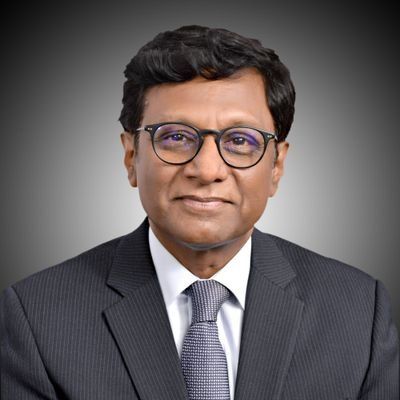
Hans Timmer
While it moves Europe in the right direction, the latest agreements won’t solve the problems. The deal for greater fiscal discipline will help provide political cover to governments implementing steps—this is important. But what I find best about this effort is the move to revise the treaty to further centralize policies. For that some autonomy needs to be given up.

The move to a more centralized Europe is the right solution. There are people who say that this is not the issue and won’t calm the markets, but this is actually extremely important. Europe can’t wait to show where it is headed.

Europe is at a fork in the road and can either go for more centralization or fragmentation. There are pros and cons to both, but I think it’s helpful that Europe is choosing the path to greater centralization.  MORE►

————————
Hans Timmer is the director of the World Bank's development prospects group.

About the Authors

Uri Dadush

Former Senior Associate, International Economics Program

Dadush was a senior associate at the Carnegie Endowment for International Peace. He focuses on trends in the global economy and is currently tracking developments in the eurozone crisis.

Hans Timmer

Authors

Uri Dadush
Former Senior Associate, International Economics Program
Uri Dadush
Hans Timmer
EconomyWestern EuropeFranceGermanyNorth America

Carnegie India does not take institutional positions on public policy issues; the views represented herein are those of the author(s) and do not necessarily reflect the views of Carnegie, its staff, or its trustees.

More Work from Carnegie India

  • Commentary
    The Impact of U.S. Sanctions and Tariffs on India’s Russian Oil Imports

    This piece examines India’s response to U.S. sanctions and tariffs, specifically assessing the immediate market consequences, such as alterations in import costs, and the broader strategic implications for India’s energy security and foreign policy orientation.

      Vrinda Sahai

  • Paper
    India-China Economic Ties: Determinants and Possibilities

    This paper examines the evolution of India-China economic ties from 2005 to 2025. It explores the impact of global events, bilateral political ties, and domestic policies on distinct spheres of the economic relationship.

      Santosh Pai

  • Commentary
    TRUST and Tariffs

    The India-U.S. relationship currently appears buffeted between three “Ts”—TRUST, Tariffs, and Trump.

      Arun K. Singh

  • Article
    Can Geopolitical Alignment Seal the India-EU FTA?

    This article argues that the geopolitical circumstances have never been more conducive, not merely for the early conclusion of the free trade agreement (FTA) between India and the EU, but also for crafting a substantive and comprehensive strategic partnership.

      Mohan Kumar

  • Source: iStock
    Commentary
    What’s Next for U.S. AI Policy?

    This commentary explores the likely actions of the Trump administration and driving forces on issues of deregulation, the United States’ leadership in AI, national security, and global engagements on AI safety.

      Shatakratu Sahu, Amlan Mohanty

Get more news and analysis from
Carnegie India
Carnegie India logo, white
Unit C-4, 5, 6, EdenparkShaheed Jeet Singh MargNew Delhi – 110016, IndiaPhone: 011-40078687
  • Research
  • About
  • Experts
  • Projects
  • Events
  • Contact
  • Careers
  • Privacy
  • For Media
Get more news and analysis from
Carnegie India
© 2026 Carnegie Endowment for International Peace. All rights reserved.