• Research
  • About
  • Experts
Carnegie India logoCarnegie lettermark logo
AI
{
  "authors": [
    "Hans Timmer",
    "Uri Dadush"
  ],
  "type": "other",
  "centerAffiliationAll": "",
  "centers": [
    "Carnegie Endowment for International Peace"
  ],
  "collections": [],
  "englishNewsletterAll": "",
  "nonEnglishNewsletterAll": "",
  "primaryCenter": "Carnegie Endowment for International Peace",
  "programAffiliation": "",
  "programs": [],
  "projects": [],
  "regions": [
    "North America",
    "United States",
    "Western Europe"
  ],
  "topics": [
    "Economy"
  ]
}
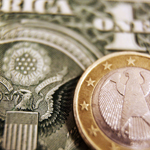
Source: Getty

Other

The Biggest Global Economic Concern

While the global economic crisis runs deeper than the euro, the inadequate institutional set up of the European Monetary Union greatly complicates matters.

Link Copied
By Hans Timmer and Uri Dadush
Published on Dec 20, 2011
What is the biggest global economic concern today?
Hans Timmer
The biggest global economic concern today is the health of financial institutions. The health of the banking sector is incredibly difficult to control given the global nature of the sector and huge size of institutions. And we all know that the consequences for the real economy are enormous.

We don’t have the oversight and institutions to respond to these problems and to a certain extent we’ve made it worse over the last decade. Governments, to some degree, have reinforced the problem and are not strong enough to react, especially in Europe. This is a sign that there is not enough Europe, instead of a sign that there is too much Europe.

Read more

Uri Dadush
There is a lot more going on than the euro, of course, but the big difference now versus ten years ago is that major European countries at risk had more instruments at their disposal. They could devalue their currency and print money. These were important safety valves that countries in the eurozone no longer enjoy—and this greatly exacerbates the worries in the markets.

So while the problem runs deeper than the euro, the inadequate institutional set up of the European Monetary Union greatly complicates matters.
 
Hans Timmer

I don’t buy the argument that there wouldn’t have been a problem if European countries had flexible exchange rates and I also don’t buy the argument that a flexible exchange rate is needed to accommodate the structural differences across European countries. I agree more with the thinking that many of the countries were too small or the economies were too integrated to have independent currencies and monetary policies.

This would have been messy anyhow. The real problem is not that the countries don’t have the tools to react, but what happened in the boom period that led to this crisis. For all kinds of reasons, there was over-borrowing and an underpricing of risk. We are seeing the nasty consequences today.  MORE►

————————
Hans Timmer is the director of the World Bank's development prospects group.

About the Authors

Hans Timmer

Uri Dadush

Former Senior Associate, International Economics Program

Dadush was a senior associate at the Carnegie Endowment for International Peace. He focuses on trends in the global economy and is currently tracking developments in the eurozone crisis.

Authors

Hans Timmer
Uri Dadush
Former Senior Associate, International Economics Program
Uri Dadush
EconomyNorth AmericaUnited StatesWestern Europe

Carnegie India does not take institutional positions on public policy issues; the views represented herein are those of the author(s) and do not necessarily reflect the views of Carnegie, its staff, or its trustees.

More Work from Carnegie India

  • Commentary
    India Signs the Pax Silica—A Counter to Pax Sinica?

    On the last day of the India AI Impact Summit, India signed Pax Silica, a U.S.-led declaration seemingly focused on semiconductors. While India’s accession to the same was not entirely unforeseen, becoming a signatory nation this quickly was not on the cards either.

      Konark Bhandari

  • Commentary
    The Impact of U.S. Sanctions and Tariffs on India’s Russian Oil Imports

    This piece examines India’s response to U.S. sanctions and tariffs, specifically assessing the immediate market consequences, such as alterations in import costs, and the broader strategic implications for India’s energy security and foreign policy orientation.

      Vrinda Sahai

  • Paper
    India-China Economic Ties: Determinants and Possibilities

    This paper examines the evolution of India-China economic ties from 2005 to 2025. It explores the impact of global events, bilateral political ties, and domestic policies on distinct spheres of the economic relationship.

      Santosh Pai

  • Commentary
    NISAR Soars While India-U.S. Tariff Tensions Simmer

    On July 30, 2025, the United States announced 25 percent tariffs on Indian goods. While diplomatic tensions simmered on the trade front, a cosmic calm prevailed at the Sriharikota launch range. Officials from NASA and ISRO were preparing to launch an engineering marvel into space—the NASA-ISRO Synthetic Aperture Radar (NISAR), marking a significant milestone in the India-U.S. bilateral partnership.

      Tejas Bharadwaj

  • Commentary
    TRUST and Tariffs

    The India-U.S. relationship currently appears buffeted between three “Ts”—TRUST, Tariffs, and Trump.

      Arun K. Singh

Get more news and analysis from
Carnegie India
Carnegie India logo, white
Unit C-4, 5, 6, EdenparkShaheed Jeet Singh MargNew Delhi – 110016, IndiaPhone: 011-40078687
  • Research
  • About
  • Experts
  • Projects
  • Events
  • Contact
  • Careers
  • Privacy
  • For Media
Get more news and analysis from
Carnegie India
© 2026 Carnegie Endowment for International Peace. All rights reserved.