

Q&A
Matt Ferchen
{
  "authors": [
    "Matt Ferchen"
  ],
  "type": "legacyinthemedia",
  "centerAffiliationAll": "",
  "centers": [
    "Carnegie Endowment for International Peace",
    "Carnegie China"
  ],
  "collections": [
    "China and the Developing World",
    "China’s Foreign Relations"
  ],
  "englishNewsletterAll": "",
  "nonEnglishNewsletterAll": "",
  "primaryCenter": "Carnegie China",
  "programAffiliation": "",
  "programs": [],
  "projects": [],
  "regions": [],
  "topics": [
    "Economy"
  ]
}
Source: Getty
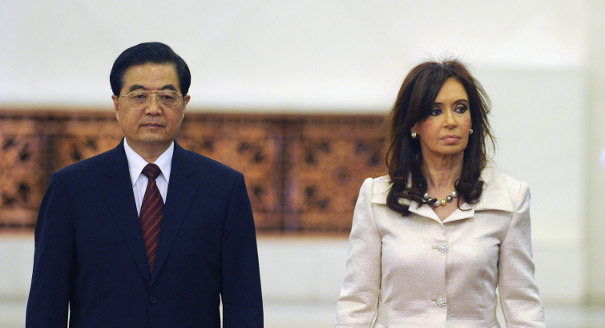
An increasing trade deficit with China, coupled with Chinese purchases of large tracts of Latin American farmland, could cause strain between China and Latin American nations.
Source: China Brief

The expansion of economic ties has not been limited to trade. Chinese firms have also recently dramatically stepped up their foreign direct investment in the region. For example, within the last two years China has become the top source of foreign direct investment in first Brazil and then Peru. This boom in trade and investment ties has been primarily driven by China’s rapidly expanding demand for Latin American mineral, agricultural and energy resources. At the same time, Chinese exports to Latin America of manufactured goods ranging from modems to motorcycles have also grown dramatically.
Therefore, the rapid expansion of trade and investment ties between Latin America and China has produced a mix of high expectations and rising anxieties. After the financial crisis battered the economies of Latin America’s traditional export markets in the US and Europe, China came to be seen by some Latin American government and business leaders as a beacon of hope. China weathered the financial crisis better than most and its continued strong demand for commodities underpinned surging purchases—not to mention booming prices—of Latin American raw materials. Within a very short time frame China has exploded into the imaginations of many Latin American business and government leaders, as well as regular citizens, as a new global partner. For many in Latin America it must seem as if the region has been drawn into the developmental wake of China’s unstoppable growth machine. Expectations of China are high.
But at the same time, anxieties about expanding economic ties with China are rising in some countries and economic sectors in Latin America. Even in countries that have benefited the most from expanding commodity ties to China, through a combination of exports to China and an inflow of Chinese investment, there are worries. Such anxieties are often based on historical patterns of export dependency and the trauma of commodity boom-and-bust cycles that have afflicted the region for well over a century. Countries like Brazil that have fought to move away from commodity-based export growth worry about “de-industrialization” and over-reliance on demand from a single market like China. Moreover, rising Chinese foreign investment in the region’s mineral and agricultural resources have raised concerns about “Dutch disease” and its negative impact on Latin American manufacturing exports. (Dutch disease refers to the tendency for a commodity boom to result in currency inflation, which subsequently makes non-commodity exports less competitive). The surge in investment from China has also brought to the fore local sensitivities about foreign ownership of agricultural land.
After a nearly decade-long period of increasingly close economic ties between China and Latin America, the relationship now stands at a turning point. The honeymoon period based on the initial Latin American euphoria over expanded trade and investment with China is giving way to anxieties. Even the relatively small number of South American countries that have benefited the most from commodities ties with China have long expressed a desire to move beyond a narrow Chinese focus on natural resource trade and investment. Initial hopes for a broadening of the relationship, including increased exports of Latin American manufactured goods to the huge Chinese market, have largely been disappointed.
Much of the initial excitement in Latin America about booming trade and investment ties to China was based on a positive view of China in comparison with the U.S. Latin American sentiment about their neighbor to the North has vacillated between concerns about receiving either too much or too little U.S. attention. In the wake of the U.S. post 9/11 involvement in two foreign wars far from the Western Hemisphere, followed by the shock and ongoing difficulties of the financial crisis, leaders in Latin America felt that for better or worse, the U.S. had once again entered a phase ofneglecting the region. China has stepped in to fill this vacuum, quickly establishing itself as a leading trade and investment partner of some of the region’s main economies.
Moreover, within Latin America, China’s influence has been seen as almost purely economic and therefore a welcome change from American political influence. Despite the anxieties that have accompanied China’s rising economic impact on Latin America, there has been widespread hope in the region that China could become a new and possibly more positive economic and political partner for the region. But exactly because the China-Latin America relationship is so new, and is as of yet so narrowly focused on Chinese demand for commodities, much work has yet to be done to broaden and solidify relations. In this there are opportunities for expanded cooperation among Latin America, China and the U.S.
Among the most obvious opportunities is the need for greater understanding on all sides. The most common concerns expressed by both Chinese and Latin Americans involved in trade, investment and diplomatic relations is the lack of mutual understanding. This includes basic language skills but extends to cultural, economic, legal and other important political factors that are essential for deeper ties. Both China and Latin America are working to create deeper mutual understanding through educational exchange and the founding of research centers. On both fronts Latin America and China could learn from, and actually in, the U.S., where universities and think tanks continue to be global leaders in both Latin American and China area studies. A win-win strategy for expanded knowledge of the U.S.-China-Latin America relationship should build on these already strong foundations.
This article was orginally published in AmCham-China's China Brief

Former Nonresident Scholar, Carnegie-Tsinghua Center for Global Policy
Ferchen specializes in China’s political-economic relations with emerging economies. At the Carnegie–Tsinghua Center for Global Policy, he ran a program on China’s economic and political relations with the developing world, including Latin America.
Recent Work
Matt Ferchen
Matt Ferchen, Anarkalee Perera
Carnegie India does not take institutional positions on public policy issues; the views represented herein are those of the author(s) and do not necessarily reflect the views of Carnegie, its staff, or its trustees.

On March 10, 2026, India’s Union Cabinet approved amendments to Press Note 3, a regulation that mandated government approval on all foreign direct investment (FDI) from countries sharing a land border with India. This amendment raises questions primarily about whether its stated benefits will materialize and if the risks have been adequately weighed. This piece will address the same.

Konark Bhandari

This piece examines India’s response to U.S. sanctions and tariffs, specifically assessing the immediate market consequences, such as alterations in import costs, and the broader strategic implications for India’s energy security and foreign policy orientation.

Vrinda Sahai
This paper examines the evolution of India-China economic ties from 2005 to 2025. It explores the impact of global events, bilateral political ties, and domestic policies on distinct spheres of the economic relationship.

Santosh Pai
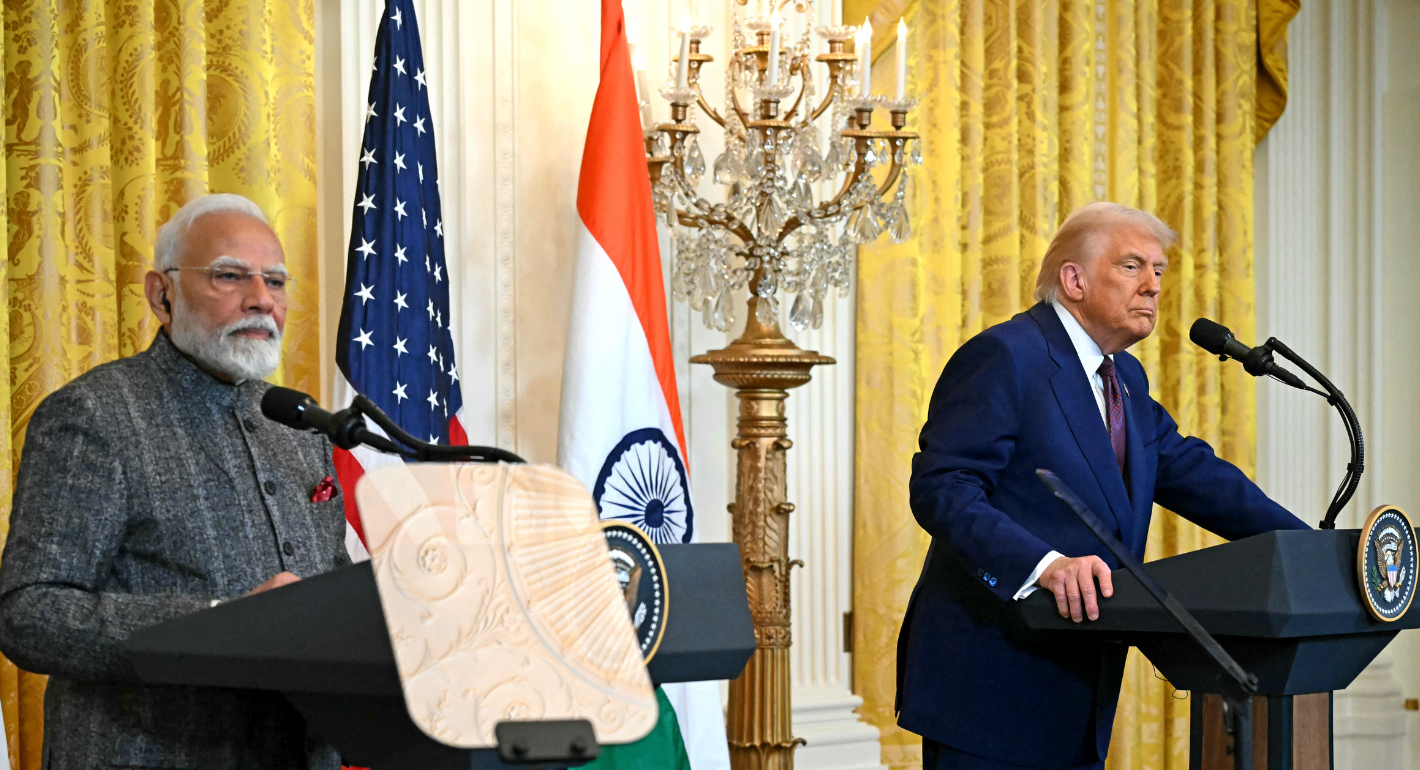
The India-U.S. relationship currently appears buffeted between three “Ts”—TRUST, Tariffs, and Trump.

Arun K. Singh
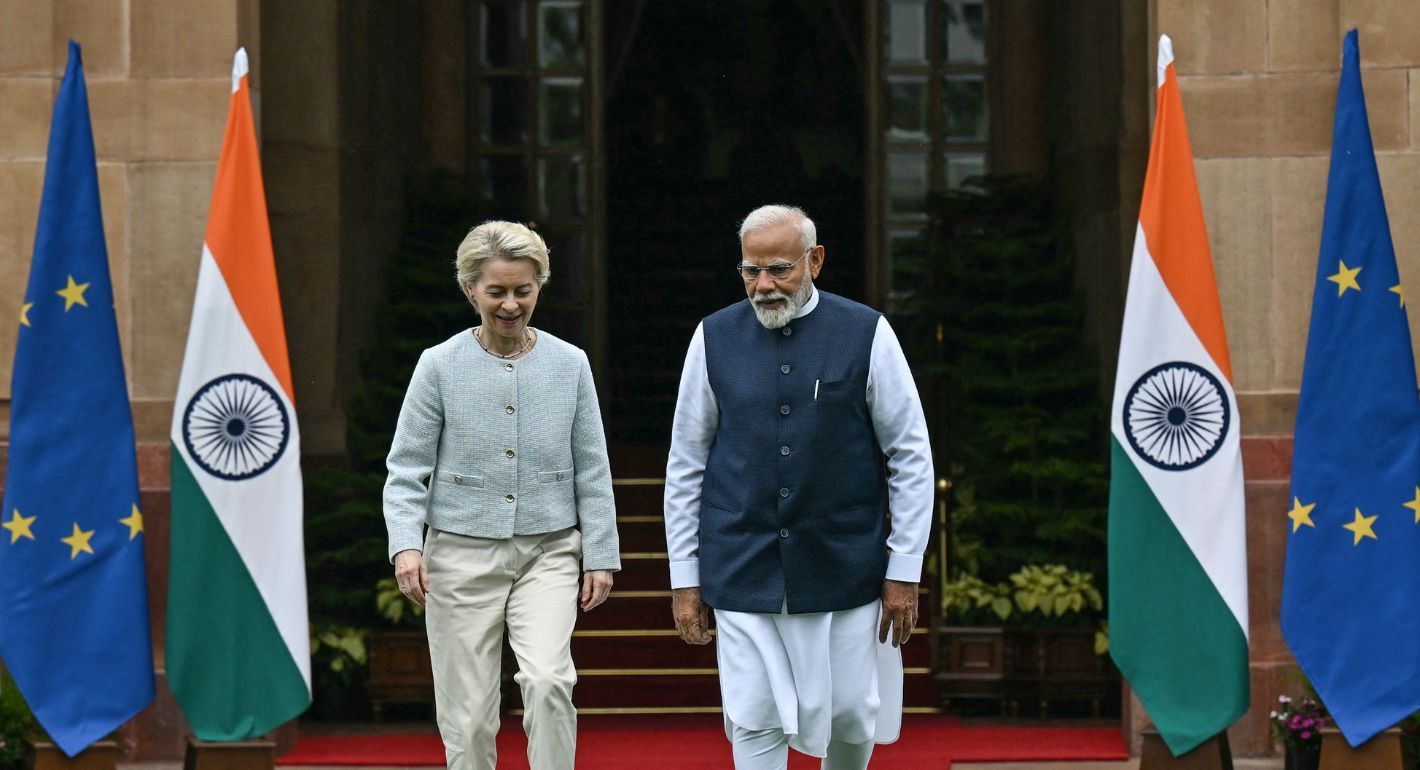
This article argues that the geopolitical circumstances have never been more conducive, not merely for the early conclusion of the free trade agreement (FTA) between India and the EU, but also for crafting a substantive and comprehensive strategic partnership.

Mohan Kumar