

Commentary
Uri Dadush
{
  "authors": [
    "Uri Dadush"
  ],
  "type": "legacyinthemedia",
  "centerAffiliationAll": "",
  "centers": [
    "Carnegie Endowment for International Peace",
    "Carnegie Europe"
  ],
  "collections": [],
  "englishNewsletterAll": "",
  "nonEnglishNewsletterAll": "",
  "primaryCenter": "Carnegie Endowment for International Peace",
  "programAffiliation": "",
  "programs": [],
  "projects": [],
  "regions": [
    "Western Europe",
    "France",
    "Germany",
    "Europe",
    "North America"
  ],
  "topics": [
    "Economy",
    "Foreign Policy",
    "EU"
  ]
}
Source: Getty
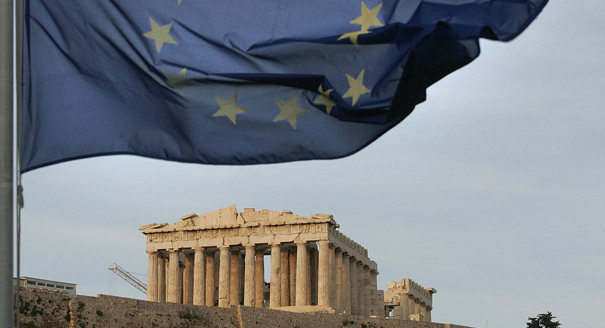
Though Europe can help itself economically by lowering interest rates and accelerating structural reforms, financial contributions from non-European countries through the IMF are needed most.
Source: Athens News

Secondly, the countries that have reasonably good fiscal shape (Germany, Finland, Austria, the Netherlands etc) can do more to extend government spending or slow down tax increases. These countries can do more on the fiscal side to help other countries in Europe. It is not going to have a huge impact, but I think it can help.
The third thing is to accelerate structural reforms and liberalisation. I know this has a bad name in Greece, because of the pain that comes with these reforms. But this is a part of what the whole of Europe, including Greece, should do in order to become a more flexible economy. In order for the EMU to function, it is essential that the labour market should be able to adjust, that firms should be competitive. This third dimension is important in the long term; however, it is not going to do a lot for Europe or for Greece in 2012 or in 2013. These things take time to work. You have to do them, but they will pay off in the long term.What is the bottom line? A little bit more can be done, but it is not going to change the picture in a fundamental way. In the best of circumstances, if you did all three of the things that I just said, you will get a little bit more growth in 2012, not much more. The instruments are just not there, given the severity of the problems that Europe is confronting across the board.
Finally, the rest of the world can also help Europe. An extension of the IMF resources and an extension of the European Stability Mechanism and the European Financial Stability Facility requires a greater contribution not only from Germany and France and some of the healthy economies in the eurozone, but also from the rest of the world. It is the single most important thing that can be done, because if you could add another trillion euros to these combined facilities, then there is a strong likelihood that this will be reflected in increased market confidence, and interest rates in many of the most vulnerable countries can come down.

Former Senior Associate, International Economics Program
Dadush was a senior associate at the Carnegie Endowment for International Peace. He focuses on trends in the global economy and is currently tracking developments in the eurozone crisis.
Recent Work
Uri Dadush
Uri Dadush
Carnegie India does not take institutional positions on public policy issues; the views represented herein are those of the author(s) and do not necessarily reflect the views of Carnegie, its staff, or its trustees.

After the chill in ties between 2020 and 2024 that brought India–China relations to their lowest point in several decades, the two countries have engaged each other afresh. This paper argues that there are predominantly four imperatives guiding India’s approach to China, and they exist in an order of priority.

Saheb Singh Chadha

This piece argues that India’s central challenge is not managing a single flashpoint but resolving the underlying tension between expansion and institutional coherency of the BRICS grouping.

Vrinda Sahai
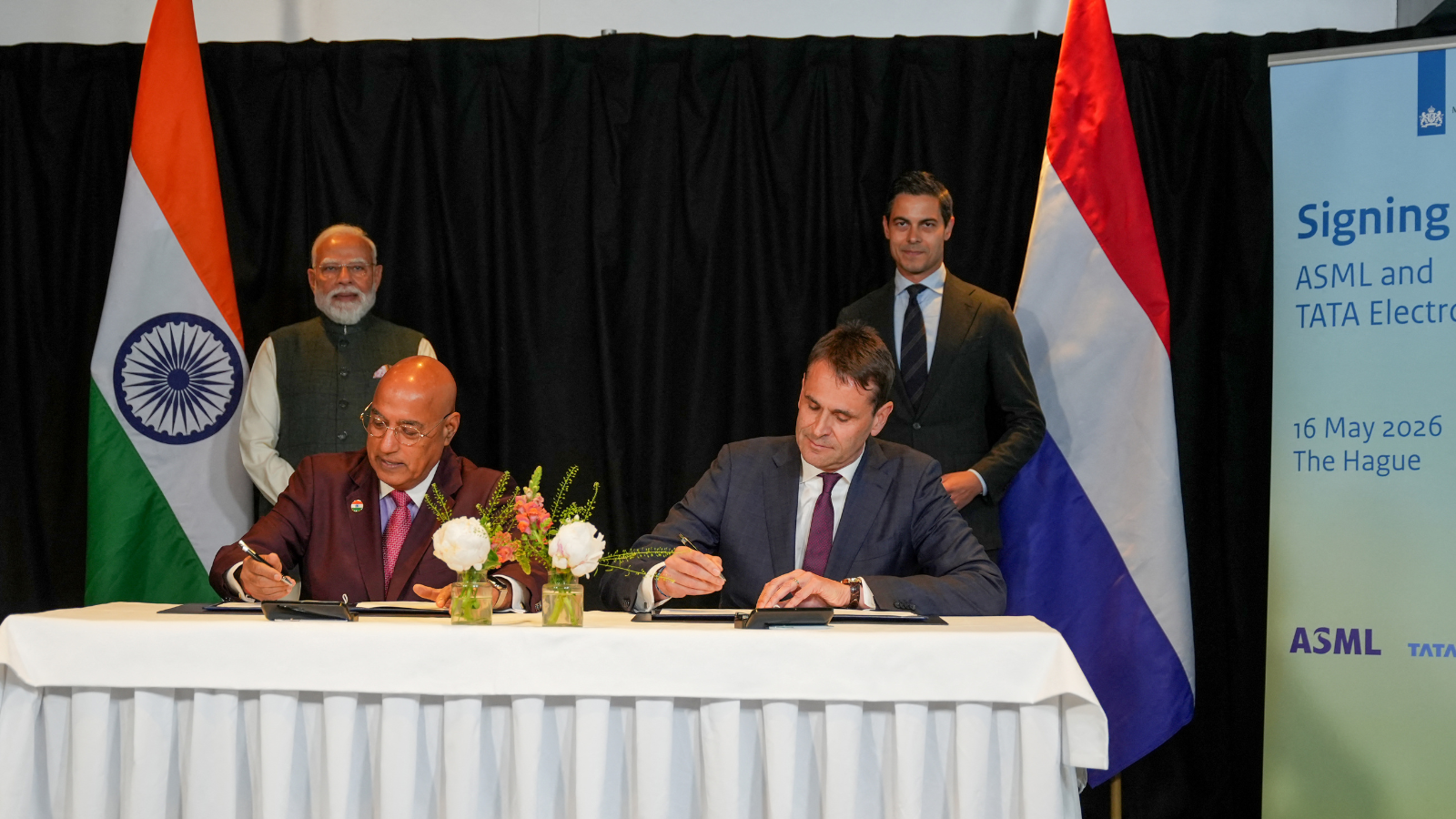
The ASML MoU with Tata Electronics is an indicator of how far the Indian semiconductor ecosystem has come. This ecosystem has been years in the making and represents real commercial logic.

Konark Bhandari

A partnership between India, a country of subcontinental size, and Africa, a continent of fifty-four countries, may seem asymmetric until one notes that both are home to nearly the same number of people—1.4 billion. This essay spells out the existing challenges to the partnership, its optimal potential, and the possible pathways to realize it over the next quarter-century.

Rajiv Bhatia

The India–EU Free Trade Agreement (FTA) is shaping up to be one of the most consequential trade negotiations, both economically and strategically. But, what’s in the agreement, what’s missing, and what will determine its success in the years ahead
Vrinda Sahai, Nicolas Köhler-Suzuki