

Article
Deborah Gordon, Stephen D. Ziman
{
  "authors": [
    "Deborah Gordon"
  ],
  "type": "legacyinthemedia",
  "centerAffiliationAll": "dc",
  "centers": [
    "Carnegie Endowment for International Peace"
  ],
  "collections": [],
  "englishNewsletterAll": "ctw",
  "nonEnglishNewsletterAll": "",
  "primaryCenter": "Carnegie Endowment for International Peace",
  "programAffiliation": "SCP",
  "programs": [
    "Sustainability, Climate, and Geopolitics"
  ],
  "projects": [
    "Carnegie Oil Initiative"
  ],
  "regions": [
    "North America",
    "United States"
  ],
  "topics": [
    "Climate Change"
  ]
}
Source: Getty
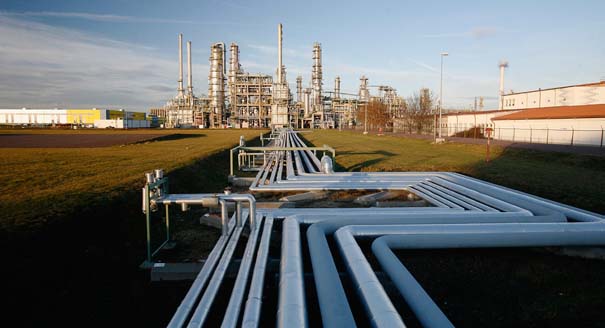
The real issue behind the Keystone XL pipeline debate is how to manage the climate effects of the shift from conventional oils to unconventional oils.
Source: Politico

Environmentalists say approving the Keystone XL pipeline would lock the world into a global warming trajectory that guarantees economic destruction, widespread human suffering and species extinction.
Skeptics, even some who admit to concern about climate effects, say Keystone is not the problem. Instead, they suggest we focus on larger, structural issues — urban sprawl, inefficient energy use and inadequate investment in renewable fuels. The benefits of getting oil from our friends to the north rather than the Organization of Petroleum Exporting Countries outweigh any environmental worries.
Both sides are right. Stopping the pipeline, by itself, won’t prevent global warming. Keystone XL, however, really is a big deal for what it portends about the growing climate risks of our oil dependence. What matters is not simply the quantity of oil we consume but the carbon intensity of all new petroleum supplies — starting with oil sands.Oil sands are a new breed of fuel. They are heavy, complex, carbon-laden and nothing like conventional oil. Locked up deep in the earth — bound tightly to sand, tar and rock — oil sands are nature’s own carbon capture and storage device. When they are tapped, we risk breaking open this natural carbon-fixing system.
New unconventional oils are poised to “recarbonize” global petroleum supplies. Though they have been recognized as new sources of hydrocarbons, according to the Energy Department, unconventional oils have yet to be strictly defined. Their common characteristic is that they can’t be produced by conventional means, just pumping liquids out of the earth.
Unconventional oils require new energy-intensive production techniques and are generally much higher in carbon content and other contaminants. This heterogeneous bundle of burgeoning resources ranges from the bitumen in oil sands to tight oils in deep shale rock fissures and must be liberated by hydraulic fracturing. There’s also kerogen, an immature oil fastened to rocky oil shales, ultradeep oils buried as remotely as 10 miles below the water’s surface and new liquid oils derived from intense chemical transformations of coal and gas.
There are major gaps in our knowledge about the effect of this paradigm shift to new fossil fuels. Unconventional oils are a major departure from business as usual in terms of their emissions, chemical complexity, geographic locations, cost structure, global markets and societal risks.
The truth is that we don’t know how much carbon the oil sands and other unconventional oils will release into the atmosphere. This fundamental uncertainty must be addressed before we increase the rate at which they’re tapped. An unconventional oils information clearinghouse is needed to build public understanding of their varying carbon footprints. Only then can we make wise public decisions about their increased use.
We urgently need better information to guide the development of sound fiscal and regulatory policies for the new oils and to avoid an emissions pathway that could breach the 2 degrees Celsius safe threshold of warming agreed to by world governments.
Unconventional oils take us into the great unknown. We are still in the dark about just how devastating their effect could be on climate stability. This is why the oil sands debate is so timely — and important.

Former Director and Senior Fellow, Energy and Climate Program
Gordon was director of Carnegie’s Energy and Climate Program, where her research focuses on oil and climate change issues in North America and globally.
Recent Work
Deborah Gordon, Stephen D. Ziman
Deborah Gordon, Smriti Kumble, David Livingston
Carnegie India does not take institutional positions on public policy issues; the views represented herein are those of the author(s) and do not necessarily reflect the views of Carnegie, its staff, or its trustees.

How is AI reshaping space security, creating governance challenges, and where does international diplomacy stand today?


Tejas Bharadwaj, Almudena Azcárate Ortega

The U.S.–India semiconductor cooperation story is well-stocked with top-level strategic intent. What remains unresolved, however, are some underlying challenges that will determine whether the cooperation actually functions. Three such friction points stand out.

Shruti Mittal

India and the United States are close to concluding a Reciprocal Defense Procurement Agreement (RDPA) that will allow firms from the two countries to sell to each other’s defense establishments more easily. While this may not remedy the specific grievances both sides may have regarding larger bilateral issues, an RDPA could restore some momentum, following the trade deal announcement.

Konark Bhandari

On the last day of the India AI Impact Summit, India signed Pax Silica, a U.S.-led declaration seemingly focused on semiconductors. While India’s accession to the same was not entirely unforeseen, becoming a signatory nation this quickly was not on the cards either.
Konark Bhandari

This piece examines India’s response to U.S. sanctions and tariffs, specifically assessing the immediate market consequences, such as alterations in import costs, and the broader strategic implications for India’s energy security and foreign policy orientation.

Vrinda Sahai