

Commentary
Uri Dadush
{
  "authors": [
    "Uri Dadush"
  ],
  "type": "legacyinthemedia",
  "centerAffiliationAll": "",
  "centers": [
    "Carnegie Endowment for International Peace"
  ],
  "collections": [],
  "englishNewsletterAll": "",
  "nonEnglishNewsletterAll": "",
  "primaryCenter": "Carnegie Endowment for International Peace",
  "programAffiliation": "",
  "programs": [],
  "projects": [],
  "regions": [
    "North America",
    "United States",
    "Southern, Eastern, and Western Africa",
    "South Asia",
    "India",
    "East Asia",
    "China"
  ],
  "topics": [
    "Economy"
  ]
}
REQUIRED IMAGE
Over the past several decades, the World Bank has broadened its approach to growth and poverty reduction by moving beyond hard infrastructure initiatives to systemic reforms in education and health care and the development of social safety nets.
Source: C-SPAN
Speaking on C-SPAN’s Washington Journal, Uri Dadush provided a primer on the World Bank’s mission and operations. He discussed how the bank’s approach to development has evolved over the years; outgoing president Robert Zoellick’s achievements at the bank; and the institution’s intense engagement with Africa. Over the past several decades, Dadush noted, the World Bank has broadened its approach to growth and poverty reduction, shifting from “projects” to “programs” and moving beyond hard infrastructure initiatives—the construction of roads, bridges, and power stations—to systemic reforms in education and health care and the development of social safety nets. The bank has made mistakes, but also learned from them, Dadush added; it has played a critical role, moreover, in launching the green revolution, which helped increase agricultural productivity and reduce poverty, and eradicate river blindness, among other accomplishments.

Former Senior Associate, International Economics Program
Dadush was a senior associate at the Carnegie Endowment for International Peace. He focuses on trends in the global economy and is currently tracking developments in the eurozone crisis.
Recent Work
Uri Dadush
Uri Dadush
Carnegie India does not take institutional positions on public policy issues; the views represented herein are those of the author(s) and do not necessarily reflect the views of Carnegie, its staff, or its trustees.

The Indian Ocean Region hosts one of the densest concentrations of subsea cables in the world. Yet, despite accounting for a significant share of global internet traffic, India’s participation remains limited.

Charukeshi Bhatt

How is AI reshaping space security, creating governance challenges, and where does international diplomacy stand today?


Tejas Bharadwaj, Almudena Azcárate Ortega

After the chill in ties between 2020 and 2024 that brought India–China relations to their lowest point in several decades, the two countries have engaged each other afresh. This paper argues that there are predominantly four imperatives guiding India’s approach to China, and they exist in an order of priority.

Saheb Singh Chadha

This piece argues that India’s central challenge is not managing a single flashpoint but resolving the underlying tension between expansion and institutional coherency of the BRICS grouping.

Vrinda Sahai
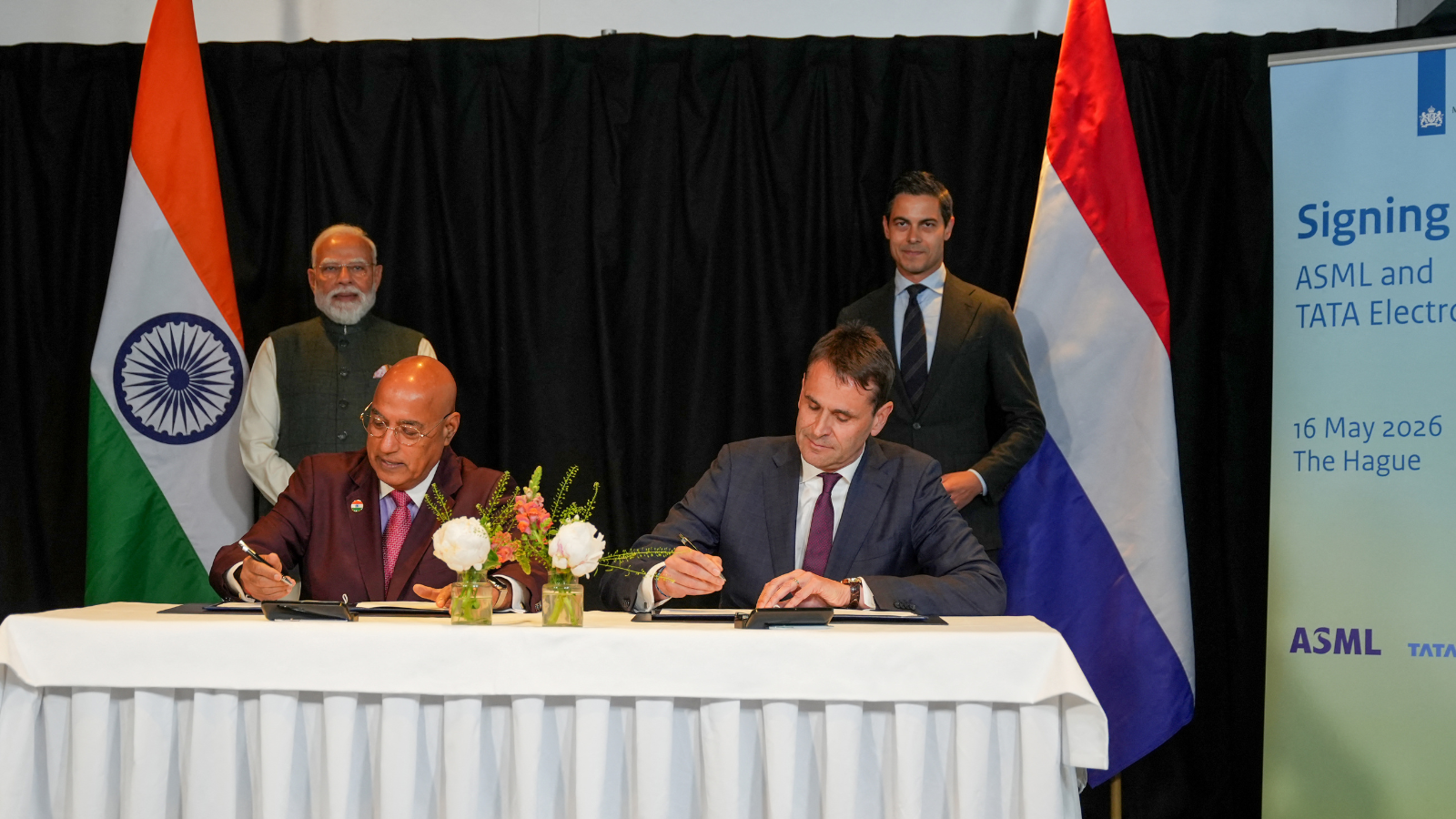
The ASML MoU with Tata Electronics is an indicator of how far the Indian semiconductor ecosystem has come. This ecosystem has been years in the making and represents real commercial logic.

Konark Bhandari