

In The Media
David Rothkopf
{
  "authors": [
    "David Rothkopf"
  ],
  "type": "legacyinthemedia",
  "centerAffiliationAll": "",
  "centers": [
    "Carnegie Endowment for International Peace",
    "Carnegie Europe"
  ],
  "collections": [],
  "englishNewsletterAll": "",
  "nonEnglishNewsletterAll": "",
  "primaryCenter": "Carnegie Endowment for International Peace",
  "programAffiliation": "",
  "programs": [],
  "projects": [],
  "regions": [
    "Western Europe",
    "Europe"
  ],
  "topics": [
    "Economy",
    "Foreign Policy",
    "EU"
  ]
}
Source: Getty
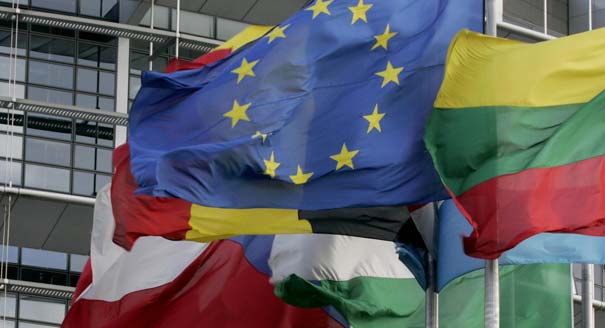
There is a growing sense that European leaders have lacked the political will to take the decisive and potentially painful measures that could help resolve the financial crisis.
Source: Foreign Policy

At a party thrown by JPMorgan, former U.S. Federal Reserve Chairman Alan Greenspan reportedly opined that the European monetary experiment was doomed from the start due to the divergent views and national characters of the disparate countries participating in the venture.
Then, over the weekend, the Dutch government, one of Germany's most important allies in making the case for austerity, fell. And in France, the first round of the presidential election both presaged the almost certain ultimate victory of Socialist François Hollande over incumbent Nicolas Sarkozy and, more ominously, showed the strength of Marine Le Pen's far-right National Front party.As the past week has shown, Europe's crisis lives on, seemingly more fueled than ended by high-profile "solutions" that have provided more questions than answers. In fact, the European financial crisis has been a case study in compounded mismanagement.
While the expectations of most of those with whom I spoke who participated in this weekend's discussions was that the Europeans have sufficient tools to avert catastrophe for the foreseeable future, there was also a clear sense that risks are nonetheless growing. Recession and the pain of belt-tightening would likely produce populist backlash on both the left and the right. Long-term recession in the south seemed certain. And if the malaise triggered bank failures, it might be every man for himself: Not all governments would pull together in bailing out financial institutions headquartered outside their immediate borders. Further, if a failure triggered a problem with a big American bank such as Morgan Stanley, the most often whispered victim, the bet was that neither the U.S. president nor Congress would have the appetite for an election-year bailout. "They'd let it fail," said a former top Obama administration official, expressing the view that this is what would appeal to the public at large.
For a moment, it almost made one wish for the good old days of George W. Bush. The ex-president left behind a wake of problems worldwide, notably associated with his administration's misguided prosecution of its "war on terror." But when the markets teetered late in 2008, he and his Treasury secretary, Hank Paulson, stepped in and not only acted relatively quickly but marshaled the kind of collective action from the U.S. Congress that the body seems more or less incapable of unless it has a gun to its head. My guess is that in the future, the picture of the Bush presidency is going to moderate considerably, and his team's imperfect but ultimately decisive and fairly effective intervention in the markets during his last days in office will be counted to his credit.
In the same way, flawed as President Barack Obama's stimulus package a few months later may have been, it too is likely to look wise next to the eurozone's approach, especially if, as seems likely, the eurodithering both produces long-term social pain and triggers instability or a resurgence of Europe's intolerant, nationalist right.
Another event I participated in last week, a conference featuring several dozen major institutional investors, offered a slightly different take on the drama in the eurozone. To be sure, there was a universal sense that Europe's leaders and the international community at large were foolishly playing with fire in their mishandling of the crisis. As one participant in the conference said, "There is an old rule of debt crises. If the debt can't be paid, it won't be." What he, a longtime research director for large investment funds, meant was that overly indebted countries needed to default, devalue their debt through inflation, or negotiate a deal that lowers or postpones their obligations. Debt crises invariably involve haircuts for someone.
There was also a widely held sense among the investors that the crisis might blow up in a way that would produce cascading bank failures and also, as a secondary but significant consequence, would undo Obama's reelection prospects. But they too saw the crisis as one of choice. The relative ease with which one of the several Eurobond proposals might be implemented was discussed and made clear, and therefore many in the group believed that after the muddling, perhaps in the face of the imminent possibility of bank collapses, European leaders might finally listen to reason.
This sentiment led a number of the investors at the event to conclude that they may be underweighted on the upside when it comes to Europe. The thought was that if catastrophe were indeed going to be averted, then some assets, like big blue-chip German and other Northern European equities, might be undervalued. It might also be worth holding stock options to buy them should a more positive scenario play out.
In other words, while the majority of investors were, like the majority of senior officials I spoke to this weekend, very worried about Europe's current trajectory, they still believed there remained a possibility that in the end, self-interest and rationality might force Europe's leaders to do what thus far they have been unable or unwilling to do: live up to their responsibilities and serve the interests of their people. But that, of course, is far from a safe bet.

Former Visiting Scholar
David Rothkopf was a visiting scholar at the Carnegie Endowment as well as the former CEO and editor in chief of the FP Group.
Recent Work
David Rothkopf
David Rothkopf
Carnegie India does not take institutional positions on public policy issues; the views represented herein are those of the author(s) and do not necessarily reflect the views of Carnegie, its staff, or its trustees.

After the chill in ties between 2020 and 2024 that brought India–China relations to their lowest point in several decades, the two countries have engaged each other afresh. This paper argues that there are predominantly four imperatives guiding India’s approach to China, and they exist in an order of priority.

Saheb Singh Chadha

This piece argues that India’s central challenge is not managing a single flashpoint but resolving the underlying tension between expansion and institutional coherency of the BRICS grouping.

Vrinda Sahai
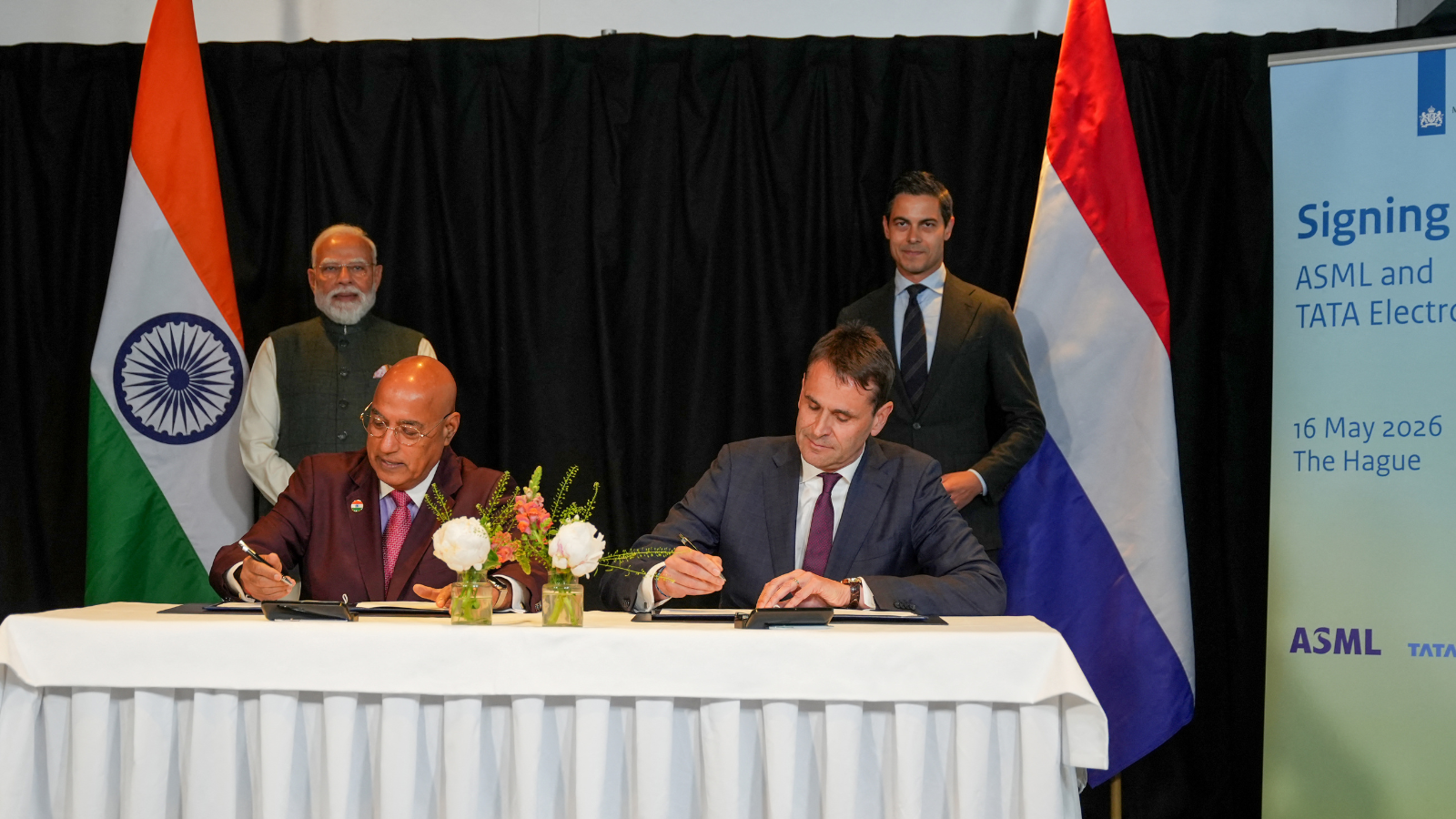
The ASML MoU with Tata Electronics is an indicator of how far the Indian semiconductor ecosystem has come. This ecosystem has been years in the making and represents real commercial logic.

Konark Bhandari

A partnership between India, a country of subcontinental size, and Africa, a continent of fifty-four countries, may seem asymmetric until one notes that both are home to nearly the same number of people—1.4 billion. This essay spells out the existing challenges to the partnership, its optimal potential, and the possible pathways to realize it over the next quarter-century.

Rajiv Bhatia

The India–EU Free Trade Agreement (FTA) is shaping up to be one of the most consequential trade negotiations, both economically and strategically. But, what’s in the agreement, what’s missing, and what will determine its success in the years ahead
Vrinda Sahai, Nicolas Köhler-Suzuki