

Commentary
- +2
Memduh Karakullukçu, Dmitri Trenin, Ümit Pamir, …
{
  "authors": [
    "Adnan Vatansever"
  ],
  "type": "legacyinthemedia",
  "centerAffiliationAll": "dc",
  "centers": [
    "Carnegie Endowment for International Peace"
  ],
  "collections": [],
  "englishNewsletterAll": "ctw",
  "nonEnglishNewsletterAll": "",
  "primaryCenter": "Carnegie Endowment for International Peace",
  "programAffiliation": "SCP",
  "programs": [
    "Sustainability, Climate, and Geopolitics"
  ],
  "projects": [
    "Carnegie Oil Initiative"
  ],
  "regions": [
    "North America",
    "United States",
    "Middle East",
    "Iran"
  ],
  "topics": [
    "Economy",
    "Foreign Policy",
    "Nuclear Policy"
  ]
}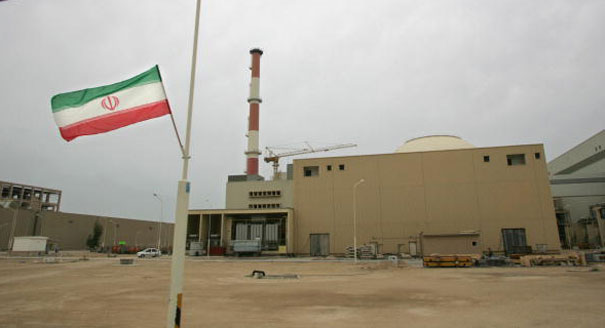
Source: Getty
The United States and its European allies can make oil sanctions against Iran work by designing the right foundations that will not falter at the early signs of price instability in the oil markets.
Source: National Interest

The current sanctions straddle two goals: reducing Iran's oil-export revenues and maintaining price stability in the oil markets. Iran is the world's fifth-largest oil producer, but it is also the second largest in the trading cartel OPEC. As a result, achieving both goals at the same time is a tough challenge. The National Defense Authorization Act (NDAA), which was adopted at the end of last year and spells out the U.S. sanctions, recognizes the inherent trade-off. It has been crafted cautiously to permit a degree of flexibility, allowing moderation of sanctions if the markets are not ready.
Success in stabilizing markets is far from assured. Oil prices have already spiked. In mid-April, Brent oil cost 12 percent more than at the end of 2011, when the NDAA was enacted, and 17 percent more than in early October, when momentum for sanctions started to build. Production outages in Yemen, Syria and South Sudan have contributed to this price increase. But a large share of the blame goes to Iran. Tehran has skillfully played on global fears of impending supply constraints. Threatening to close off the shipping route through the Straits of Hormuz has only compounded these worries.
As for cutting Iran's oil exports, history teaches that the risk of failure is high—the Iraq oil sanctions are just one such recent example. With world prices higher than before the NDAA was enacted, Iran can probably make up for lost revenue even if it is forced to sell less oil or sell at a discount to lure new clients. Success requires that Iranian oil-export volumes be cut dramatically for an extended period of time. Unless the present sanctions strategy is better calibrated, it probably will not achieve a major reduction in Iran's proceeds from oil sales abroad. Two issues merit closer attention.
First, oil demand is shifting away from the countries intent on imposing sanctions. Demand from countries in the Organization for Economic Co-operation and Development (OECD) is contracting, and consumption in non-OECD countries continues its rapid growth. Within about a year, oil consumption in non-OECD countries is expected to exceed OECD consumption for the first time. According to the International Energy Agency (IEA), the world will consume an additional 800,000 barrels a day in 2012, with China accounting for nearly half of that increase.
China and India, already Iran's main oil clients, are not concerned about Iran's nuclear plans in the same way as the United States and the EU. Finding the oil they need to grow their economies is a priority. If Beijing and New Delhi have to sever their oil relations with Tehran, they will need to look for new sources of supply. It is hard to predict where they will look to find the extra volumes. Without doubt, shipping discounted Iranian oil will remain enticing.
Second, crude oil is traded in a global market that is not only extremely fluid but also largely nontransparent. This provides Iran with considerable room to maneuver. As its oil is gradually displaced from Europe—which consumed about 450,000 barrels a day on average in 2011—Tehran will bet on finding new clients as well as new ways to reach them. Reshuffling its deck of oil clients may take some time. But the oil market continues to offer plenty of opportunities for Iran to maintain its exports and revenues.
The shipping industry and oil traders are also likely to aid and abet Iran's efforts to "slip the noose" of oil sanctions. While Iran’s own tanker fleet is not big enough to handle all volumes currently exported, tankers have seen significant overcapacity in recent months. Even if some of the Western shippers opt to stay away from Iran, companies from China and India are already among the largest players in shipping and physical trading of oil. A premium paid by Iran to ship its oil may continue to lure shipping companies driven by profits, not politics.
For the United States and the EU, enforcing the global oil-trading embargo against a regime determined to evade the trap, especially one abetted by private parties lured by lucrative deals, is a high-risk effort. If the goal is to cut Iranian oil-export revenues substantially without destabilizing the markets, the current approach will need to be carefully refined.
First, the United States must adopt a more realistic approach on timing the sanctions. A few months is too small a window to smoothly accommodate a major cut of oil supplies from Iran. A U.S. Energy Information Administration report estimates global spare crude-oil production capacity at about 2.5 million barrels a day—only slightly more than Iran's average daily exports last year. The report assessed the capacity as "modest by historical standards" and the lowest since the fourth quarter of 2008. Using most of this spare capacity will require the oil market to remain in a nearly perfect state. Minor signs of instability—like a hurricane in the Gulf of Mexico, a workers' strike in a major oil-producing country or a pipeline blast—could lead to extreme price hikes. The focus should be on a more realistic time frame that would allow markets to adjust.
Second, it should be clear to Iran that once sanctions reach their full force, it will not be able to sell oil above a certain limit. While there must be some room for flexibility, defining the ultimate target will send the right message to Iran and its people. This "ceiling" for Iranian exports must be strategically calibrated to achieve the desired effect. Oil sanctions should not target 100 percent of Iran's oil exports. This would be unrealistic, and signs of noncompliance will result in lost credibility. Besides, a complete ban on Iranian oil exports would allow the government, notorious for mismanaging its oil wealth, to deflect the blame for its own economic mismanagement. Instead, at the fullest extent of the sanctions, Iran should be able to continue to sell a minor portion of its oil to cover humanitarian needs. Any signs of mismanaged revenues should be exposed to the Iranian people.
Third, the United States and the EU need to build a broader coalition on this effort. Without the support of emerging markets, especially Iran's key trade partners in Asia, sanctions will remain ineffective. Key suppliers in OPEC also will need to be convinced about the long-term value of the sanctions. Though building consensus will be strenuous, moving toward more comprehensive sanctions is more likely to generate support among leaders in Asia and in the Gulf. The presence of "free riders" is a perennial problem with oil sanctions. Countries are less willing to support sanctions if they lack credibility. Setting realistic goals will add to the credibility of the sanction and result in fewer potential free riders.
Sanctions alone will not suffice. Shippers and traders of oil need to be targeted. U.S. and EU legislators could set punitive measures for companies and their affiliates that dock a tanker in an Iranian port. Tracking and satellite technology, if put to use, will suffice to trace every tanker carrying leaving Iran. Insurance companies, which already feel the heat of covering voyages to Iran, could be legally required to lift any coverage of Iranian crude shipments.
Sanctions against Iranian oil exports are already starting to bite. But it is too early to say how the sanctions will unfold once Tehran reconstructs its web of work-arounds.
With the right policies and determination, the United States and its European allies have the chance to make oil sanctions work. The focus should be on designing the right foundations that will not falter at the early signs of price instability in the oil markets.
In the meantime, tensions with Iran should not stand in the way of developing sound energy policies for the new century. The fact that the United States imports no oil from Iran but its economic recovery can be affected by politics in Tehran, illustrates the global nature of oil markets. Reducing dependence on oil altogether will be the only way to ensure tensions in the Middle East will not affect the American economy.
For now, the urgent task is to successfully develop and enforce oil sanctions on Iran and thus open the path for nuclear negotiations.
This article originally appeared in The National Interest.

Former Senior Associate, Energy and Climate Program
Vatansever was a senior associate in the Energy and Climate Program where he specializes in the energy sectors of the former Soviet republics and Eastern Europe.
Recent Work
Memduh Karakullukçu, Dmitri Trenin, Ümit Pamir, …
Adnan Vatansever, Анна Корппоо
Carnegie India does not take institutional positions on public policy issues; the views represented herein are those of the author(s) and do not necessarily reflect the views of Carnegie, its staff, or its trustees.

How is AI reshaping space security, creating governance challenges, and where does international diplomacy stand today?


Tejas Bharadwaj, Almudena Azcárate Ortega

After the chill in ties between 2020 and 2024 that brought India–China relations to their lowest point in several decades, the two countries have engaged each other afresh. This paper argues that there are predominantly four imperatives guiding India’s approach to China, and they exist in an order of priority.

Saheb Singh Chadha

This piece argues that India’s central challenge is not managing a single flashpoint but resolving the underlying tension between expansion and institutional coherency of the BRICS grouping.

Vrinda Sahai

A partnership between India, a country of subcontinental size, and Africa, a continent of fifty-four countries, may seem asymmetric until one notes that both are home to nearly the same number of people—1.4 billion. This essay spells out the existing challenges to the partnership, its optimal potential, and the possible pathways to realize it over the next quarter-century.

Rajiv Bhatia

The U.S.–India semiconductor cooperation story is well-stocked with top-level strategic intent. What remains unresolved, however, are some underlying challenges that will determine whether the cooperation actually functions. Three such friction points stand out.

Shruti Mittal