

Article
Deborah Gordon, Stephen D. Ziman
{
  "authors": [
    "Deborah Gordon"
  ],
  "type": "legacyinthemedia",
  "centerAffiliationAll": "dc",
  "centers": [
    "Carnegie Endowment for International Peace"
  ],
  "collections": [],
  "englishNewsletterAll": "ctw",
  "nonEnglishNewsletterAll": "",
  "primaryCenter": "Carnegie Endowment for International Peace",
  "programAffiliation": "SCP",
  "programs": [
    "Sustainability, Climate, and Geopolitics"
  ],
  "projects": [
    "Carnegie Oil Initiative"
  ],
  "regions": [
    "North America",
    "United States"
  ],
  "topics": [
    "Climate Change"
  ]
}
Source: Getty
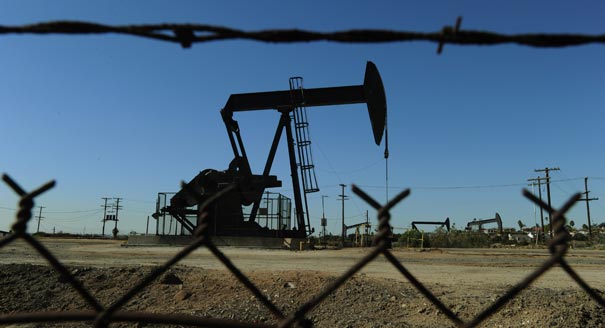
America’s oil-and-gas revival risks inviting wastefulness that could threaten its competitiveness in the growing global economy.
Source: Hill

In Ohio and its neighboring states, residents have suffered through decades of downturn. The region’s specialization in processing raw materials for manufacturing had faded away. Prosperity is now returning, though slowly, to the Midwest economy in the form of resources buried deeply in the disconnected fissures of the Utica, Marcellus and Devonian shale. Conventional thinking is unlikely to question the wisdom of this energy windfall.
Unconventional thinking, however, raises red flags in the conventional wisdom. Will the U.S. oil-and-gas boom bolster energy and economic security? Maybe. But there are risks.Emerging petroleum sources have an imposing relationship on their surroundings. Producing and processing new oils and gases requires technological forcing — through horizontal drilling, hydraulic fracturing and chemical injection — with uncertain long-term impacts. Managing water quality, waste and seismic, climate and other impacts are difficult in the face of rapid, under-regulated resource development.
This situation breeds an information and power imbalance. Industry has more knowledge than citizens and can hold financial sway over policymakers. Proceeding more cautiously, while prudent, too often pits profits and jobs against health and safety.
The speed at which tight reserves are being extracted merits reconsideration beyond these important issues of unintended societal consequences. There are also economic and energy trade-offs associated with this energy boom.
First, with natural gas selling at low prices, accelerated production of tight gas could be unwise. Today it might be worth more in the ground than in the pipeline. A slower development path would buy time to figure out how to safeguard residents and the environment, offering full disclosure and better mitigation before problems arise.
Tight oil, on the other hand, raises a different set of energy and economic concerns. With oil topping $100 a barrel, the pressure to pump these continuous crude resources is palpable. But there are flaws in this thinking. Claims that U.S. tight light oil is a benefit for American motorists could be too good to be true. Midwest oil will do nothing to relieve prices at the gas pump, which are driven by international events in global oil markets. Gas prices will rise and fall despite an all-out effort to drill at home.
Moreover, there just isn’t that much oil in the Midwest — the faster it is removed, the sooner it will run out. There is evidence of resource depletion within the first year. Other estimates show tight oil finds ramping up quickly and then plateauing and declining well before the end of this decade.
Nevertheless, current drilling activity in Ohio stands at dozens of wells per square mile. This level of development is one of the most concentrated in America, where an estimated 4.3 million new wells have been completed. In fact, nearly the entire state of Ohio is contained within the largest shale resource play in the continental United States, spanning some seven states. Containing premature enthusiasm, especially in the face of the recent recession, will be a challenge.
But what’s the rush? These hydrocarbons are not going anywhere. While a boon to steel and petrochemical production, long-term economic security of the region and the nation extends well beyond the current oil-and-gas boom. A slow, structured approach — one that balances energy supplies and energy demands — is more likely to lock in robust results.
In the face of burgeoning new energy supplies, there is now mounting resistance to reduce overall energy demands through increased energy efficiency. America’s oil-and-gas revival could invite wastefulness that could threaten its competitiveness in the growing global economy. The United States, and the Midwest in particular, needs to take care that its assets aren’t mismanaged. It is well documented that big hydrocarbon discoveries tend to make non-oil sectors, such as agriculture and manufacturing, less competitive on world markets, thus leaving oil to dominate the economy.
We must learn how to navigate the promises and pitfalls of 21st century petroleum supplies. Transparency is essential. This starts with cautious development that protects local residents. It entails establishing information databanks so that regulators fully understand the hydrocarbon value chain, from extraction through use. And it means developing new rules for new fuels to effectively manage the transformation of oil and gas.
This is a critical moment to determine the future energy balance between fossil fuels, low-carbon alternative fuels and energy efficiency. There is no historical precedent for a coherent, enduring global petroleum policy. Now is the time to structure the role oil-and-gas supplies will play in our collective energy future.

Former Director and Senior Fellow, Energy and Climate Program
Gordon was director of Carnegie’s Energy and Climate Program, where her research focuses on oil and climate change issues in North America and globally.
Recent Work
Deborah Gordon, Stephen D. Ziman
Deborah Gordon, Smriti Kumble, David Livingston
Carnegie India does not take institutional positions on public policy issues; the views represented herein are those of the author(s) and do not necessarily reflect the views of Carnegie, its staff, or its trustees.

How is AI reshaping space security, creating governance challenges, and where does international diplomacy stand today?


Tejas Bharadwaj, Almudena Azcárate Ortega

The U.S.–India semiconductor cooperation story is well-stocked with top-level strategic intent. What remains unresolved, however, are some underlying challenges that will determine whether the cooperation actually functions. Three such friction points stand out.

Shruti Mittal

India and the United States are close to concluding a Reciprocal Defense Procurement Agreement (RDPA) that will allow firms from the two countries to sell to each other’s defense establishments more easily. While this may not remedy the specific grievances both sides may have regarding larger bilateral issues, an RDPA could restore some momentum, following the trade deal announcement.

Konark Bhandari

On the last day of the India AI Impact Summit, India signed Pax Silica, a U.S.-led declaration seemingly focused on semiconductors. While India’s accession to the same was not entirely unforeseen, becoming a signatory nation this quickly was not on the cards either.
Konark Bhandari

This piece examines India’s response to U.S. sanctions and tariffs, specifically assessing the immediate market consequences, such as alterations in import costs, and the broader strategic implications for India’s energy security and foreign policy orientation.

Vrinda Sahai